
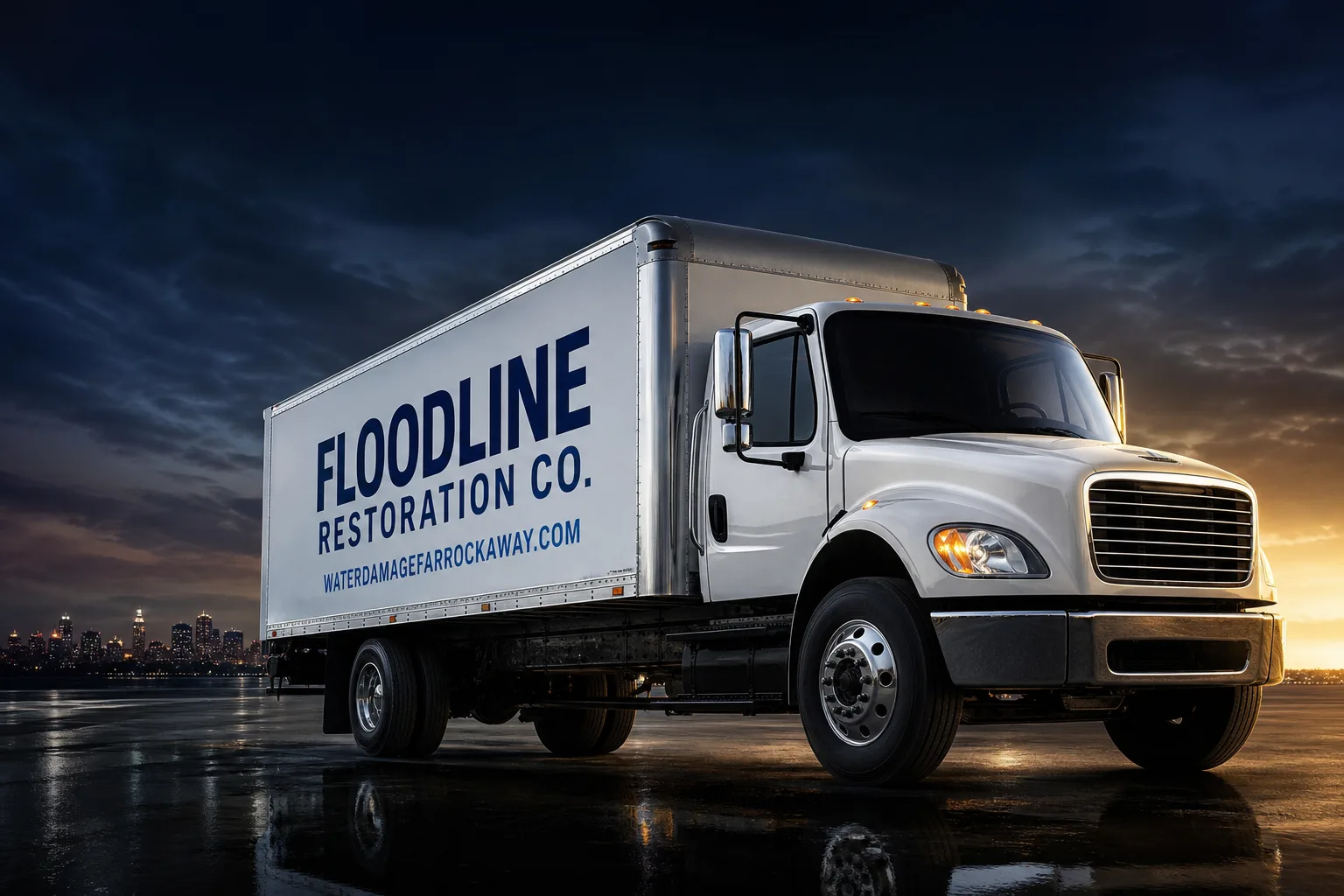
Free visual inspection and a written scope of work before any mitigation begins - photos, moisture readings, and drying logs go in your claim file
The scope we write is the scope we bill. Anything new gets shown to you, in writing, before we touch it.
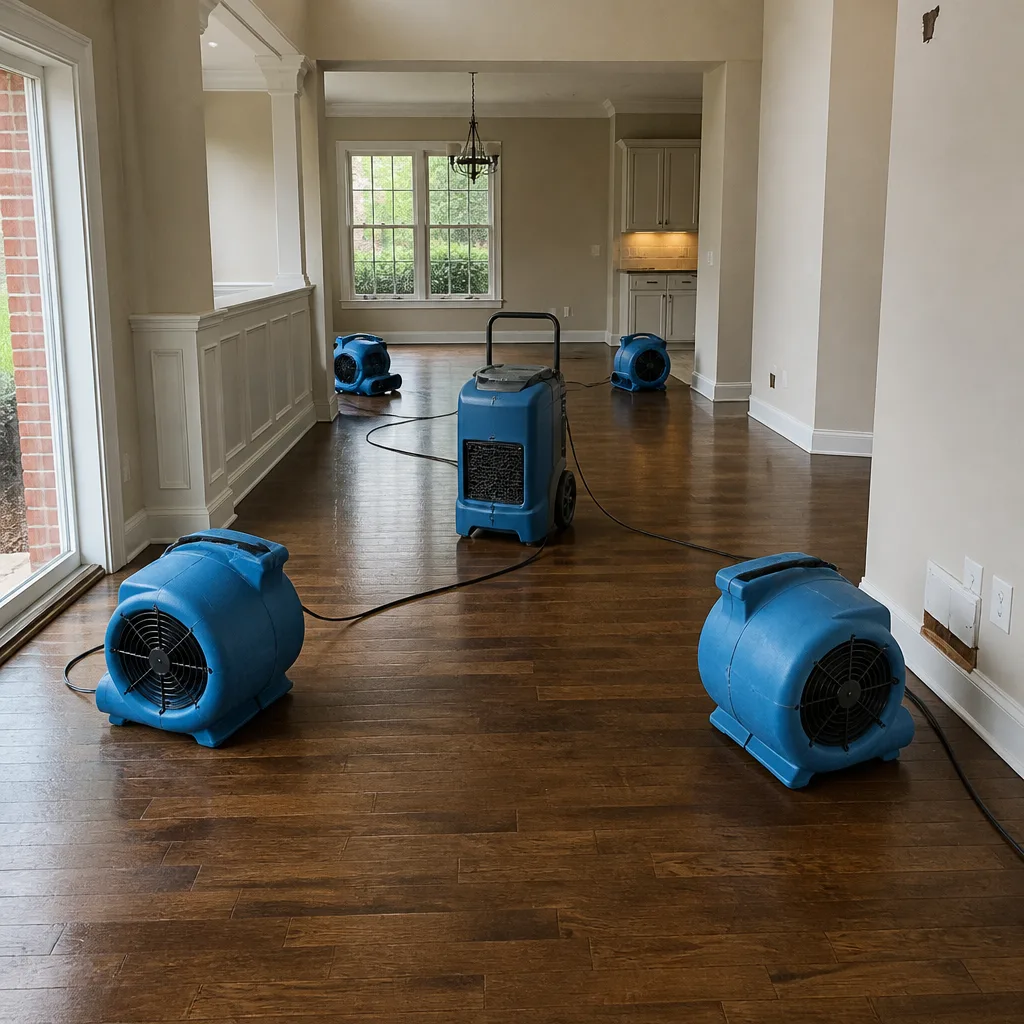
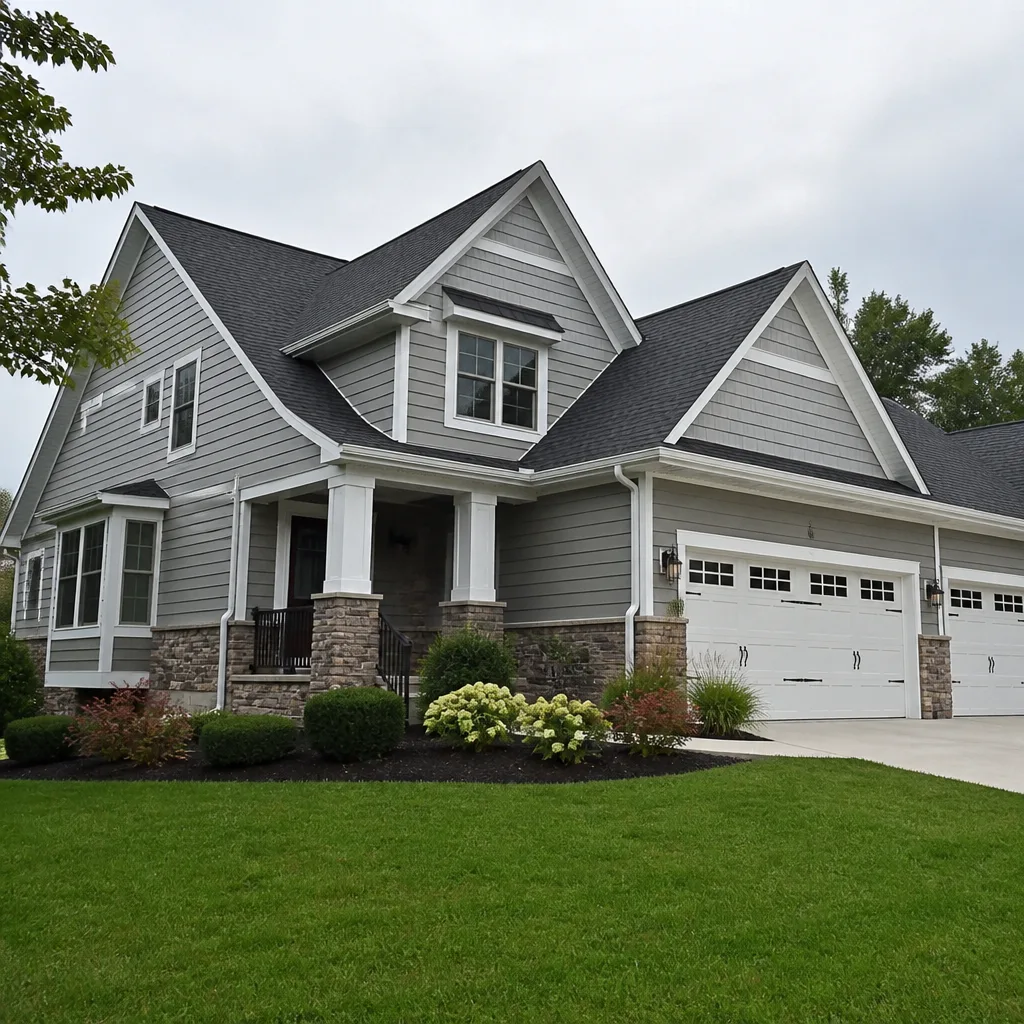
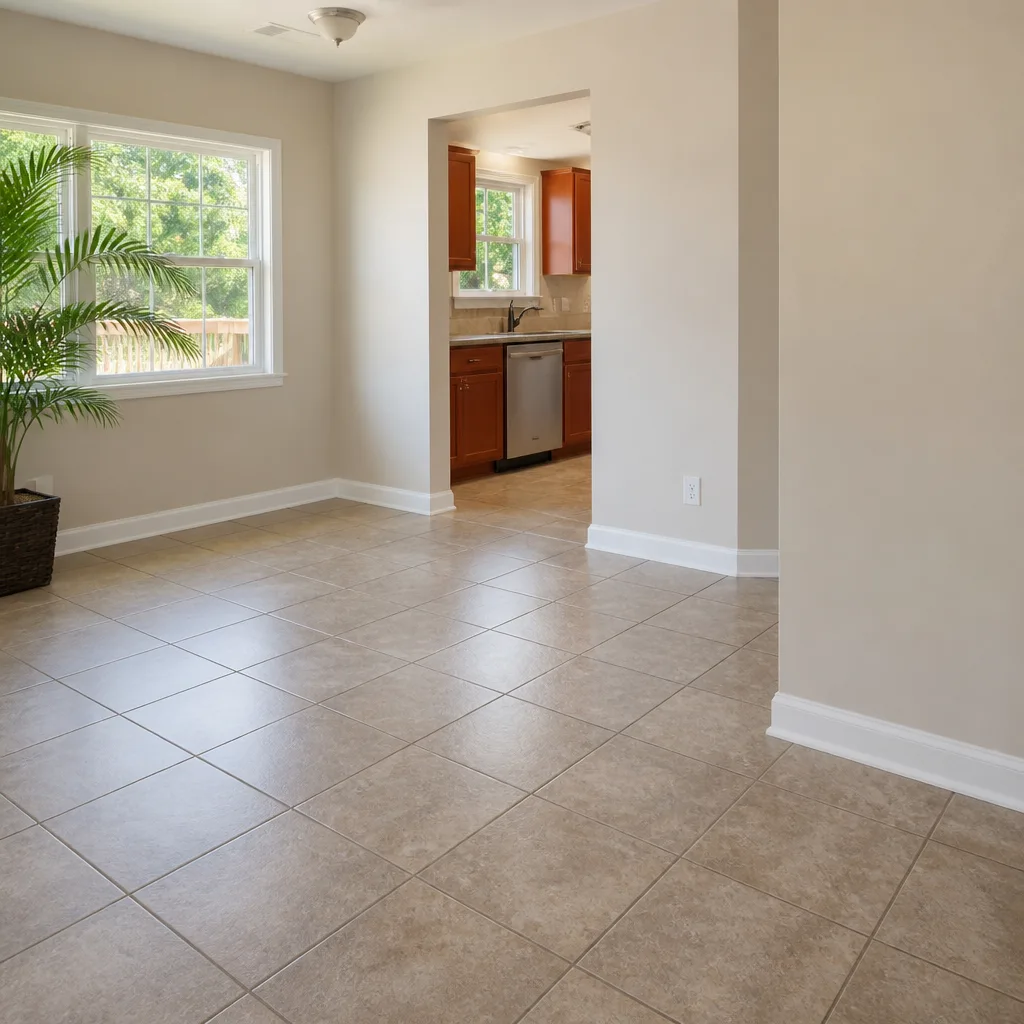
 Before
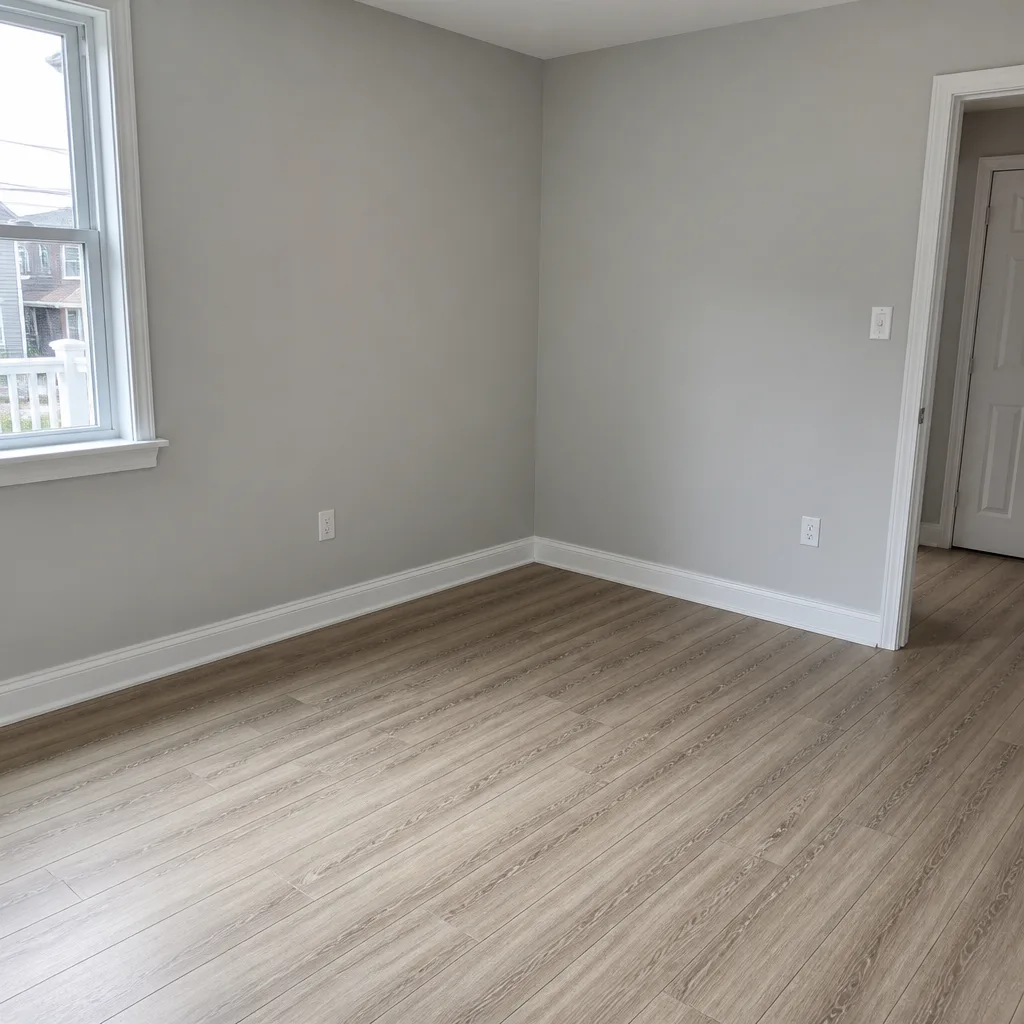 After
After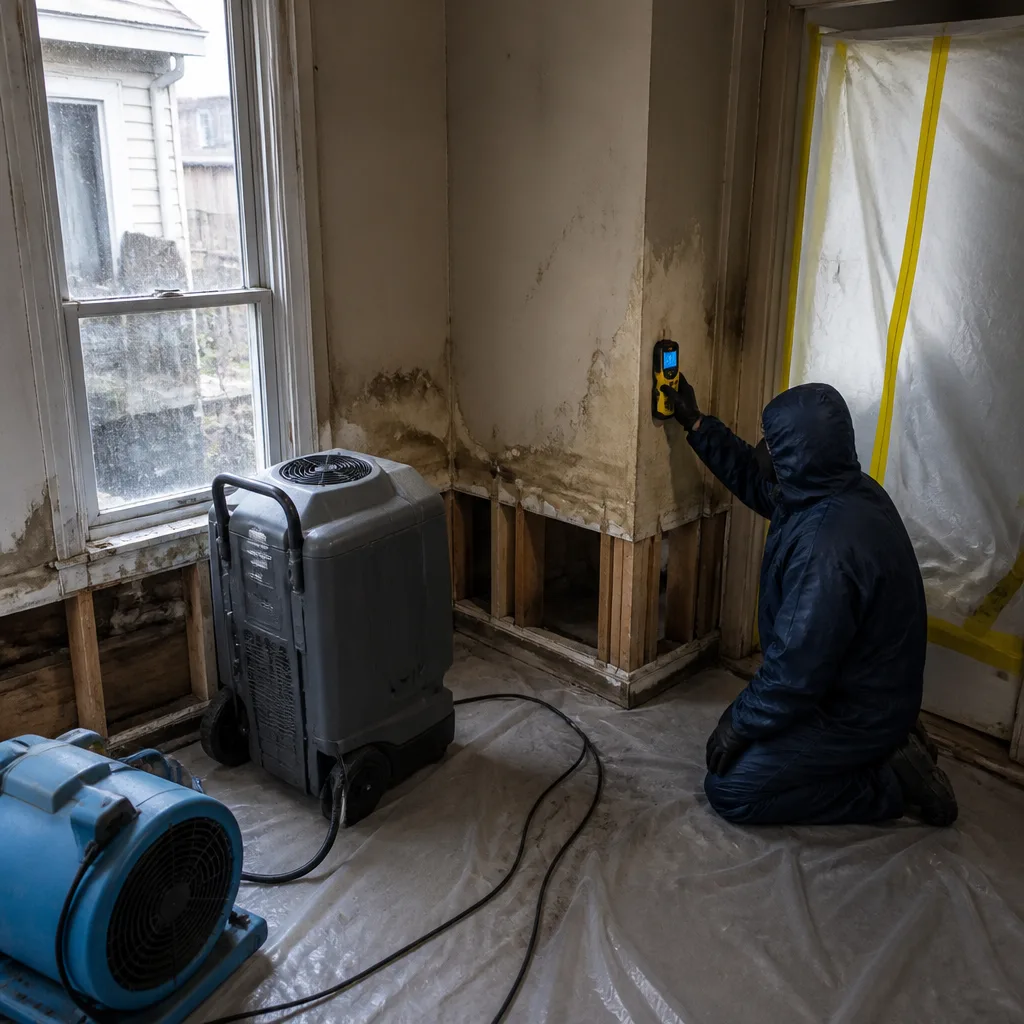 Before
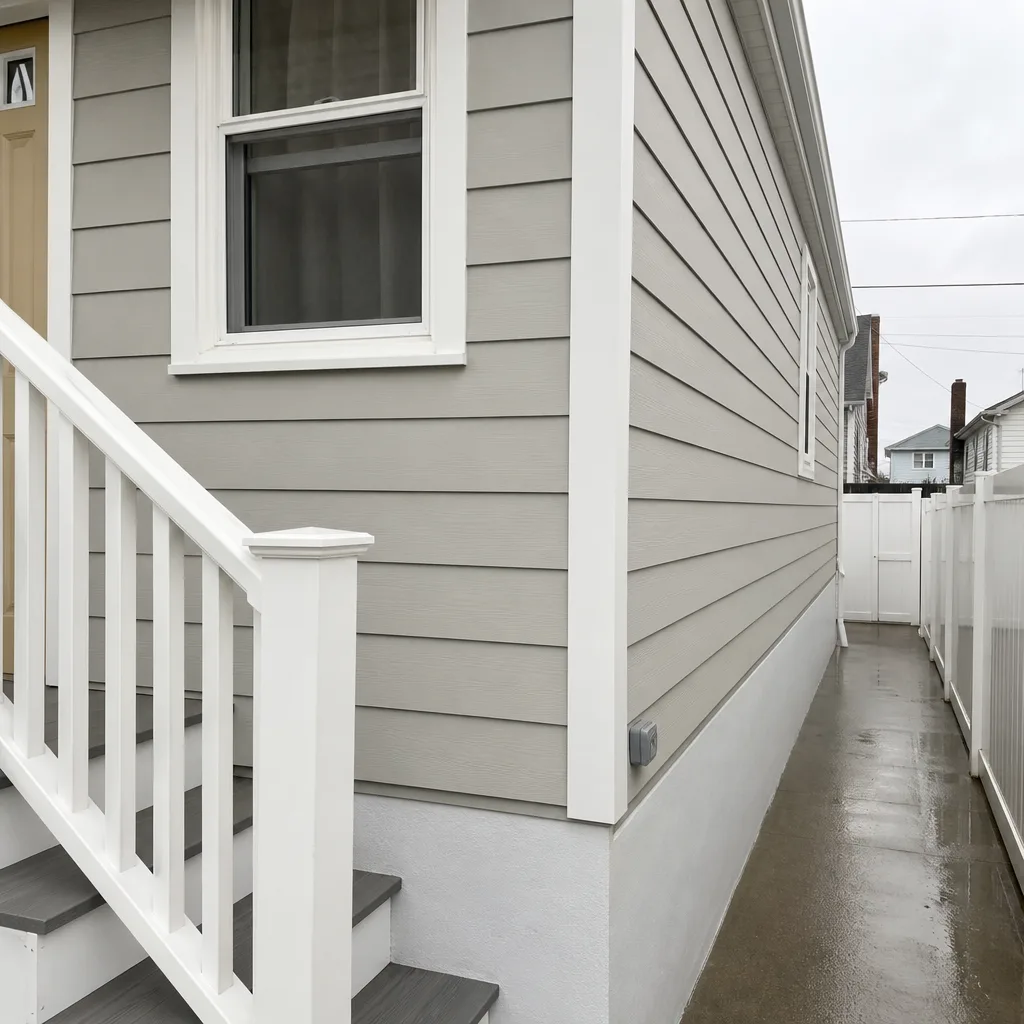 After
After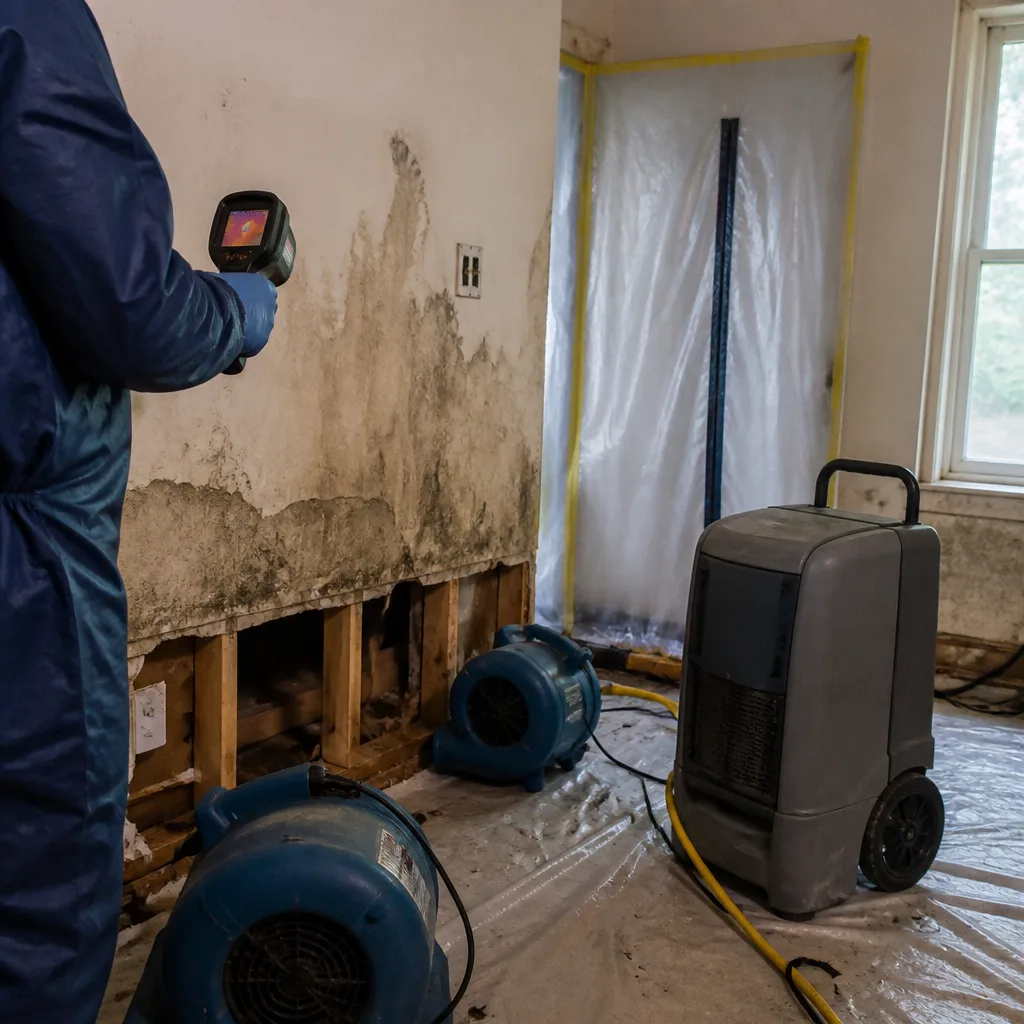 Before
 After
After24/7 Emergency Mold Remediation in Howard Beach
Mold remediation in Howard Beach typically runs $1,800 to $6,500 for a contained removal on a single affected room, and $8,000 to $25,000+ when saltwater surge damage requires full gut-out of wall cavities. We answer the phone with a live dispatcher at (845) 773-8058 any hour, and a certified crew can be at your door inside 45 minutes for a free visual inspection. The first hour matters because mold colonies double roughly every 24 to 48 hours once active growth starts. In Howard Beach, the clock often started weeks ago when the surge water receded and salt stayed behind.
Understanding Mold Remediation Severity in Howard Beach Properties
Not every mold job is the same, and Howard Beach has a severity profile that inland Queens neighborhoods simply don’t. We classify mold work by the source and extent of water, not just the square footage of visible growth. A slow plumbing leak behind a bathroom wall is a Category 1 job: limited containment, targeted removal, usually done in a day. A nor’easter that pushed Jamaica Bay water through your foundation vents is Category 3: sewage-adjacent, salt-laden, and wicked deep into building materials that a moisture meter alone cannot clear.
Your home’s construction dictates the protocol. Most of Howard Beach’s housing stock is mid-century brick and frame on slabs or very low crawl spaces, built in the 1950s through 1970s, many just a few feet above the bay’s high-water mark. Those slabs sit directly on saturated soil after a flood event. The crawl spaces trap humidity. The original drywall from that era is gypsum with paper facing, which mold consumes readily. When you combine slab construction, salt-saturated framing, and paper-faced drywall, a passing moisture reading on the surface tells you almost nothing about what’s happening inside the wall cavity.
Why Howard Beach Property Owners Choose Floodline Restoration Co.
- 45-minute response commitment to Howard Beach. Our crews stage locally and know Cross Bay Boulevard, 84th Street, and the 11414 side streets without a map. We’re on site fast because we’re already close.
- A live person answers, 24 hours a day, seven days a week. Not a recording. Not a call center that patches you to a third party. A Floodline dispatcher picks up at 2 a.m. and starts a crew moving toward your house.
- IICRC-certified remediation crews. Our technicians hold IICRC AMRT and WRT certifications, so the containment, air scrubbing, and clearance testing follow the standard your insurer expects.
- Free visual inspection with a written scope. We walk the affected areas, check moisture with thermal imaging and hygrometers, and hand you a line-item scope of work before any demolition starts.
- Direct insurance billing. We bill your carrier directly and handle adjuster communication, so you’re not playing messenger between us and the insurance company.
- One team from first cut to final paint. The same Floodline crew that sets containment handles the drying, the rebuild, and the clearance testing. No mid-job handoff to a subcontractor you’ve never met.
Our Mold Remediation Process
Inspection & Assessment
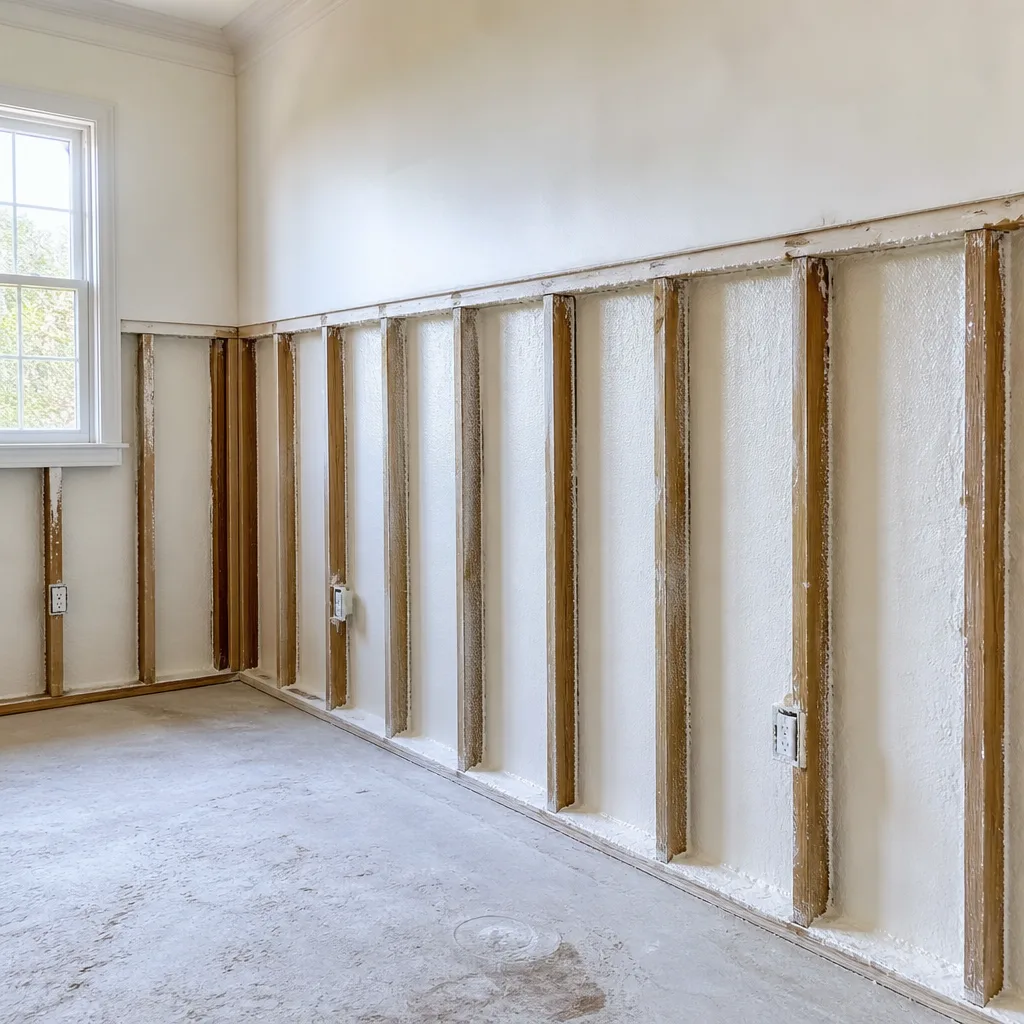
We map the moisture in every affected room using thermal imaging and penetrating moisture meters. In Howard Beach, this includes pulling baseboards and drilling small inspection holes into stud bays where saltwater intrusion is suspected, because surface readings after surge events are often misleading.
Containment Setup
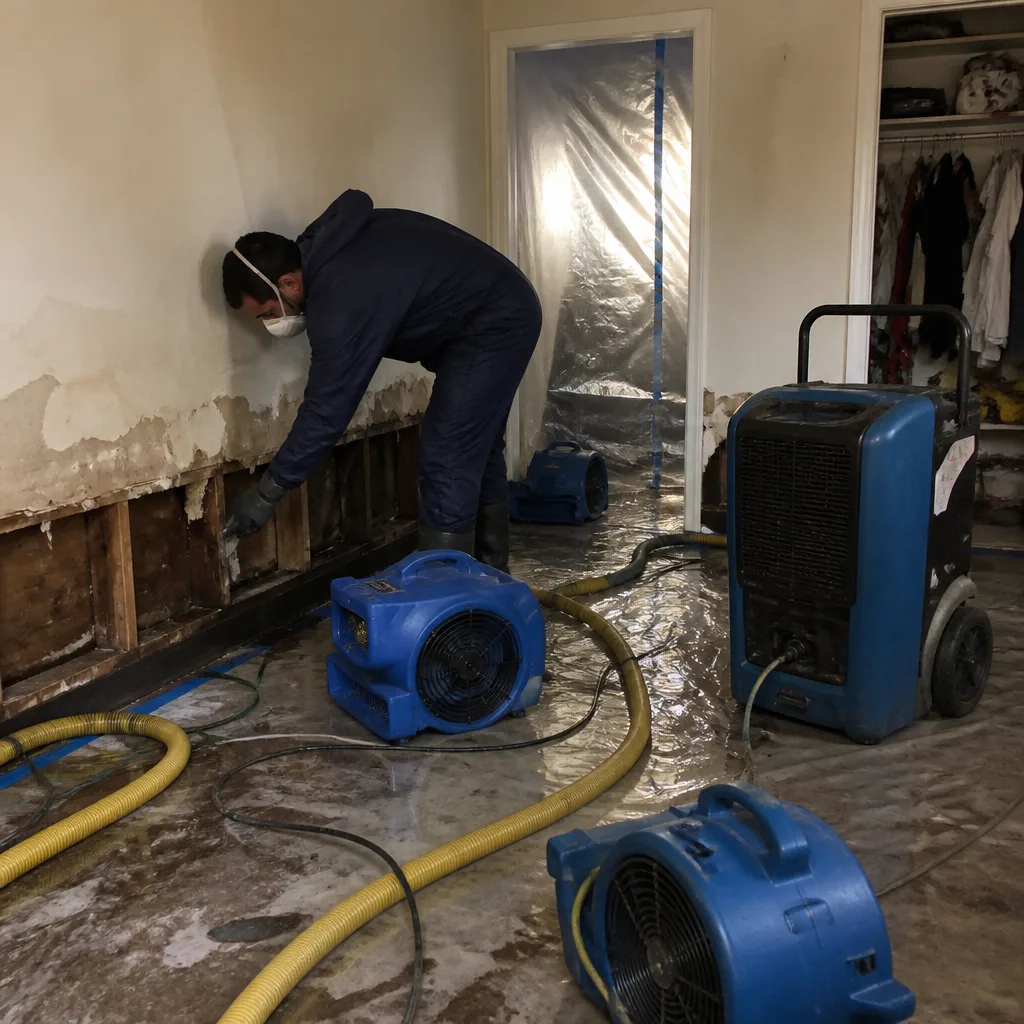
We seal the work area with 6-mil polyethylene sheeting and establish negative air pressure using HEPA-filtered air scrubbers. Containment keeps mold spores from migrating into unaffected rooms during removal.
Source Removal & Controlled Demolition
Affected drywall, insulation, and baseboards come out in sealed bags. In homes with salt-saturated framing, this step goes further than typical inland jobs: we expose every stud bay that reads elevated so the salt treatment can reach the structure itself.
Salt-Flush Antimicrobial Treatment
This is the Howard Beach-specific step that generic franchises skip. We flush exposed framing with an antimicrobial solution designed to dissolve and remove hygroscopic salt deposits. Without it, salt crystals reabsorb humidity from the air and restart mold within weeks.
Drying & Dehumidification
We run injected drying into wall cavities and place XPOWER air movers with commercial dehumidifiers throughout the containment zone. Daily moisture readings are logged and shared with you and your insurer until the dry standard is met, not just the surface standard.
Reconstruction & Clearance
We rebuild what we removed, then run post-remediation air sampling. You get a written clearance report and our 90-Day Done Right Promise in hand before we walk off the property.
Need Emergency Mold Remediation in Howard Beach Now?
Crews minutes away, answering live 24 hours a day. The sooner we start, the less it costs.
Working With Your Insurance Company
Most Howard Beach mold claims trace back to a covered water event, and the way we document from hour one determines whether your carrier approves the full scope or nickels-and-dimes the settlement. We photograph every room before demolition starts, log moisture readings daily, and write estimates using the same line-item software your adjuster uses. When your carrier sends an independent adjuster, we walk the job together and point out the salt intrusion evidence in the stud bays. You don’t sit on hold with your insurer; we handle that. You get a copy of everything we send them.
What We Provide Your Insurer
- Thorough documentation of the loss
- Photos of all damage, room by room
- Moisture readings and drying logs
- A detailed, line-item scope of work
- Direct coordination with your carrier
Built for Howard Beach’s Loss Calendar
Mold in Howard Beach is not a summer-only problem, and it’s rarely caused by the same thing twice in a row. Late summer and early fall bring hurricane season. A single landfalling storm that pushes Jamaica Bay over its banks saturates dozens of slab foundations in a single night. Winter nor’easters are worse for the low-lying blocks: the surge arrives when nobody is thinking about mold, and the cold air slows evaporation, so saltwater sits in wall cavities for weeks. Spring’s thaw and heavy rain find every crack in a 1960s foundation that hasn’t moved in fifty years.
The pattern we see on Cross Bay Boulevard and the side streets off 84th is always the same. The flood recedes, the homeowner runs fans for a few days, the surface feels dry, and six weeks later the baseboards smell like a wet basement. In an AE flood zone, fans are not remediation. We built our Howard Beach protocols because the local loss calendar demands them.
Mold Remediation Across Howard Beach’s Neighborhoods
Howard Beach is small geographically, roughly a square mile and a half inside ZIP code 11414, but the building stock changes block to block and so does the mold profile. Old Howard Beach, the section west of Cross Bay Boulevard around 84th and 85th Streets, holds some of the oldest homes in the neighborhood, many dating to the 1930s with original brick exteriors and crawl spaces that were never designed for modern flood elevations. Those crawl spaces run salt-saturated after every significant surge. Hamilton Beach, down near the water off 104th Street, floods earlier and more often than anywhere else in the zip code, and the homes there tend to be frame construction with lower floor elevations, which means we often deal with full-height wall cavity intrusion rather than just baseboard-level wicking.
Lindenwood, in the northeast corner off 153rd Avenue, has a large concentration of brick ranches and two-family homes built in the 1960s on slab foundations. Slab homes are the quiet challenge here: there’s no crawl space to inspect, so water travels horizontally under the flooring and into wall bases, and mold grows unseen under tile and hardwood for weeks before anyone notices. Rockwood Park sits between Cross Bay and the Belt Parkway, and the homes there see the same salt air exposure, with HVAC registers and duct runs corroding faster than inland Queens. We route our crews down Cross Bay Boulevard as the spine, then branch west toward 84th, east toward Lindenwood, or south toward Hamilton Beach depending on the call. That local routing is why our 45-minute response holds for the whole neighborhood.
Specialized Mold Remediation Services We Offer in Howard Beach
Mold Inspection & Testing
Before we recommend demolition, we need to know what we’re dealing with. We run visual inspections with thermal imaging, take air and surface samples when needed, and send them to a third-party lab for speciation. In Howard Beach, we specifically test for Aspergillus and Penicillium, the two genera we most often see in salt-damaged wall cavities, because they behave differently and require different clearance protocols.
Mold Removal
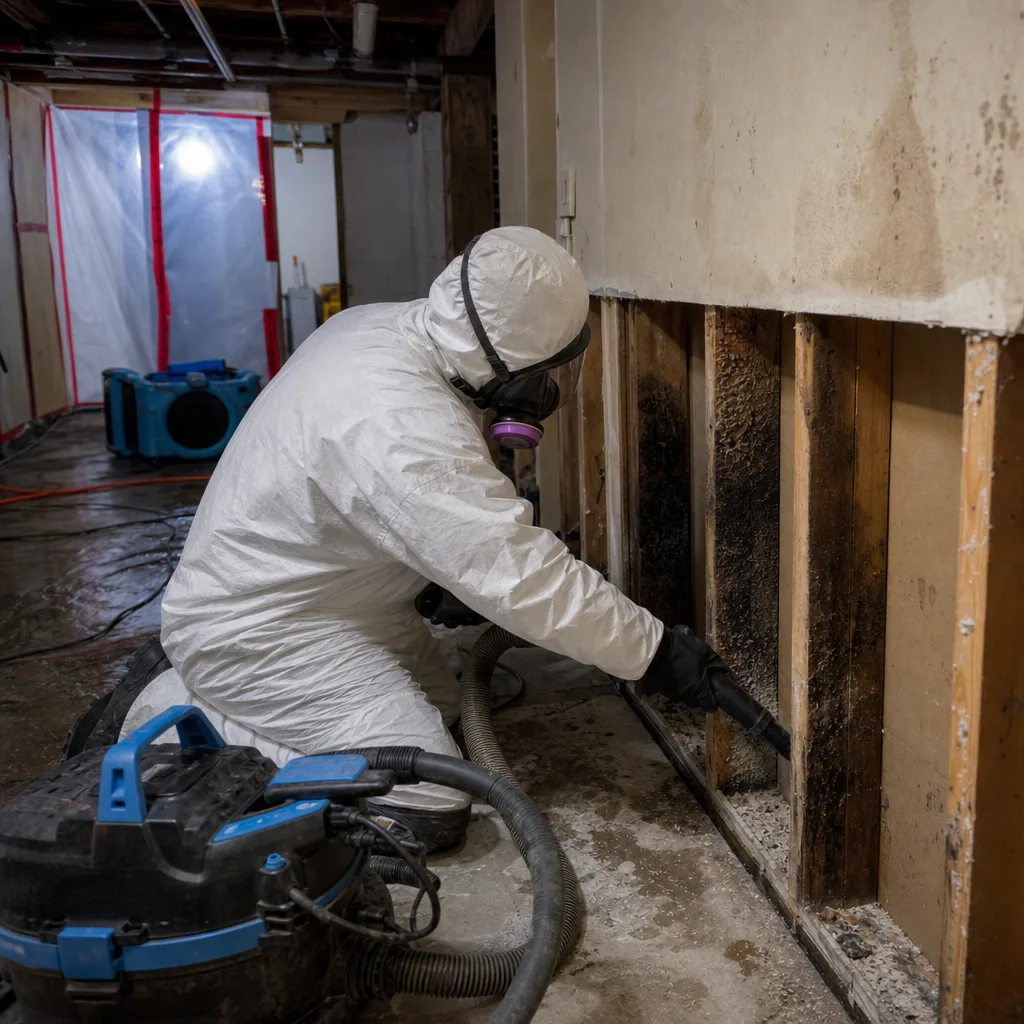
Full mold removal in Howard Beach usually means controlled demolition under containment, not spraying a chemical over visible growth. We remove contaminated drywall, insulation, and baseboards, bag everything under negative air pressure, and dispose of it through approved waste channels. The removal stops when we hit clean substrate, which after a surge event often means opening more wall than the homeowner expected.
Black Mold Remediation
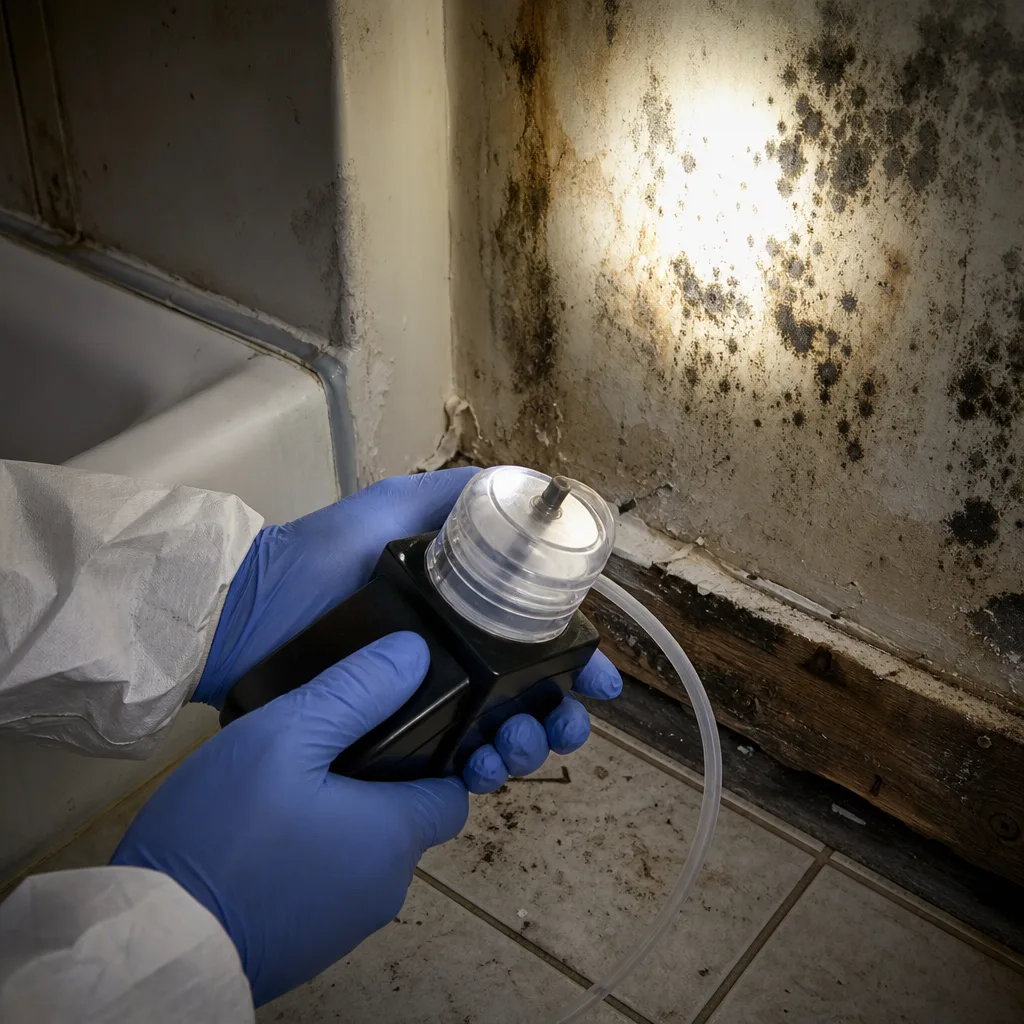
Stachybotrys chartarum, what people call black mold, shows up in Howard Beach homes that have had prolonged moisture after flood events, typically in dark, low-airflow spaces like crawl spaces, behind baseboards, and under slab flooring. We treat black mold jobs with higher containment standards, full-face respiratory protection, and HEPA air scrubbing throughout the process. Post-remediation air sampling is always part of the scope.
Air Quality Restoration
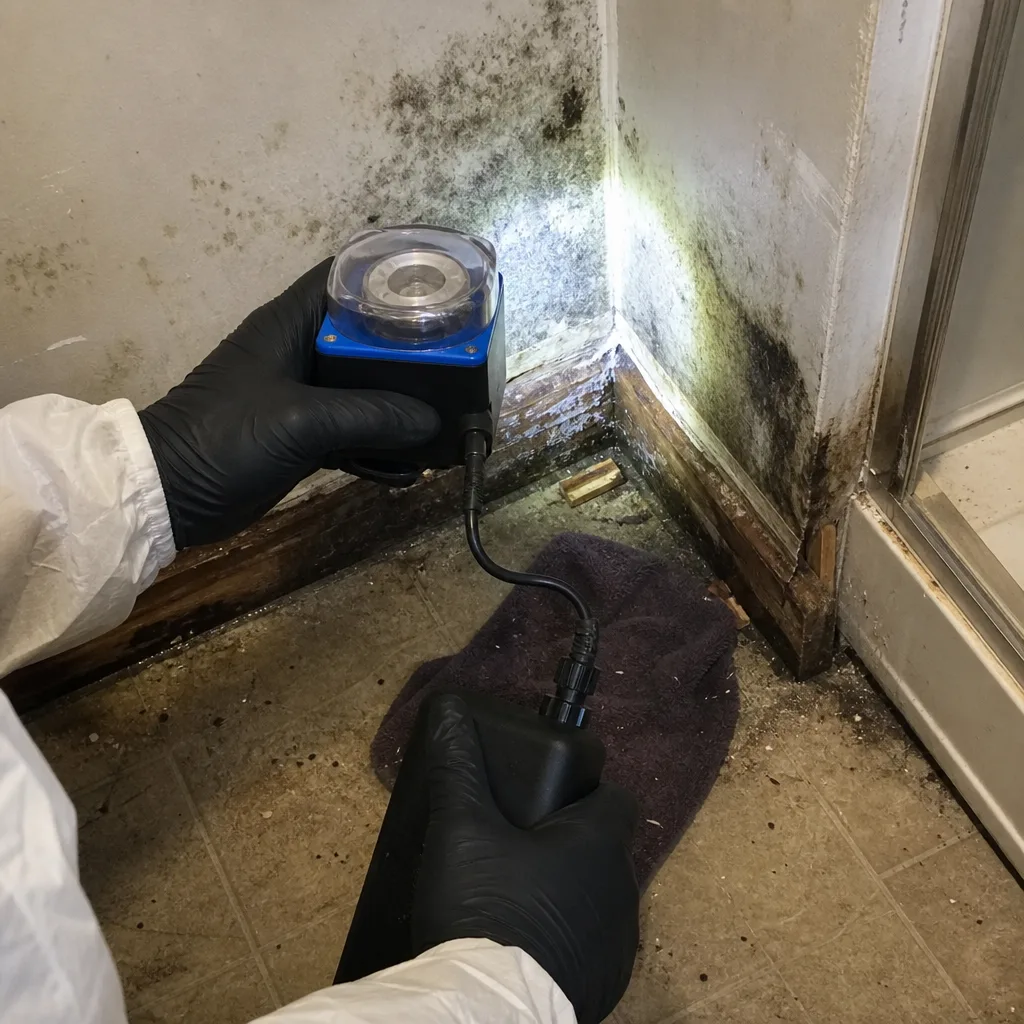
Mold spores travel. Even after removal, the air inside a Howard Beach home can hold elevated spore counts that settle into HVAC ducts and re-contaminate cleaned rooms. We run HEPA air scrubbers during remediation, then clean duct runs and replace affected filters. When the job finishes, we run clearance air sampling so you have a written number showing what changed.
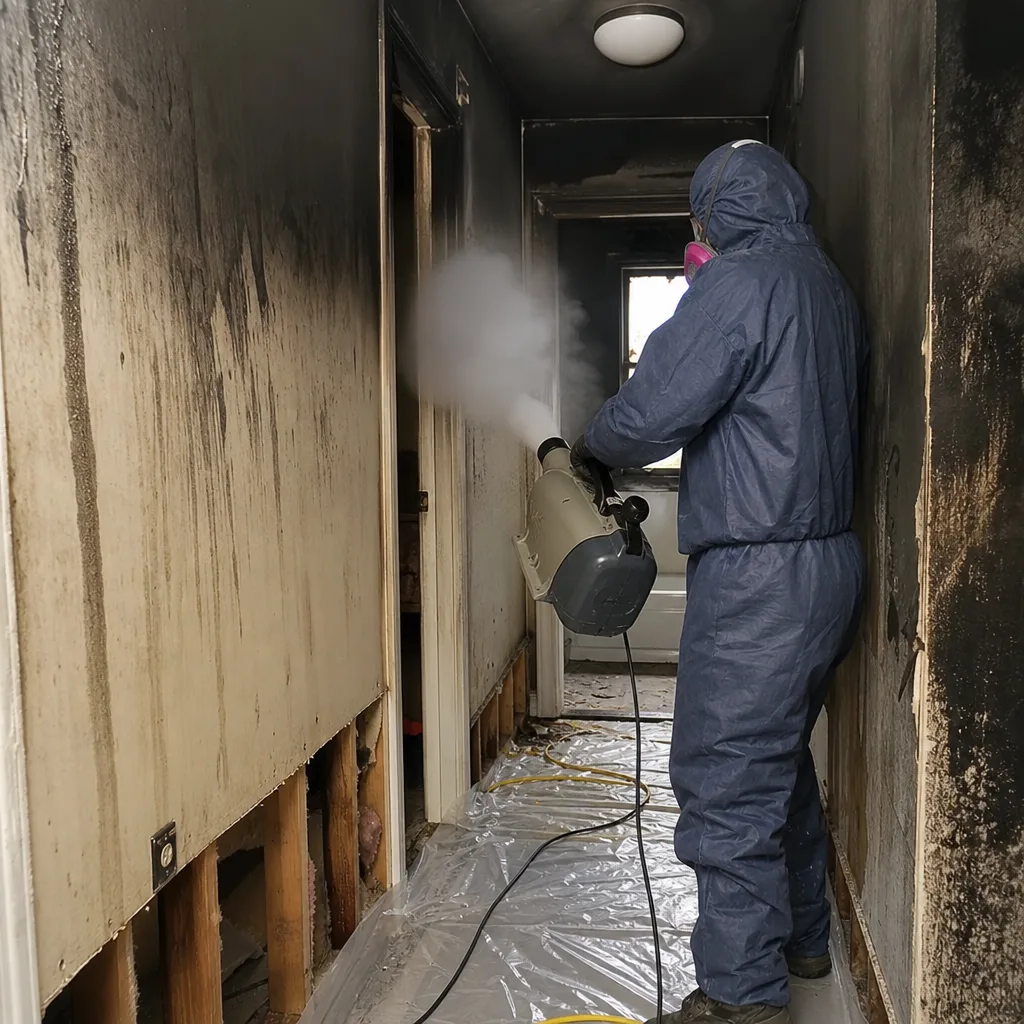
Crawl Space Treatment
Howard Beach crawl spaces are the repeat offenders. After saltwater intrusion, we treat the framing, then install or repair vapor barriers and, where the floor plan allows, add sealed crawl space dehumidification. Skipping the vapor barrier after a salt-flush means you’ll be calling us again after the next nor’easter. We’d rather do it once.
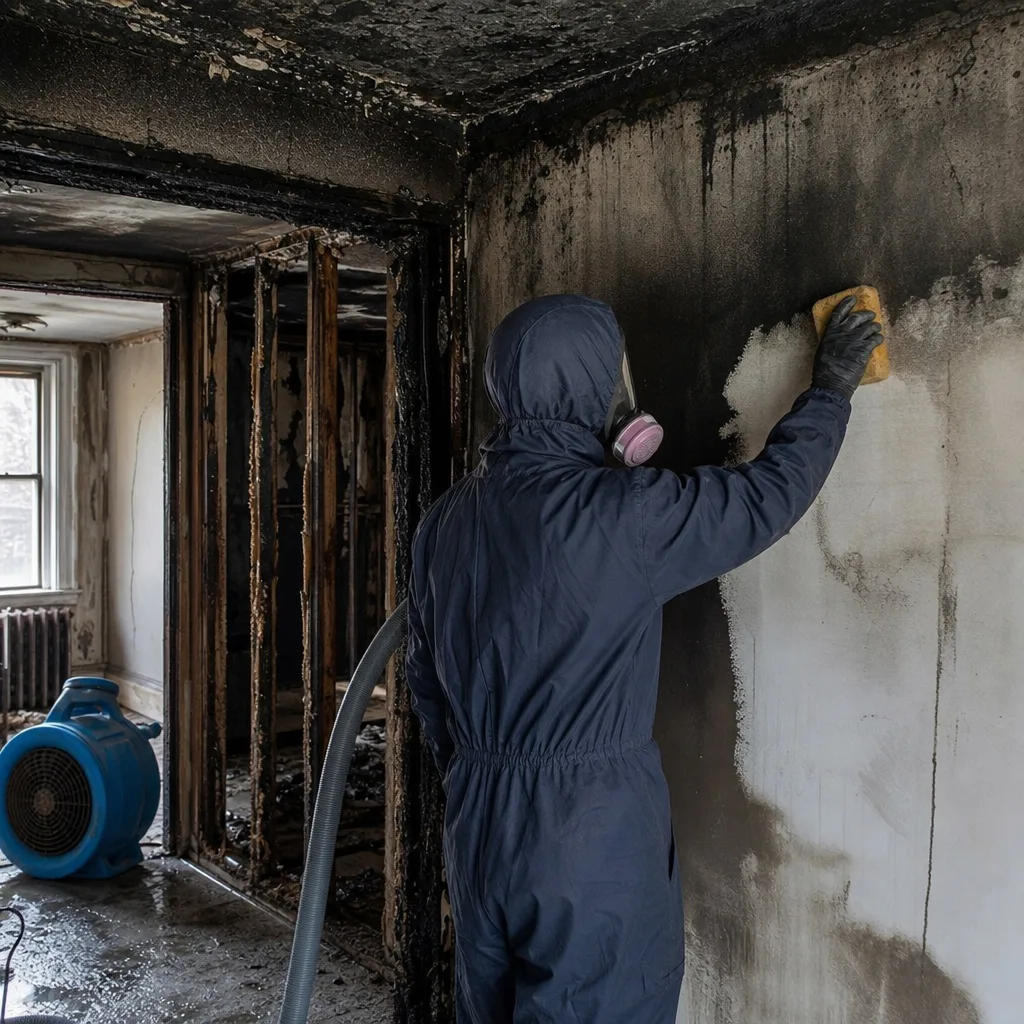
Moisture & Humidity Control
Persistent bay humidity and salt air mean Howard Beach homes run higher interior moisture than inland Queens even without a flood. We evaluate whole-house humidity, recommend dehumidification where readings support it, and address condensation points on ductwork and plumbing that feed slow, invisible mold growth. This is prevention, but it’s prevention built for a coastal zip code.
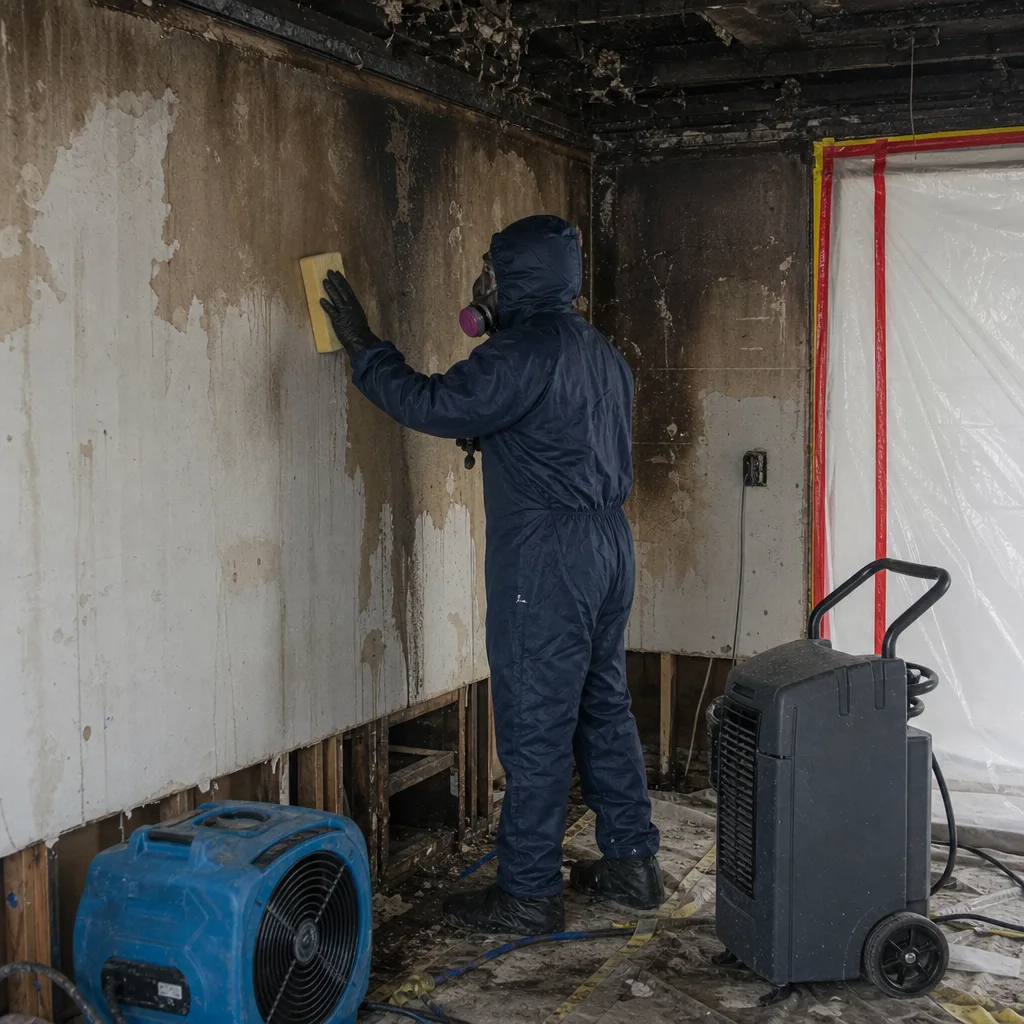
What happens when you call
- 1
A real person answersNo phone trees - you reach a local pro.
- 2
You get an upfront price rangeHonest numbers before anyone is dispatched.
- 3
A background-checked tech heads outLicensed & insured, dispatched right away.
- 4
You approve before work beginsNothing starts until you say go.
Mold Remediation Costs in Howard Beach, NY
Expect to pay $1,800 to $3,500 for targeted mold removal in a single bathroom or closet with light to moderate growth and no structural salt intrusion. A single bedroom with category 1 water damage and moderate mold runs $2,500 to $5,500, including containment, removal, drying, and basic rebuild of the drywall. A crawl space treatment after a nor’easter, with salt-flush antimicrobial treatment and vapor barrier replacement, typically lands between $4,000 and $9,000 depending on the square footage and whether the barrier is original.
Full gut-out remediation after a Jamaica Bay surge event runs higher: $8,000 to $18,000 for a first-floor perimeter in a typical 1960s brick ranch, and $15,000 to $30,000+ when the surge reached three feet or more inside and multiple rooms are involved. What moves the price most in Howard Beach is the salt factor. A standard freshwater drying scope can be half the cost of a proper salt-flush and gut-out protocol, and we won’t quote the cheaper path because it fails here. Insurance often covers surge-related mold when the water event itself was a covered peril, and our direct billing means you aren’t fronting the full amount while the claim processes. The free inspection gets you a written scope with real numbers before anyone swings a hammer.
We Also Serve Cities Near Howard Beach
Floodline Restoration Co. runs crews throughout southern Queens. We serve Mold Remediation in Howard Beach plus South Ozone Park, Springfield Gardens, Rockaway Park, and Rosedale, with the same 24-hour live dispatch and 45-minute response commitment across the whole service area.
Serving Howard Beach, NY - Our Local Coverage Area
We’re based in the Howard Beach area and know this community well. Use the map below to see our service coverage - if you’re nearby, we can almost certainly help.
Howard Beach Mold Remediation Questions, Answered
How is mold remediation different in Howard Beach after a Jamaica Bay storm surge compared to a burst pipe?
Saltwater surge carries dissolved sodium chloride that soaks into framing, and when the water evaporates, the salt stays behind. Those salt crystals are hygroscopic, meaning they pull moisture from the air back into the wood, which restarts mold growth even after the wall reads dry. A burst pipe is freshwater; it dries with conventional equipment and stays dry. A surge job requires salt-flush antimicrobial treatment on every exposed stud bay, or the mold returns within weeks.
Why doesn’t my moisture meter reading clear my Howard Beach wall cavity after a flood?
Moisture meters measure free water, not the salt that’s already bonded to your framing. A stud bay can read 9% on the meter, a passing number by inland standards, while holding enough salt to pull humidity back into the wood as soon as the drying equipment leaves. That’s why we use penetrating meters and core samples, and why clearance in Howard Beach should include an inspection for visible salt efflorescence on the framing.
Do older Howard Beach homes on slabs or low crawl spaces need different mold remediation than newer elevated homes?
Yes. Slab homes trap water underneath flooring where you can’t see it, so we inspect for mold under tile, hardwood, and carpet by drilling small test holes and running borescope cameras into the affected bays. Low crawl spaces hold humidity against the joists, which is why we recommend sealed vapor barriers and dehumidification after treatment. Elevated homes, including those raised under Build It Back, often escape the structural saturation but still carry mold risk in the lower enclosure and mechanical areas.
Can I just dry out my Howard Beach crawl space myself after a nor’easter to prevent mold?
You can run fans, but fans won’t remove salt from the framing, and salt is what restarts the mold. If the water was bay surge, not rainwater, the proper treatment involves containment, salt-flush antimicrobial application, and commercial drying equipment. Attempting to dry a salt-saturated crawl space with household fans typically leaves the stud bays wet enough to support mold inside the wall within four to six weeks.
What does a full mold remediation scope of work look like for a typical Howard Beach brick ranch?
For a 1960s brick ranch with surge water up to six inches inside, the scope usually includes containment of the affected first-floor rooms, removal of drywall up to four feet around the perimeter, salt-flush treatment of exposed stud bays and base plates, injected drying into wall cavities, antimicrobial application, and rebuild of drywall, baseboards, and any affected insulation. The total runs roughly $10,000 to $18,000 depending on the floor plan, and insurance often covers the majority when the surge was a covered loss.
How fast can someone actually get to my Howard Beach home for mold?
Within 45 minutes for emergency calls, day or night. We stage crews locally in southern Queens, so we’re not driving from the Bronx. A live dispatcher at (845) 773-8058 sends the nearest certified team, and the first visual inspection is free.
Will insurance cover mold remediation in Howard Beach?
Often, when the mold traces to a covered water event like a burst pipe during the January deep freeze or a nor’easter surge that flooded your first floor. We document everything from the first visit, send photos and drying logs directly to your adjuster, and bill the carrier directly. We’ll tell you honestly if a particular mold source is not covered, so you can decide what’s worth out-of-pocket.
What should I do in the first 30 minutes after I find mold in my Howard Beach home?
Stop running fans if there’s any chance the source was saltwater, because moving air spreads spores through rooms that aren’t yet affected. Close the door to the area. If you see active water, shut off electricity to that room at the breaker. Then call (845) 773-8058. We’ll walk you through what to do while the crew heads your way.
Written by Curt Bowman, Owner at Floodline Restoration Co., serving Howard Beach, NY.