
Water Damage Restoration Cost Guide: What Far Rockaway Homeowners Pay in 2026
Most Far Rockaway water damage jobs we price land between $2,800 and $9,400 in 2026, with the spread driven by how long the water sat, whether it was saltwater or sewage, and what got wet behind the walls. The national average you see quoted online misses the fact that our housing stock runs to pre-1980 plaster lath and our biggest storms push seawater through crawl spaces. If you’d rather not parse the rest of this guide, call (845) 773-8058 and we’ll walk the property with you for free.
The Floodline Restoration Co. home team has worked this shoreline since 2010, and the pricing picture here doesn’t look like inland Queens or Nassau. Here’s what actually determines the bill.
Key Takeaways
- Category 1 (clean water) restoration in Far Rockaway: $1,900 to $4,600 typical
- Category 3 (storm surge/sewage) restoration: $4,200 to $12,000+ depending on square footage and materials
- Saltwater intrusion adds 15-30% over freshwater damage because drywall and insulation usually can’t be saved
- Direct insurance billing reduces out-of-pocket exposure to your deductible in most cases
- The biggest hidden cost is delay: water that sits 48+ hours doubles the drying bill and often triggers mold remediation
Why Far Rockaway Prices Don’t Match the National Averages
The $1,300-$5,500 range you see in national articles assumes a suburban house with a burst supply line in the kitchen or a water heater that failed. Far Rockaway homes in the 30s, 40s, and 50s present different conditions. You’re often looking at an attached brick row house on a barrier island, a crawl space that hasn’t been dry since the Truman administration, and walls that are plaster over wood lath rather than gypsum board. That changes both the labor and the material math.
We pulled a job out of a two-story over in Bayswater last spring where the homeowner had called three different national franchise estimators before us. Two of them quoted the national per-square-foot book rate without looking behind the baseboard. The plaster had wicked water eighteen inches up the wall. Once we opened it, the lath was saturated and the sill plate needed replacement. The real cost came in about 40% higher than the low book bid, and the homeowner had already spent three weeks arguing with a carrier about why the adjuster’s number didn’t match reality.
The lesson: Far Rockaway pricing has to be built from the house, not from a national chart. If someone gives you a per-square-foot number over the phone without asking whether you have plaster, a crawl space, or a history of tidal flooding, they’re not estimating your job.
Cost by Damage Category: Clean Water vs. Storm Surge
Every water loss gets classified Category 1, 2, or 3 under IICRC standards. The category is a legally meaningful label because it dictates what gets torn out and what can be dried in place. In Far Rockaway, we see a clear split: Category 1 from plumbing failures and appliance leaks inside the house, and Category 3 from coastal flooding and combined sewer overflow events during heavy rain.
Category 1: Clean water from a supply line, water heater, or tub overflow
- Extraction and 3-5 days of structural drying: $1,900-$2,800 for a typical basement or single-room loss
- Baseboard removal and drywall flood cuts (2 ft): $400-$700 per room
- Antimicrobial application and HEPA cleaning: $250-$450
- Total typical range: $2,500-$4,600
Category 1 water in a room that’s caught within hours is usually the best-case scenario. The Dri-Eaz and Phoenix equipment we run pulls moisture out of framing before rot sets in. Most of these jobs complete in a single visit for extraction plus daily monitoring.
Category 3: Storm surge, tidal flooding, or sewage backup
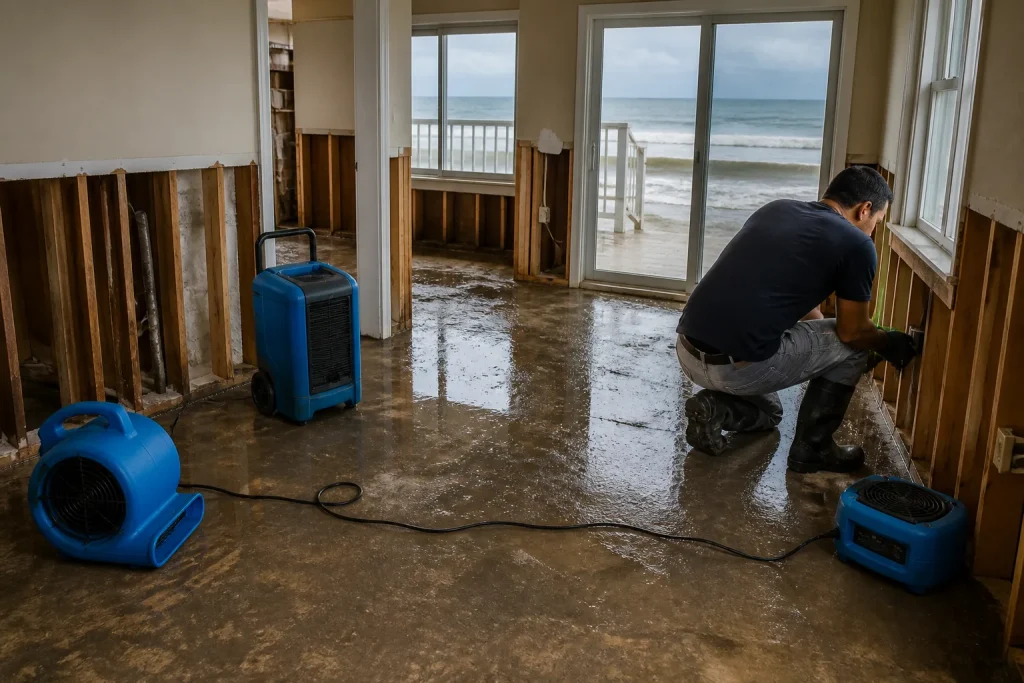
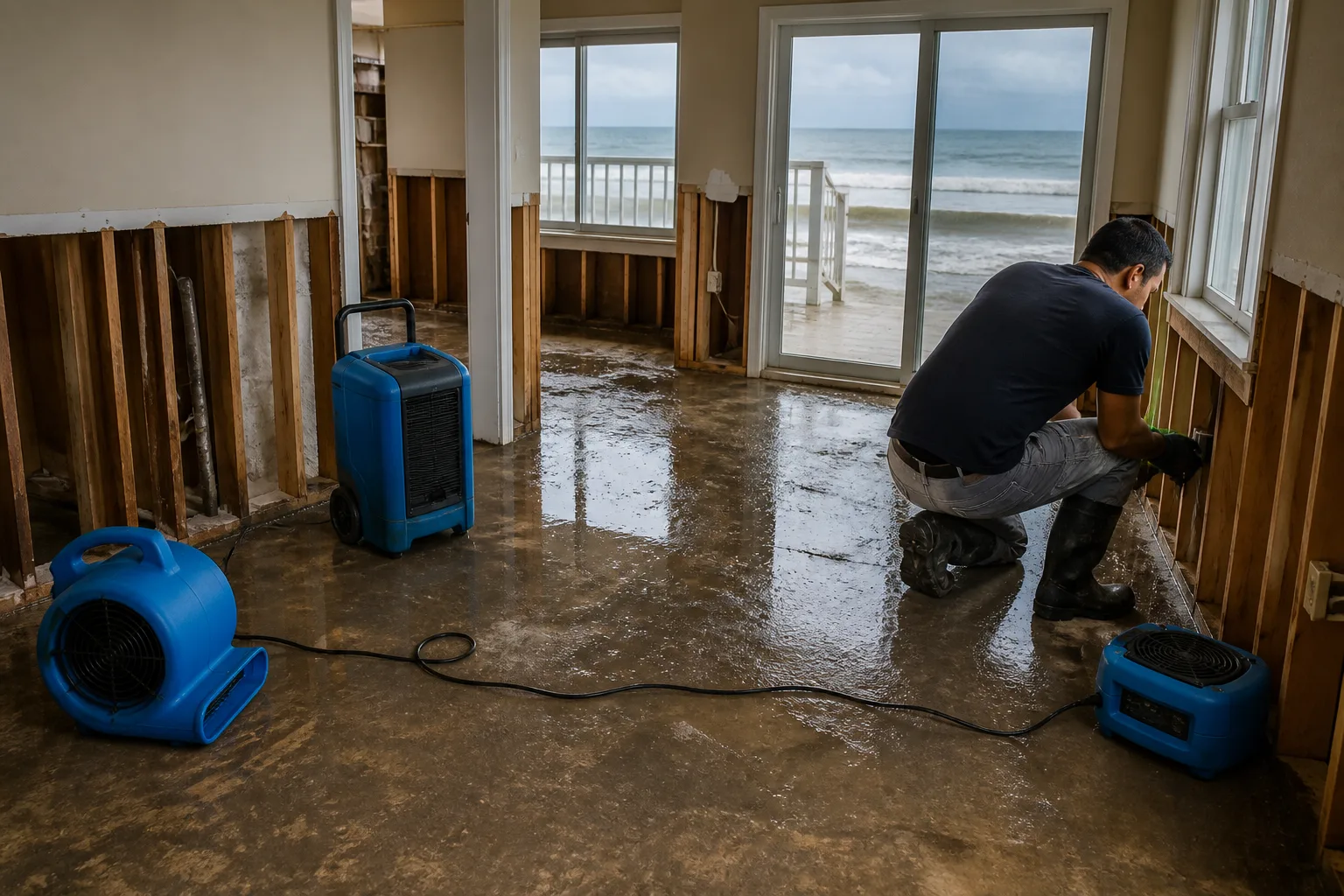
This is the Far Rockaway signature. When a nor’easter pushes water from Norton Basin or Jamaica Bay into crawl spaces and basement stairwells, the water is carrying salt, fuel residue, and often raw sewage from combined sewer overflows. Nothing about that water is clean.
- Contaminated material removal (drywall, insulation, carpet, pad): $2,800-$5,500 for a finished basement
- Structural drying of framing and subfloor: $1,800-$3,400, often 6-10 days with Injectidry drying systems on hardwoods
- Antimicrobial and sanitization treatment: $600-$1,200
- Total typical range: $4,200-$12,000 before any rebuild
One thing outsiders miss: saltwater is a different animal than freshwater. It doesn’t just wet the material. It leaves chlorides behind that keep pulling moisture out of the air and eating into metal fasteners, nails, and electrical boxes. Wood that gets soaked in saltwater and dried improperly will rot from the inside for years after the job is “done.” We replace more sill plates and subfloor sections in Far Rockaway than any restoration crew working inland sees in a decade.
What Insurers Actually Pay vs. What Gets Disputed
If you want to read an estimate intelligently, it helps to understand how carriers think about line items. They don’t see “water damage restoration” as one bill. They see categories, and each category has different coverage triggers and different adjuster skepticism levels.
Line items that usually get approved without much friction
- Emergency extraction: The faster water comes out, the less the carrier pays overall. Extractions are almost never contested.
- Structural drying days: Adjusters accept standard drying logs when they show daily moisture readings trending down. A moisture log we hand you and the carrier is your evidence.
- Category 3 tear-out: Contaminated material removal is the cheapest way to prevent a much larger mold claim. Carriers know this.
Line items that routinely get challenged
- Number of drying days: If the log shows flat readings for three days, the adjuster will ask why the equipment stayed in place. A good restoration company can justify every day with data.
- Antimicrobial treatment: Carriers sometimes call it “overkill” on Category 1 losses. On Category 3 in Far Rockaway, it’s standard and defensible.
- Structural rebuild scope: This is where adjusters most often underpay. If the repair estimate says “patch drywall” but the plaster lath behind it is gone, you need a company that documents the condition and pushes back with photos.
Floodline Restoration Co. bills carriers directly and handles the adjuster conversation. That changes the dynamic. The adjuster isn’t arguing with a homeowner who’s trying to remember what their policy says. They’re going back and forth with a restoration company that knows what the dry standard is and has the daily readings to prove it. You stay out of the middle. Your out-of-pocket exposure is typically your deductible, and we make that clear before we start.
The Hidden Saltwater Multiplier on Far Rockaway Homes Built Before 1980
Most of Far Rockaway’s housing stock predates modern moisture management. Homes built before 1980 used different materials than what goes into new construction today:
- Plaster over wood lath: Plaster is porous and holds water far longer than drywall. Lath is essentially thin wood strips nailed to the framing. Once both are wet, they must be removed. There’s no “drying in place” with soaked lath. Rebuild costs run higher because the plaster is replaced with modern drywall and the wall profile may change.
- Dimensional lumber subfloor: Older Far Rockaway homes often have solid 1x planks rather than plywood. Saltwater gets into the tongues and grooves, causes cupping, and can’t be reliably dried. Replacement costs more than sheet goods.
- Knob-and-tube or cloth-wrapped wiring remnants: Saltwater intrusion around old electrical is a fire hazard as well as a shock hazard. The remediation scope may include a licensed electrician before drying equipment is safe to run.
- Brick and block foundation walls: Far Rockaway basements and crawl spaces built with masonry soak up water through capillary action. The moisture map on day one will look worse than the visible standing water suggests.
This is why a generic national estimate fails here. A crew that doesn’t know Far Rockaway housing won’t budget for lath removal, salt contamination of fasteners, or the extra week of drying that masonry requires. A crew that does will price it accurately and still finish under what it costs when the first crew has to stop mid-job and call in someone who knows what they’re seeing.
We’ve also seen what happens when saltwater-damaged drywall is “dried” rather than removed. The paper face holds chlorides, the paint bubbles six months later, and the homeowner is doing mold remediation anyway. The cheapest bid on day one becomes the most expensive job on day three hundred.
Single Contractor vs. Split Contractor: What the Handoff Actually Costs
Most water damage jobs default to two or three contractors. Company A does extraction and drying. Company A then leaves. Homeowner calls a general contractor for rebuild. General contractor won’t touch it until a separate mold inspection clears it. Three companies, three mobilizations, three markups, and the homeowner acting as the project manager in between.
Here’s what that handoff costs in practice, on a typical Category 3 basement loss in Far Rockaway:
- Duplicate mobilization fees: $300-$800 per company per visit
- Mold inspection before rebuild: $350-$700
- Delay between drying and rebuild: 2-6 weeks while the homeowner gets bids and schedules. Meanwhile, the framing sits exposed. Moisture creeps back. Sometimes the rebuild estimate was written before the wood fully dried, and change orders stack up.
- Scope disputes: The drying company says they did their part. The rebuild contractor says the dry-out was incomplete. The homeowner is stuck mediating a technical argument they can’t resolve.
Floodline Restoration Co. runs extraction through rebuild with the same certified crew. The moisture map we build on day one determines the drying plan, and the same technicians take the daily readings until the structure meets the dry standard. Then the rebuild starts. No second mobilization. No handoff argument. No homeowner playing messenger between a mitigation crew and a remodeler who never met each other.
Does single-contractor always cost less? Not always on the line-item estimate. In some cases it’s comparable to the split model. Where it saves real money is in the delays, the change orders, and the disputes that never happen. You’re paying for a job that finishes in weeks, not a negotiation that drags into months.
How Direct Insurance Billing Affects Out-of-Pocket Exposure
“Direct insurance billing” gets used loosely in this industry. Here’s what it means when Floodline Restoration Co. says it: we submit the claim documentation, moisture logs, photos, and scope of work directly to the carrier, and the carrier pays us for the covered work. You’re not fronting the bill and waiting months for reimbursement.
In most cases, your out-of-pocket is the deductible stated on your policy. If the scope grows because we found something the adjuster didn’t, we document it, submit a supplement, and handle that conversation too. The photos are date-stamped. The readings are logged daily. The material receipts show exactly what got replaced and why.
Where the 90-Day Done Right Promise matters most is at the end of a claim. Carriers close claims when the work is done and the check is cut. If a problem shows up ninety days later, the carrier is often done with the file. Our guarantee, the Keystone Standard, says this: if it’s not done right, we make it right. In writing. No arguing. That isn’t a marketing line. It changes what the final settlement actually buys. You’re not getting a receipt and a prayer. You’re getting a written commitment that the dry-out and the rebuild will hold up. If something fails inside that window, the fix is on us, and the carrier doesn’t reopen anything.
If you’re in Far Rockaway and dealing with water right now, the first move is the phone call. A live person answers at (845) 773-8058 around the clock. We’ll discuss what you’re seeing, tell you honestly whether it’s urgent, and schedule a free assessment.
When to Call a Pro
Any water that has been sitting more than 24 hours is a job for professionals, no exceptions. Category 3 water, meaning anything from the street, the bay, or a sewage line, is a health hazard and a job for professionals immediately. Saltwater intrusion on a Far Rockaway pre-1980 home is a job for professionals who know what that means for lath, fasteners, and framing. If you’re not sure which category your damage falls into, call us and describe what happened. We’ll tell you straight whether you need a crew tonight or a dehumidifier and some patience.
Related Services in Far Rockaway
When water sits, mold follows. If you’re already seeing discoloration or smelling something that wasn’t there before, our Mold Remediation in Far Rockaway team handles the full scope, from air testing through removal and rebuild. Water losses that started as a kitchen fire or smoke event are a different kind of mess entirely; you can read about how we handle those on our Fire & Smoke Damage Restoration in Far Rockaway page. And for the full picture of what we do from first extraction to finished walls, see Water Damage Restoration in Far Rockaway.
What happens when you call
- 1
A real person answersNo phone trees - you reach a local pro.
- 2
You get an upfront price rangeHonest numbers before anyone is dispatched.
- 3
A background-checked tech heads outLicensed & insured, dispatched right away.
- 4
You approve before work beginsNothing starts until you say go.
The Bottom Line
Far Rockaway water damage restoration runs $2,800 to $9,400 in 2026 for most homes, with the category of water and the age of the house doing most of the heavy lifting on price. Clean water caught early is the cheap scenario. Storm surge in a 1940s attached home with plaster lath is the expensive one. Direct insurance billing keeps your cash outlay at the deductible in most covered losses. The fastest way to keep any job from getting worse is picking up the phone.
If you’re in Far Rockaway and need help, Floodline Restoration Co. offers free estimates. Call (845) 773-8058 and a live person answers. We’ll be there when we say.
Frequently Asked Questions
Most Far Rockaway water damage restoration jobs cost between $2,800 and $9,400 in 2026. Clean water losses from plumbing failures run $1,900 to $4,600. Storm surge or sewage losses in older Far Rockaway homes run $4,200 to $12,000 or more, driven by contaminated material removal, saltwater damage to plaster lath and framing, and longer drying times. Call (845) 773-8058 for a free assessment of your specific situation.
Homeowners insurance typically covers sudden and accidental water damage from things like burst pipes, appliance failures, and storm-driven water entering the home. Gradual leaks, groundwater seepage, and flood damage from rising bay water generally require separate flood insurance. What matters is how the damage is documented. Photos, daily moisture readings, and a written scope that matches the covered peril keep claims moving. Floodline Restoration Co. bills carriers directly and handles the adjuster conversation so you’re not stuck in the middle.
Floodline Restoration Co. has live dispatch around the clock. A person answers the phone at 2 a.m. and a crew is dispatched the same visit. In Far Rockaway, speed matters twice over: saltwater damage compounds quickly, and Category 3 contamination gets more dangerous the longer it sits. Call (845) 773-8058 and we’ll tell you honestly how urgent the situation is.
Yes. Saltwater leaves chloride residues in building materials that keep pulling moisture from the air and corrode metal fasteners, electrical boxes, and structural hardware. On Far Rockaway homes built before 1980, saltwater-soaked plaster lath, dimensional lumber subfloors, and brick foundation walls almost always require full removal and replacement rather than drying in place. Expect saltwater restoration to run 15-30% higher than comparable freshwater work.
If the water was clean and caught within hours, a cleaning plus targeted drying may be enough. If the water was from outside, from a sewer line, or sat more than 24 hours, full remediation is the only safe answer. Floodline Restoration Co. will tell you which situation you have and won’t sell you work you don’t need. That’s the square deal we’ve run on for 42 years.
Need Damage Restoration Help?
Call Floodline Restoration Co. - licensed & insured, available 24/7 in Far Rockaway.
(845) 773-8058