

Free visual inspection and a written scope of work before any mitigation begins - photos, moisture readings, and drying logs go in your claim file
The scope we write is the scope we bill. Anything new gets shown to you, in writing, before we touch it.
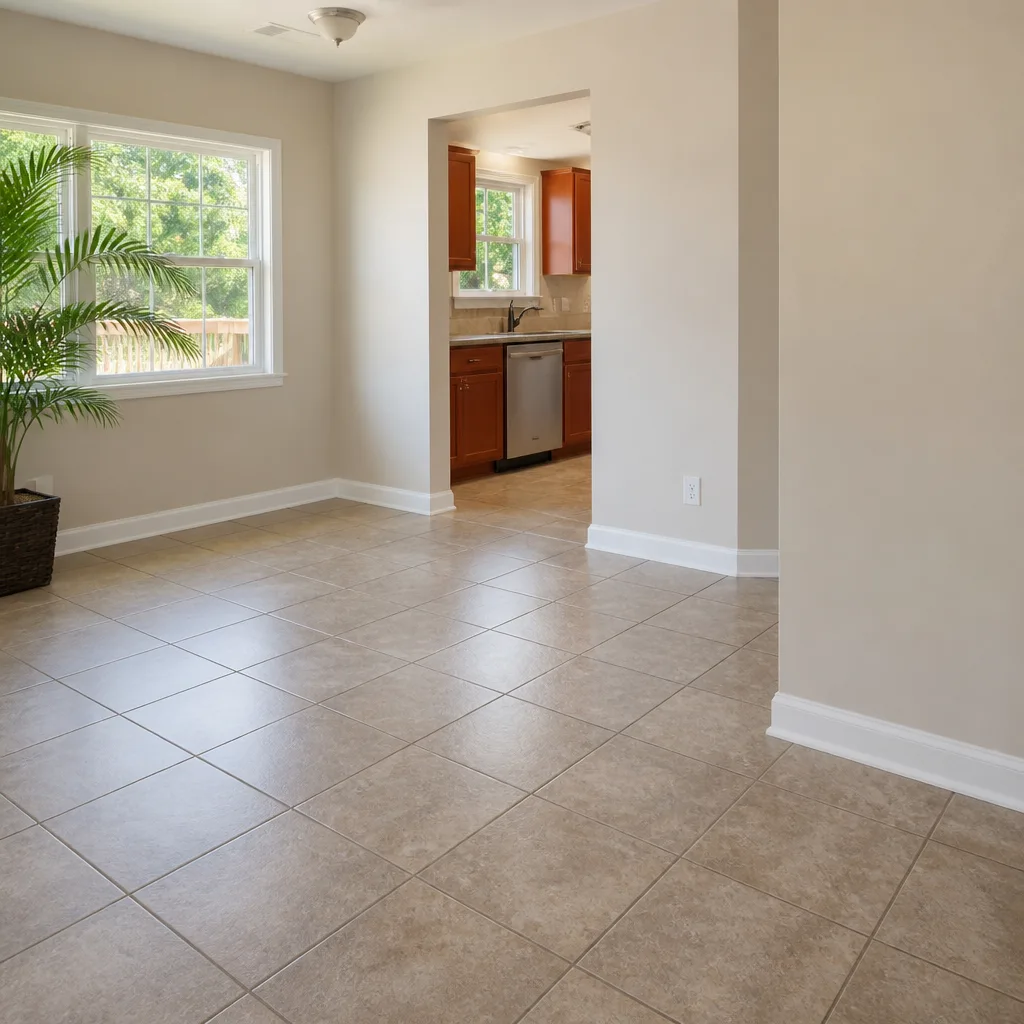
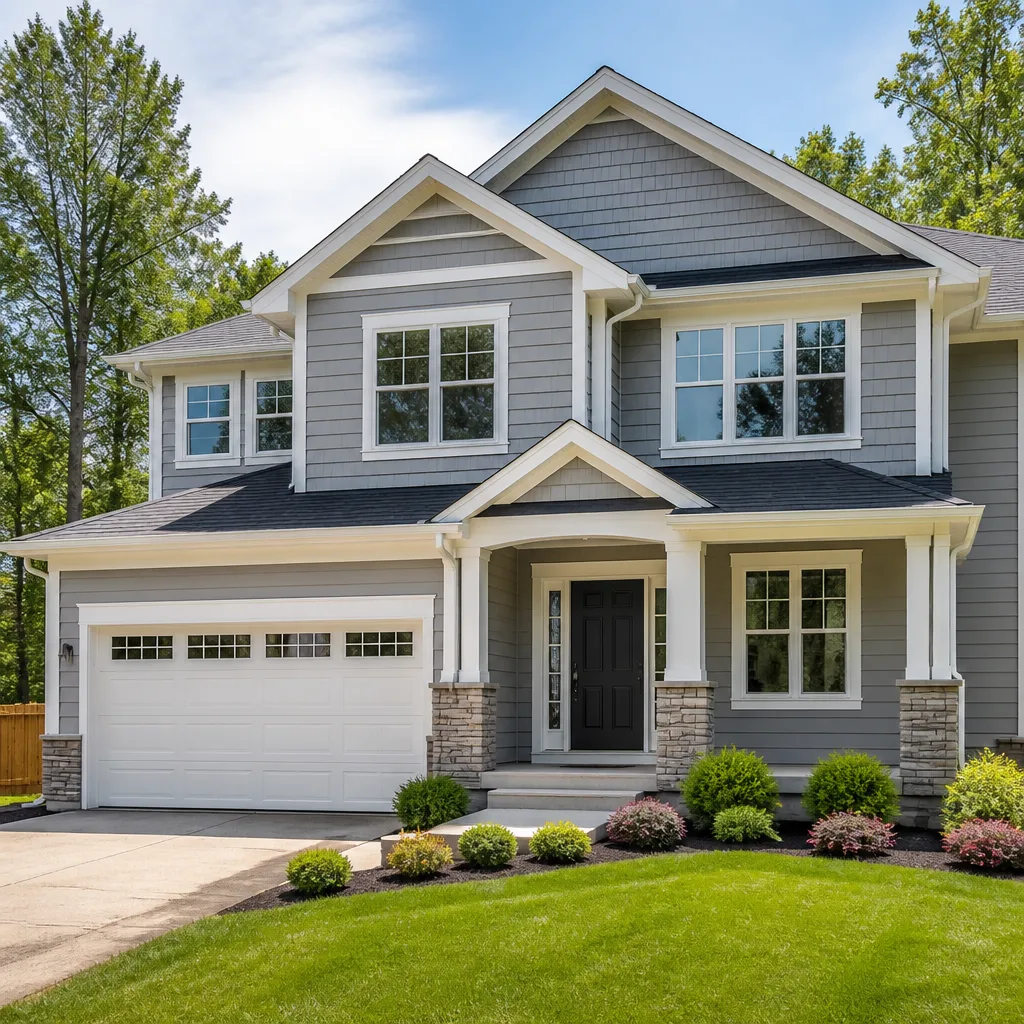
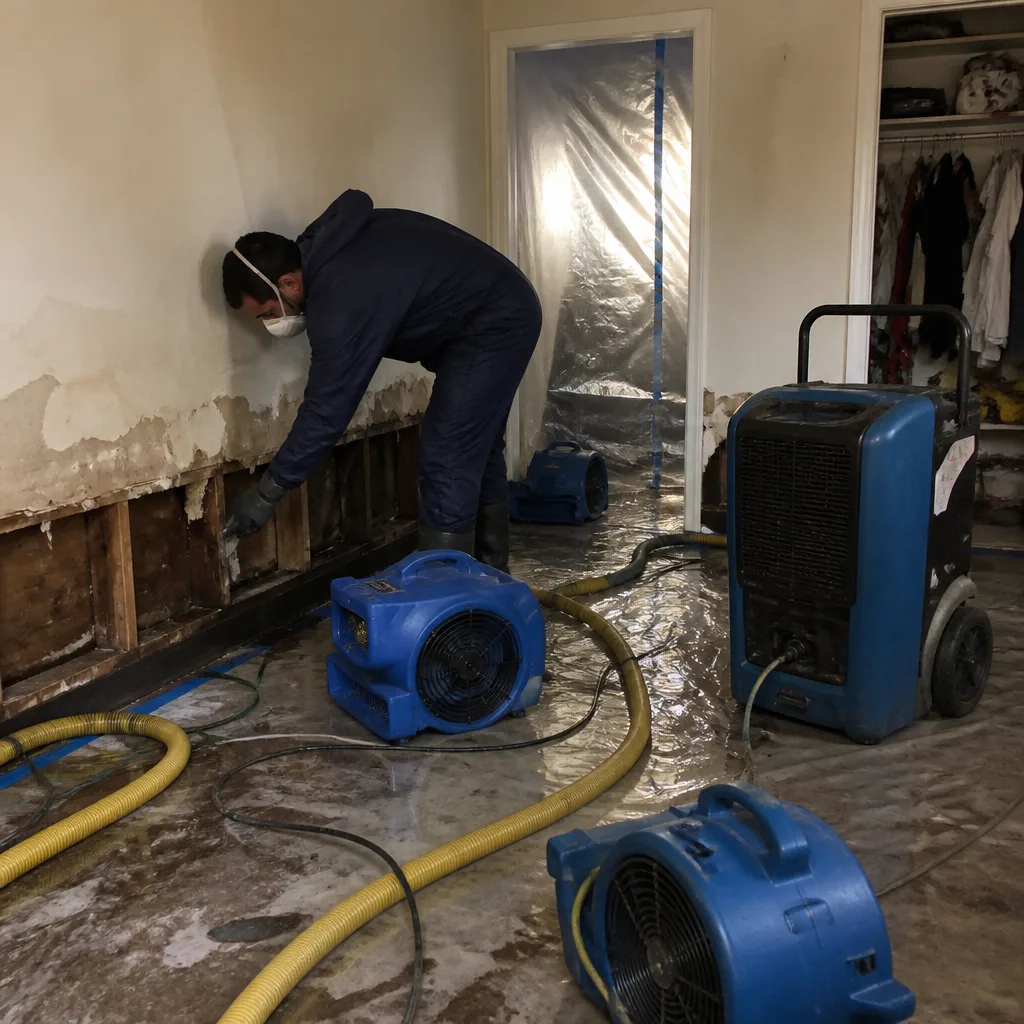 Before
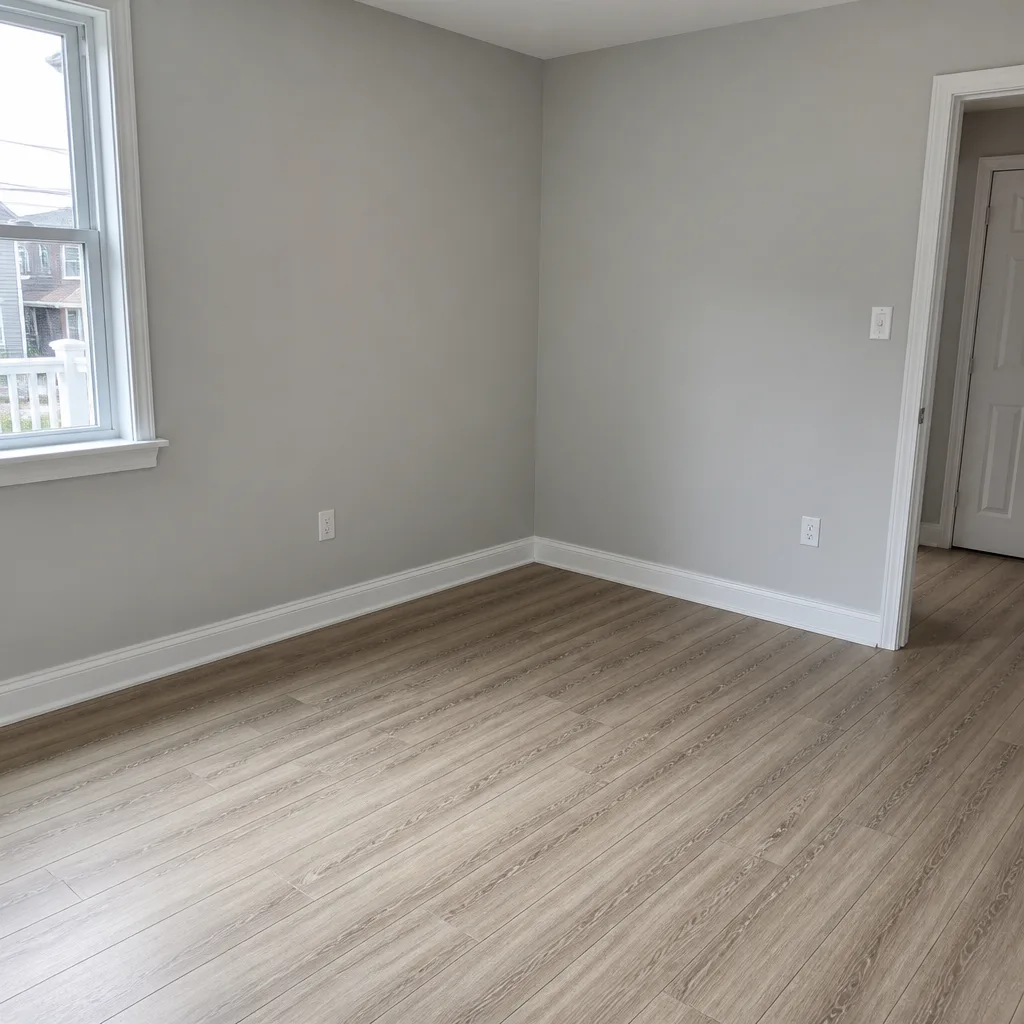 After
After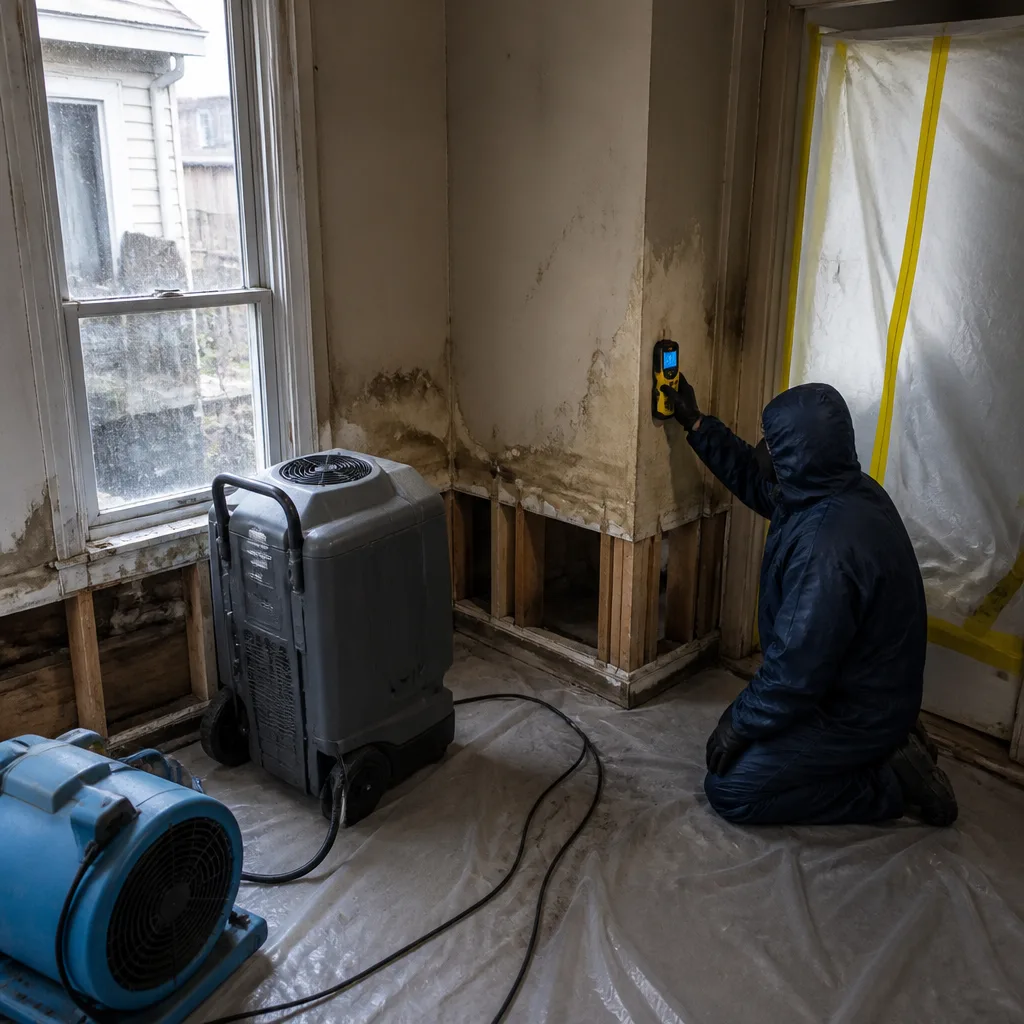 Before
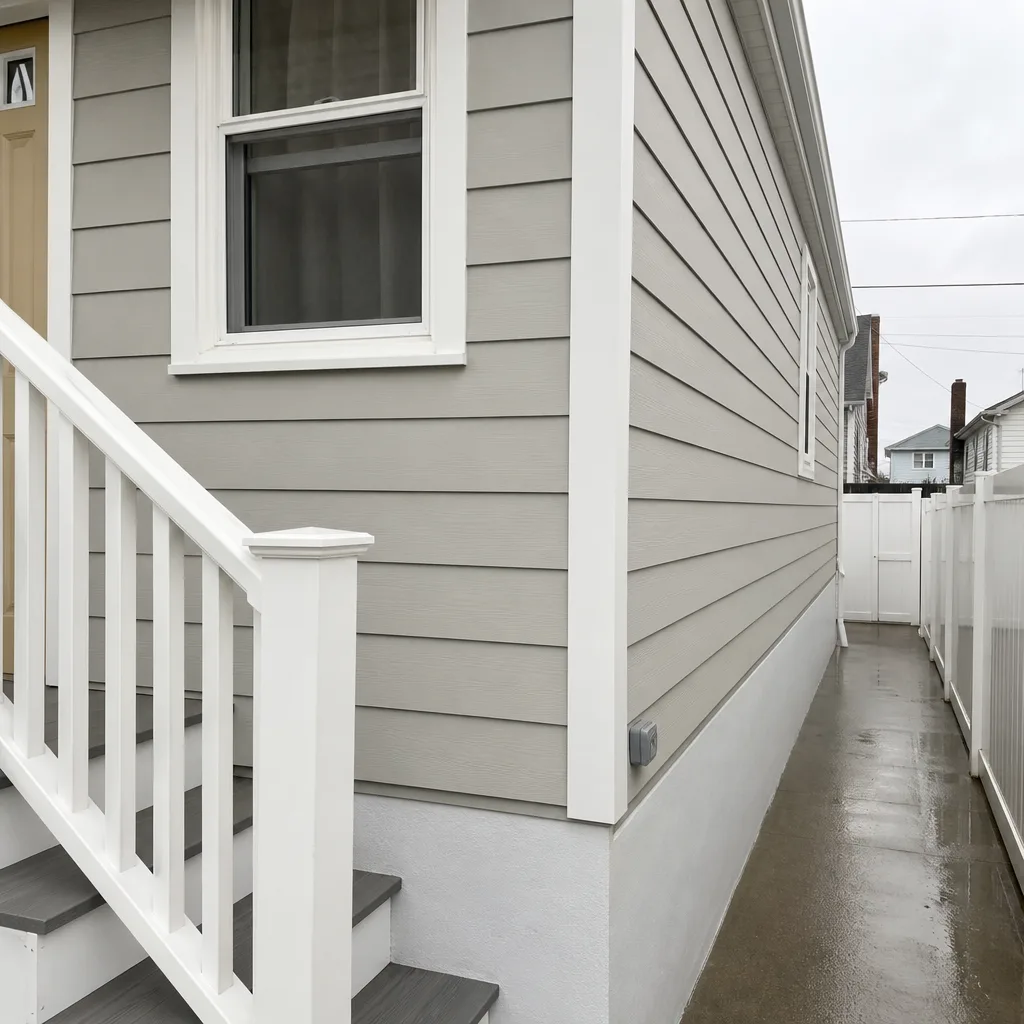 After
After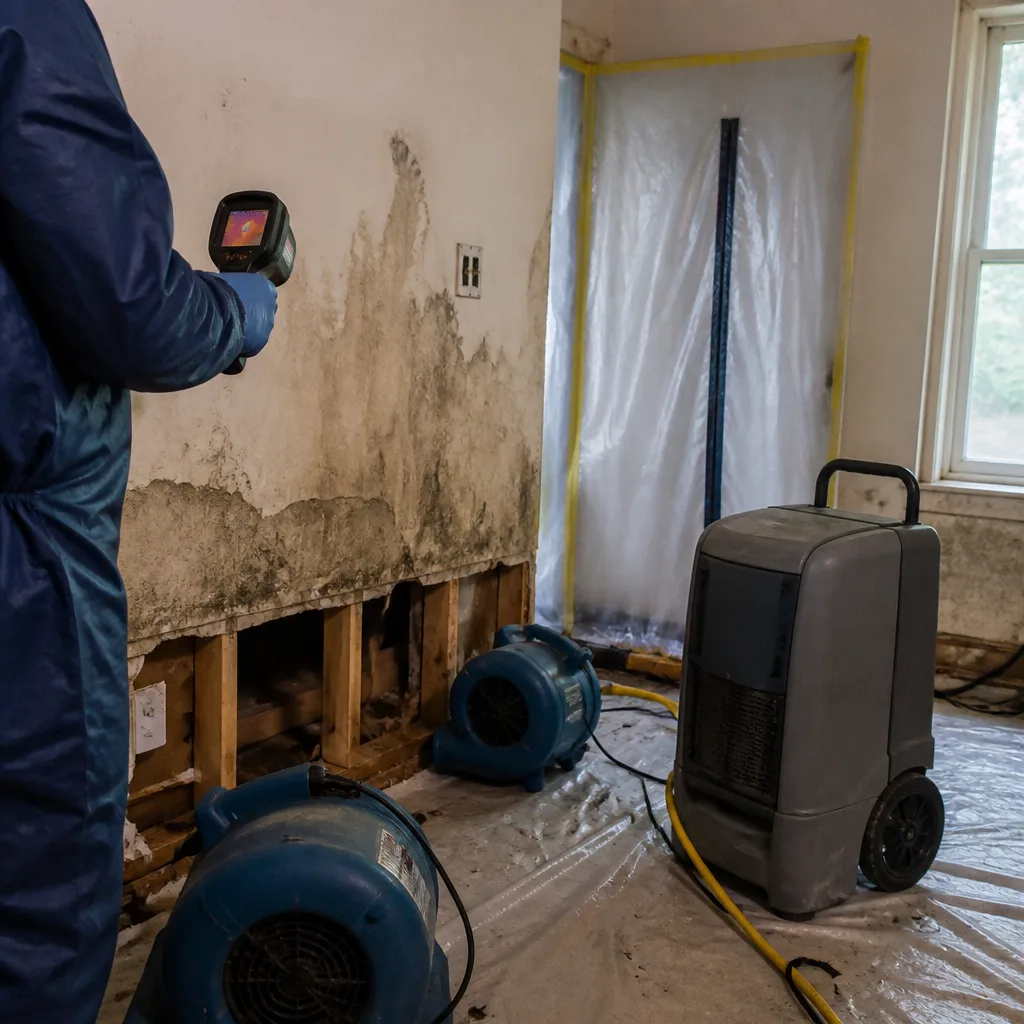 Before
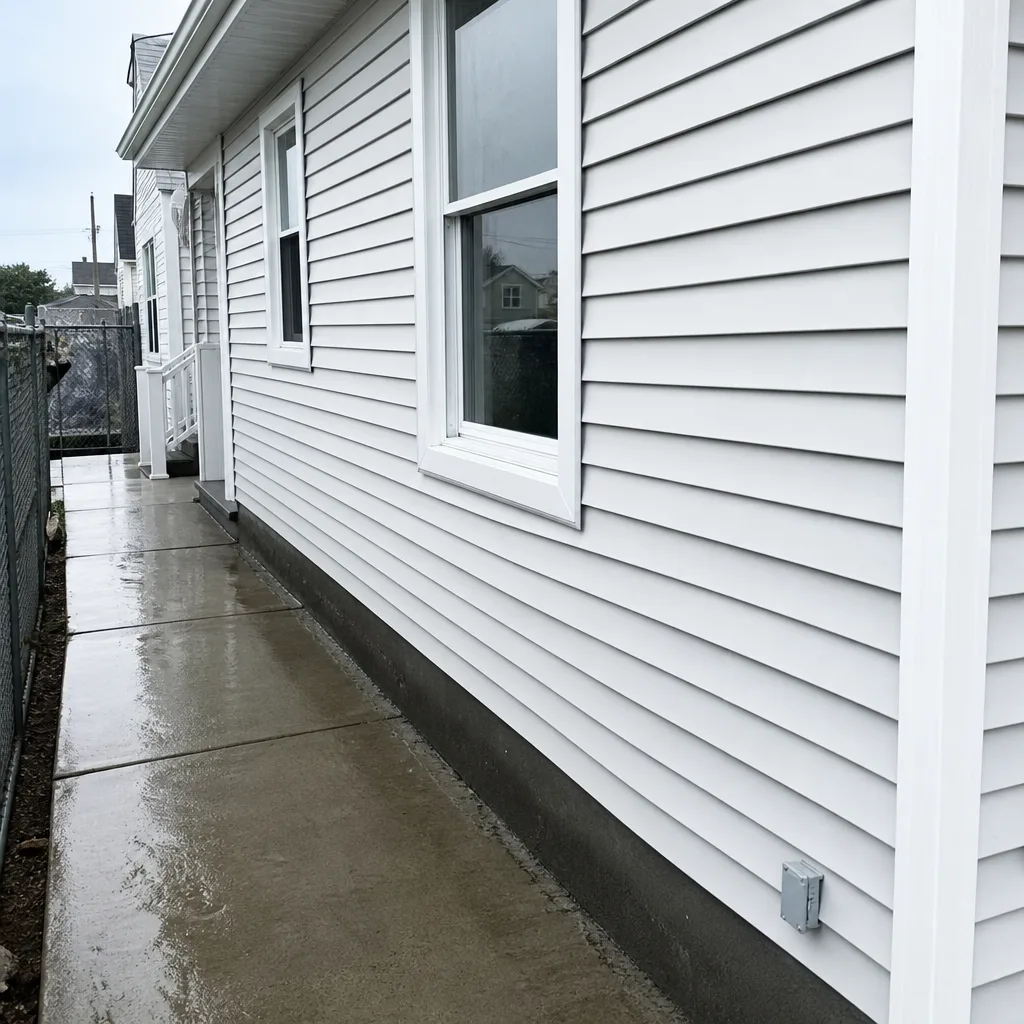 After
After24/7 Emergency Storm & Disaster Restoration in Lawrence
Storm damage in Lawrence doesn’t wait for business hours, and neither do we. Our crews are on call around the clock, with a live dispatcher answering at 2 a.m. and a certified team rolling toward the barrier strip within 45 minutes of your call. When a nor’easter rips through the village between Reynolds Channel and Jamaica Bay, the first hour determines whether you’re dealing with a cleanup or a full reconstruction. Wind-driven rain, saltwater surge, and flying debris compound fast. One call to (845) 773-8058 gets you a free visual inspection, a straight answer about what you’re facing, and a written scope before any work begins. We’ve handled Lawrence storm damage for over 42 years as a company, and we know exactly what this village’s geography does to a house when the water comes from two directions at once.
Understanding Storm & Disaster Restoration Severity in Lawrence Properties
Lawrence’s housing stock ranges from pre-WWI brick estates near the oceanfront to mid-century split-levels and ranches with finished basements below FEMA-designated AE and VE flood zone base elevations. Severity here almost always ties to water classification and structural compromise. A Category 1 water loss from a broken supply line in a Woodmere-adjacent split-level is one thing. A Category 3 saltwater intrusion from Jamaica Bay surge is another entirely. That’s contaminated water carrying hydrocarbons, biological matter, and chlorides that accelerate corrosion in ways freshwater never will. Moisture mapping with thermal imaging and hygrometers tells us where the water actually went, not just where it pooled. We look at subfloor assemblies, wall cavities, and the fasteners inside them. In Lawrence’s older brick homes, saturated lime mortar and plaster wick moisture upward for weeks after the standing water’s gone. The failure modes are specific to this village, and the assessment has to be too.
Why Lawrence Property Owners Choose Floodline Restoration Co.
- 45-minute response commitment to Lawrence. We dispatch from our New York City office with crews staged near the Five Towns corridor, so a certified team reaches the barrier strip fast when nor’easters hit.
- A live person answers, 24/7, every day. No automated system, no call-back queue. You reach a dispatcher who knows the village and can route a crew immediately.
- IICRC-certified technicians, specifically WRT and ASD. Water restoration and applied structural drying certification matter when saltwater’s involved. Our people carry the credentials and the field time to back them.
- Free visual inspection with a written scope. Before any work starts, you get the assessment on paper. No pressure, no surprise line items later.
- Direct insurance billing with adjuster coordination. We talk to your carrier, send the documentation, and bill directly. You don’t play messenger.
- One team from extraction through reconstruction. The same certified crew that reads the moisture map on day one handles daily readings and rebuilds what the storm took. No handoff to a stranger.
Our Storm & Disaster Restoration Process
Inspection & Assessment
We arrive, walk the full property, and run thermal imaging plus moisture meters through every affected room. We’re not just looking at what’s wet. We’re mapping where the water migrated, where the salt is, and what’s structurally compromised. You get the findings in writing.
Extraction & Stabilization
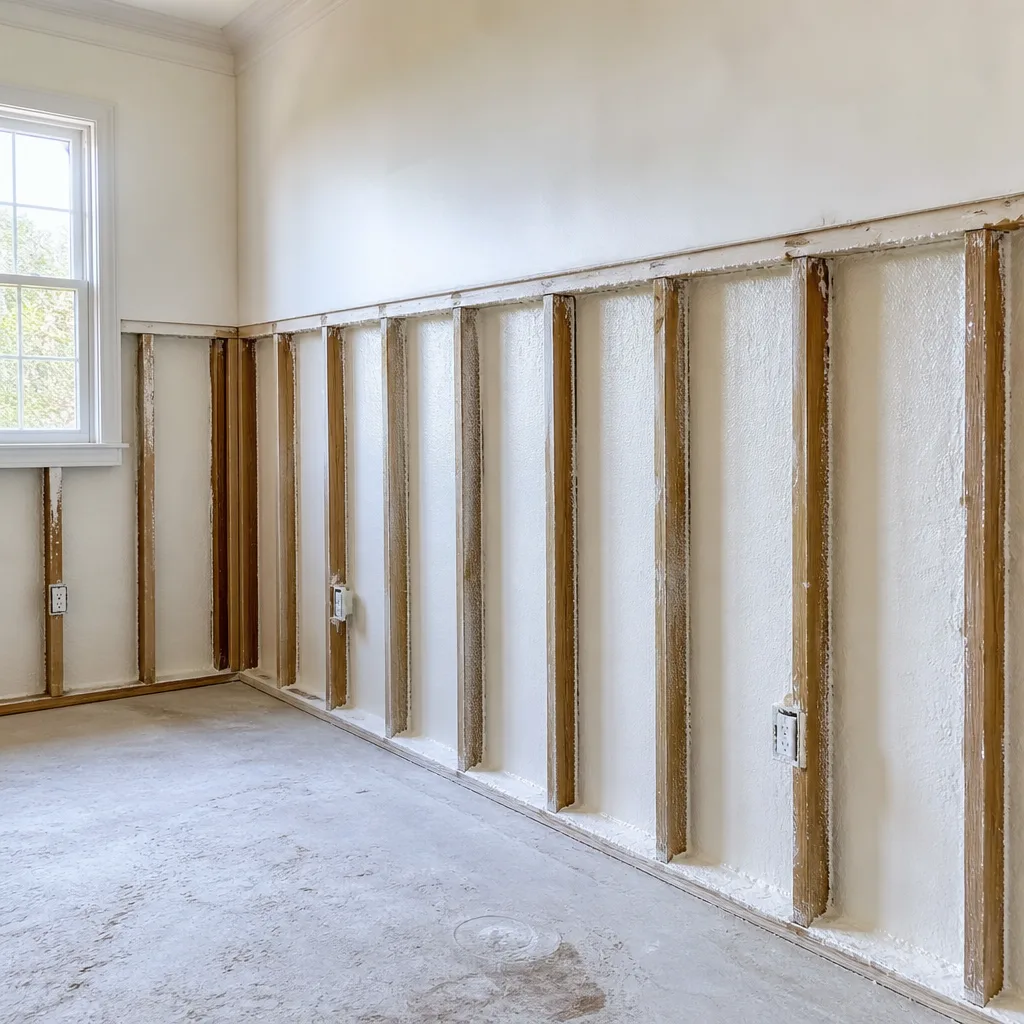
Standing water comes out first, using truck-mounted and portable extraction units. If wind damage opened the envelope, we board up openings and install temporary wind-rated panels the same visit. Stabilizing the structure stops the loss from compounding.
Drying & Dehumidification
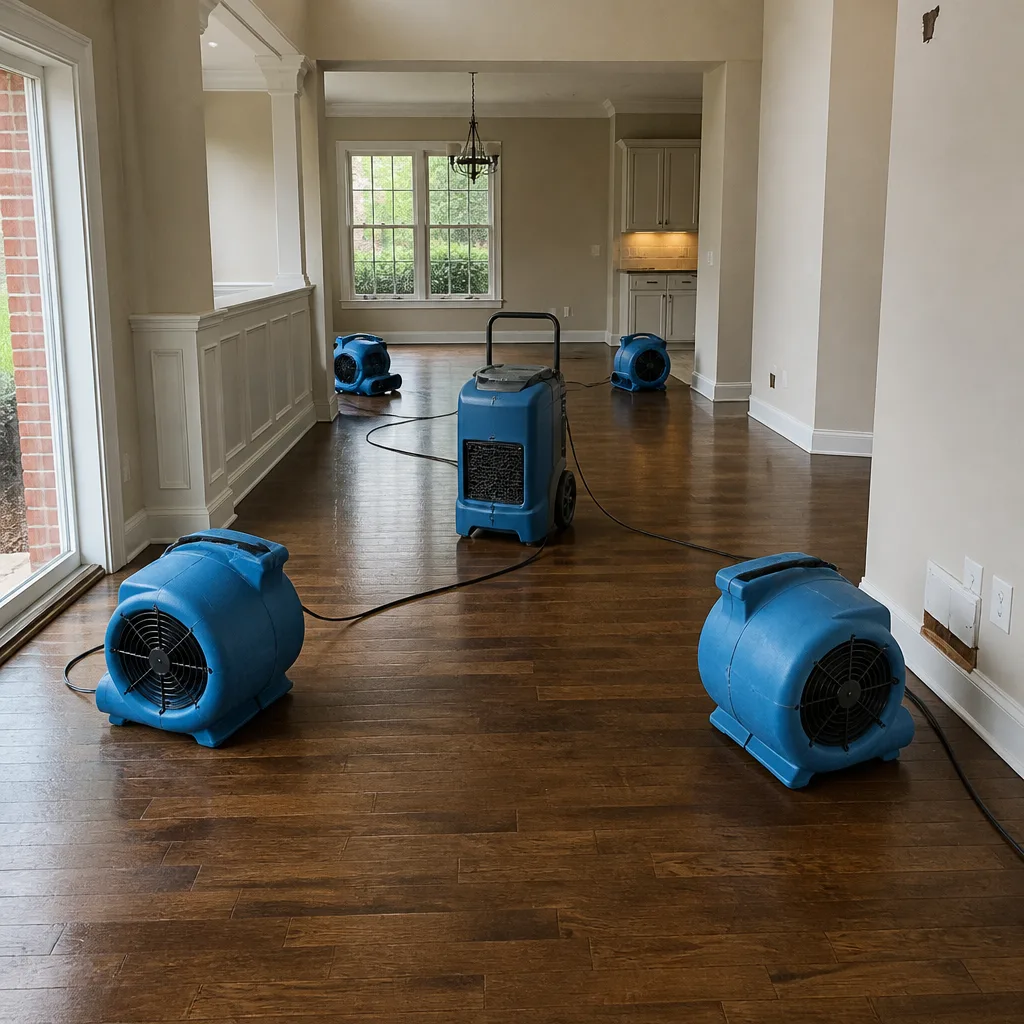
We run professional-grade Dri-Eaz and Phoenix air movers and dehumidifiers, placed according to the moisture map, not guesswork. Daily readings get logged until the dry standard is met. In Lawrence, that log matters more than inland, because salt-affected materials hide moisture differently.
Cleaning & Sanitization
Saltwater means a corrosion-specific washdown, not a standard wipe. Through our Sanitization Services in Lawrence, we clean affected surfaces with appropriate antimicrobial and saline-neutralizing agents, and we address fasteners, HVAC coils, and any metal components that saltwater touched. This step separates proper restoration from a future claim.
Wind Damage & Structural Repair
Here’s where Lawrence’s barrier-strip exposure changes the work. We handle Reconstruction & Cleanup in Lawrence, repairing or replacing damaged doors, windows, and roofing components with impact-rated or wind-rated units that meet local code expectations. Racking at jambs gets documented and corrected. Gaskets, thresholds, and anchoring get checked against the wind load your specific block actually experiences.
Repairs & Restoration
The same crew that extracted and dried now rebuilds. Trim, drywall, flooring, paint, and any structural work happens under one roof. Before we finish, you get the complete moisture log and the 90-Day Done Right Promise in writing. If it’s not done right, we make it right. No arguing.
Need Emergency Storm & Disaster Restoration in Lawrence Now?
Crews minutes away, answering live 24 hours a day. The sooner we start, the less it costs.
Working With Your Insurance Company
Storm claims in Lawrence get complicated fast. Saltwater damage, wind-driven rain intrusion, and FEMA elevation compliance all sit in the same file, and adjusters want documentation that holds up. From the first hour, we photograph every affected room, log moisture readings daily, and build an industry-standard estimate your carrier can read line by line. You never need to translate between us and them. We coordinate directly with your adjuster, answer their questions, and send the paperwork they ask for. Most homeowners in Lawrence tell us the insurance conversation was the part they dreaded most. It’s the part we handle so they don’t have to.
What We Provide Your Insurer
- Thorough documentation of the loss
- Photos of all damage, room by room
- Moisture readings and drying logs
- A detailed, line-item scope of work
- Direct coordination with your carrier
Built for Lawrence’s Loss Calendar
Lawrence doesn’t have one storm season. It has a calendar of failure modes, and they rotate through the year. January and February bring deep freezes that burst supply lines in unheated basements and crawl spaces, especially in the older pre-war homes near Rockaway Turnpike. Spring thaw saturates the ground and pushes groundwater into below-grade finished spaces, where undersized sump pumps fail quietly until the carpet’s soaked. Summer brings fast, hard thunderstorms that overwhelm drainage and send surface water into garage slabs and utility rooms. Then comes the main event: nor’easter season, from September through April, when the pincer geography between Reynolds Channel and Jamaica Bay makes Lawrence one of the most storm-surge-exposed villages in Nassau County. Add in the long shadow of Sandy’s 2012 flooding, and you have a village where every season carries a specific, predictable threat. Knowing that calendar is the difference between a quick mitigation and a rebuild.
Storm & Disaster Restoration Across Lawrence’s Neighborhoods
Lawrence’s layout puts different parts of the village in different risk positions, and our crews route accordingly. The oceanfront estates along Ocean Avenue and the streets running down to Reynold Channel’s north shore sit closest to the surge path, with grand brick homes from the 1910s and 1920s that carry original masonry and basements far below current flood elevations. Those basements flood with saltwater, and the restoration has to account for lime mortar, plaster walls, and hardwood floors that have already survived one or two previous events. East of Rockaway Turnpike, the mid-century split-levels and ranches face a different profile: wind-load pressure on aging garage doors, window flashing failures, and sump systems overdue for replacement. The stretches near the Lawrence Yacht Club and the Five Towns border see debris-driven damage in high winds, with tree limbs and loose construction materials turning into projectiles. And along Central Avenue, the commercial corridor takes water in a storm, plus the added problem of needing restoration work done without shutting down entire blocks of local business. The response route changes by neighborhood, and the damage pattern does too.
We worked a 1940s brick estate near the oceanfront after a nor’easter where wind-driven rain penetrated a failed impact-rated door and saltwater pushed up through the basement slab. Our crew pulled the door, documented racking at the jamb, installed a temporary wind-rated panel, and began structural drying with Dri-Eaz dehumidifiers while coordinating an elevation certificate with Nassau County’s floodplain administrator before any reconstruction could start. That job took longer than a standard dryout, because it had to. The elevation certificate was the compliance step that added days to the timeline, and skipping it would have meant a stop-work order and a torn-up basement left open. It’s the part of Storm & Disaster Restoration that most contractors miss in this village.
Specialized Storm & Disaster Restoration Services We Offer in Lawrence
Storm Damage Cleanup
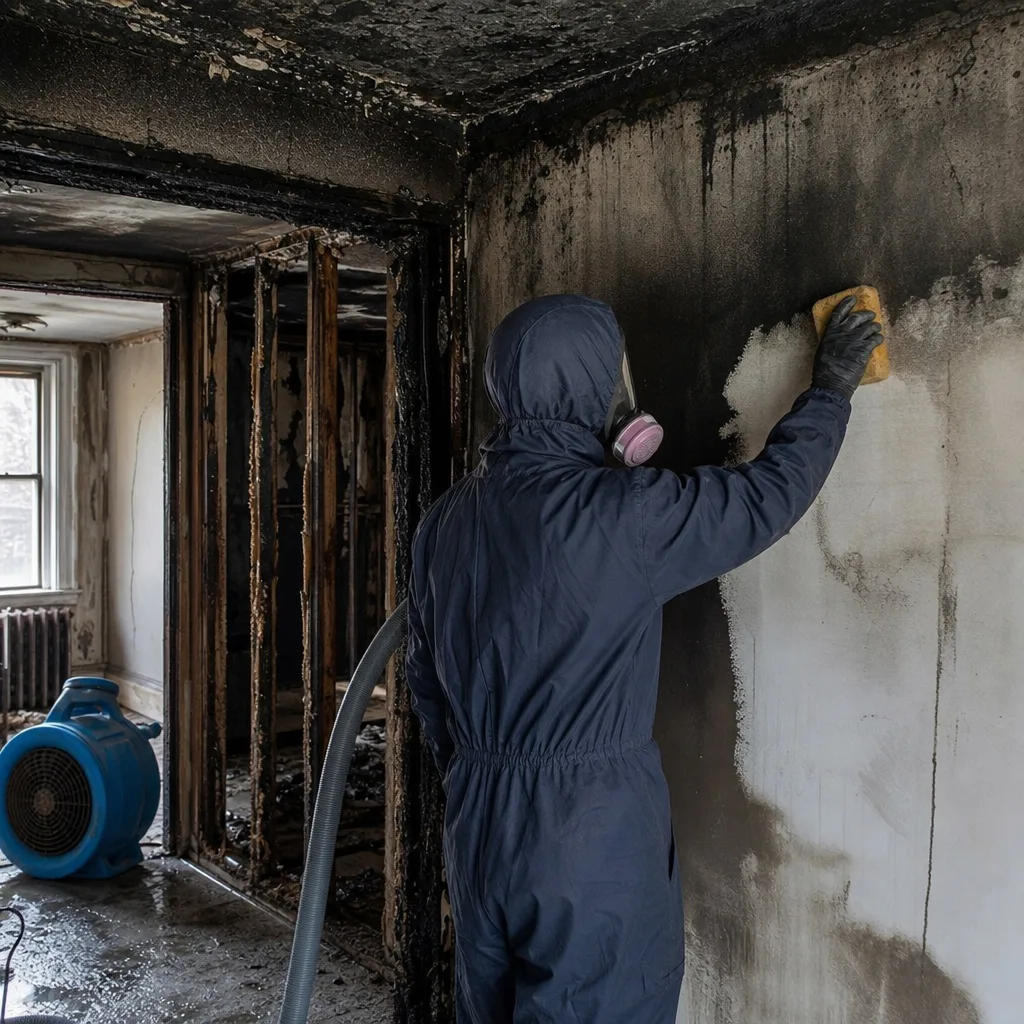
After the wind stops and the water recedes, the mess is the first thing you face. We handle debris removal, contaminated material disposal, and Biohazard & Crime Scene Cleanup - Lawrence with the same documentation standards we’d give your adjuster. On the barrier strip, that means separating saltwater-soaked debris from standard landfill waste and treating surfaces for corrosion rather than just wiping them down.
Flood Damage Restoration
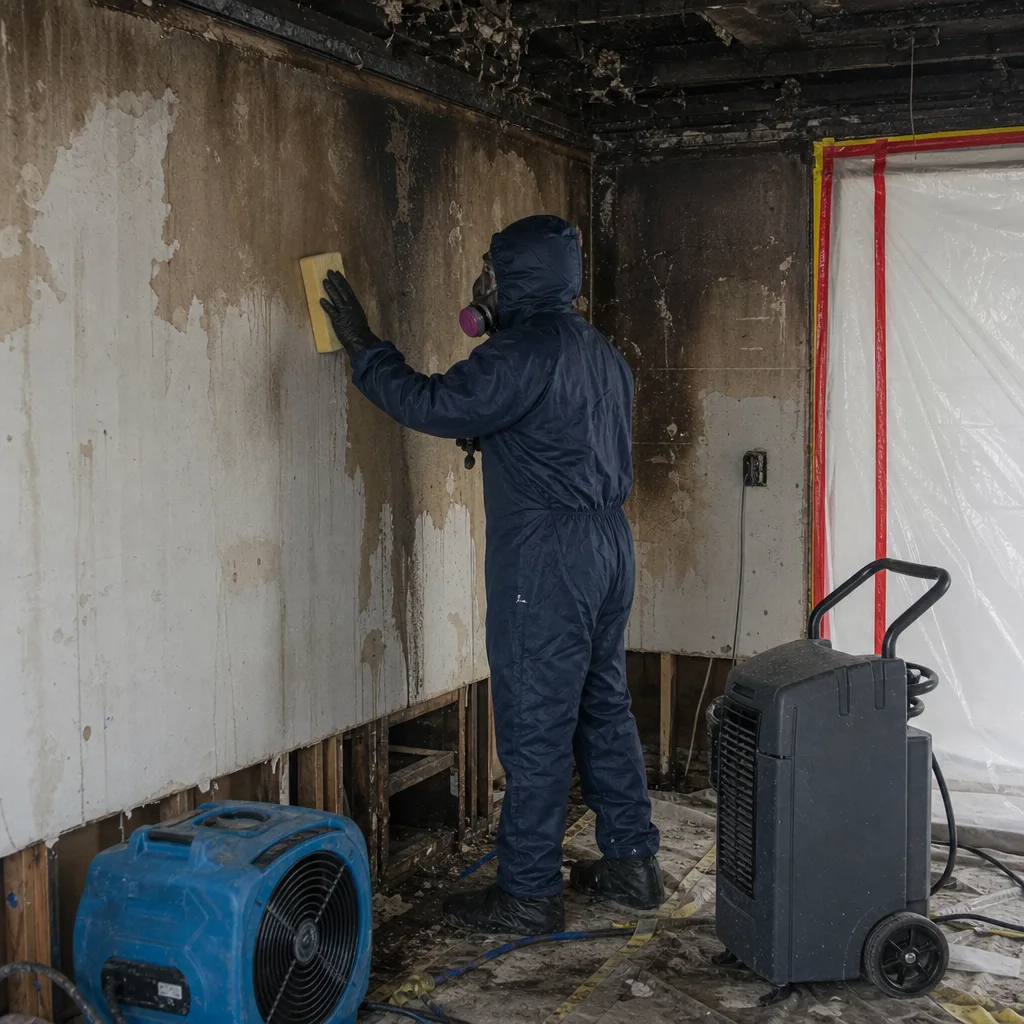
Lawrence’s pincer geography means floodwater here can be salt, brackish, or fresh depending on which body of water breached and how far the surge traveled. Each requires a different treatment protocol. Saltwater restoration means corrosion-specific washdowns, saline-neutralizing agents, and closer attention to HVAC coils, fasteners, and subfloor assemblies. Our crews are trained to IICRC, RIA, and IFA standards, and they run the same Dri-Eaz and Phoenix equipment inland contractors use, but applied to a damage profile most of them never see.
Emergency Board-Up
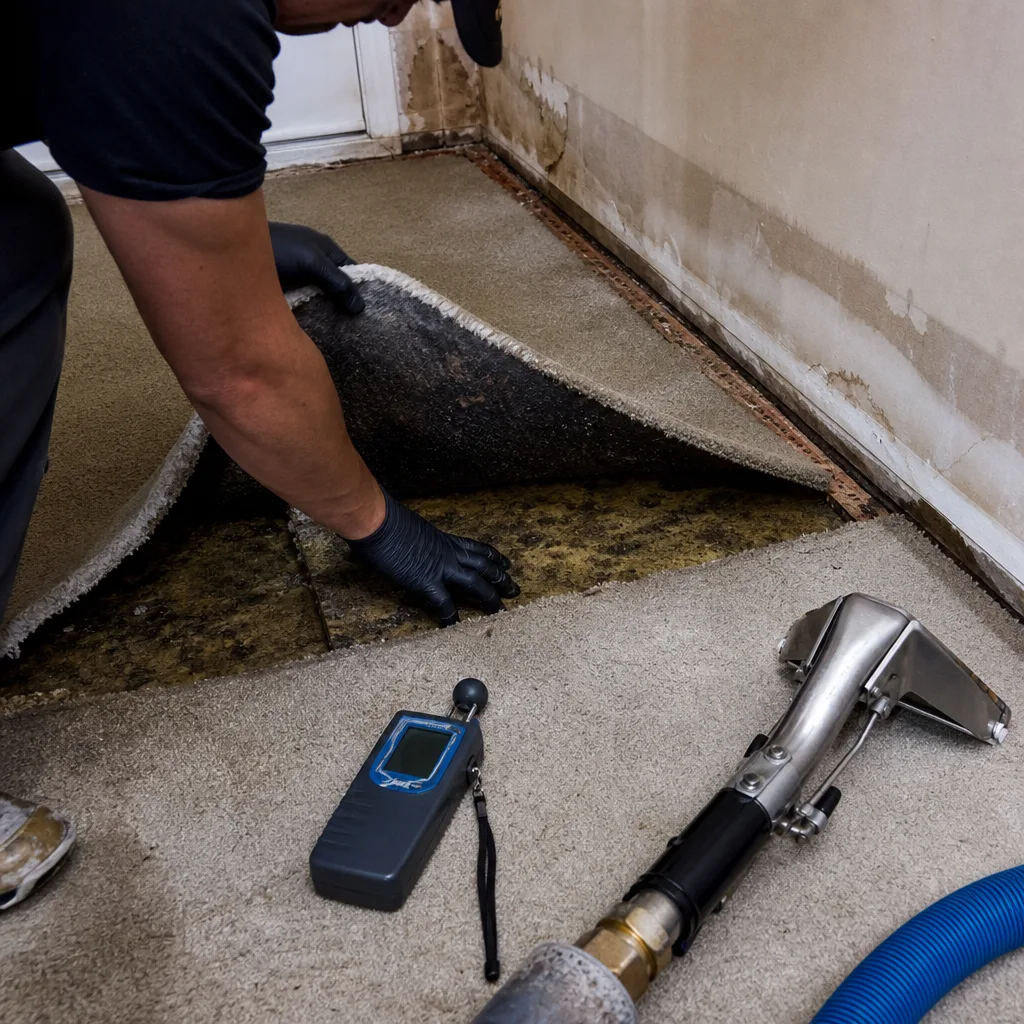
When a storm opens your home to the weather, the loss compounds by the hour. We board up broken windows, damaged doors, and breached walls the same visit. In Lawrence, we use wind-rated panels, not whatever plywood’s in the truck, because the next nor’easter is always coming and a temporary patch has to hold through real wind loads.
Roof Tarping
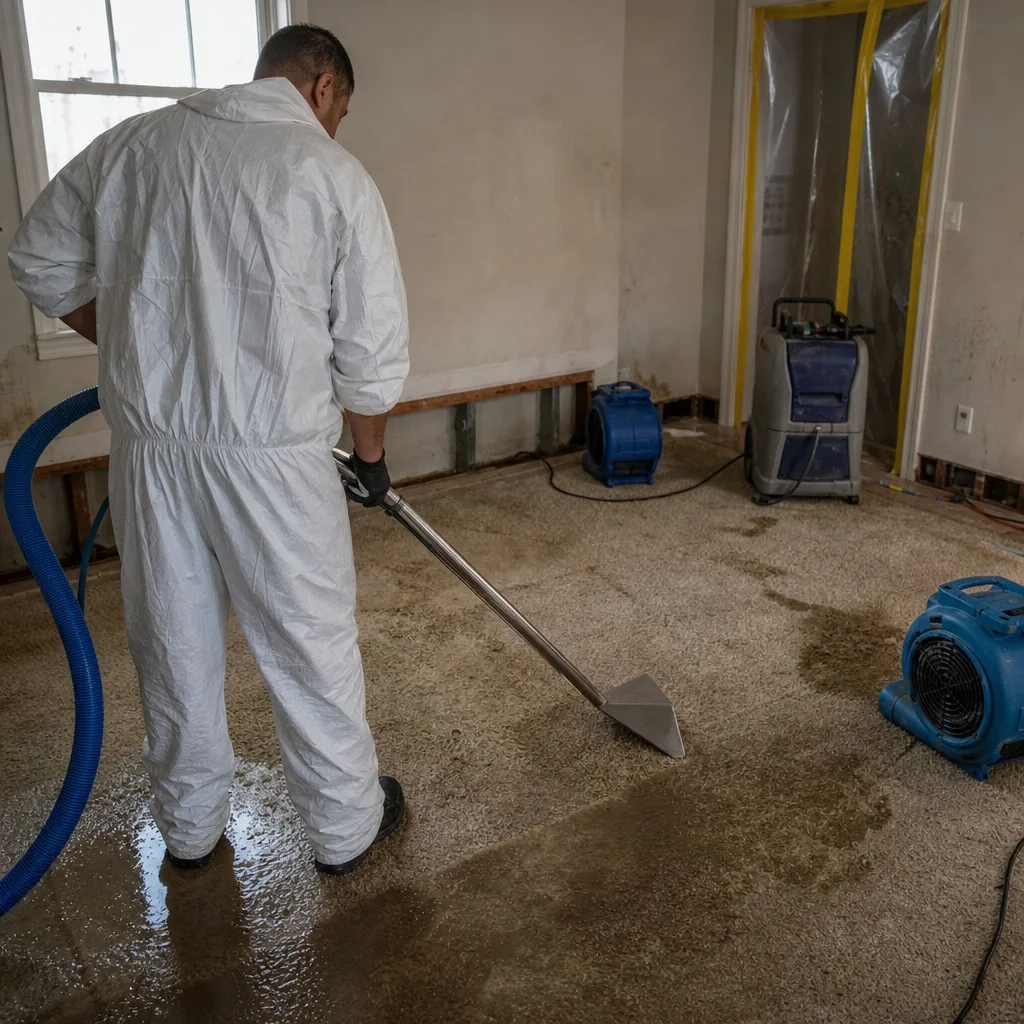
Wind damage to roofing in Lawrence tends to concentrate along the southern exposures facing Reynolds Channel, where gusts run unimpeded across open water. We tarp compromised roof sections immediately, using fastening methods that survive sustained wind, then document everything for your claim. The tarp buys time. The documentation keeps the adjuster honest.
Wind Damage Repair
This is where Lawrence’s building stock shows its age. Impact-rated doors, wind-rated windows, and reinforced garage doors aren’t optional on a barrier strip, and we routinely see homes where a previous contractor replaced a storm-damaged door with a non-rated unit that failed in the next event. We repair and replace to the wind-load standard your block actually experiences, with anchoring, thresholds, and gaskets checked against local code expectations. If you’re in Lawrence, that standard is higher than what inland Five Towns neighbors need.
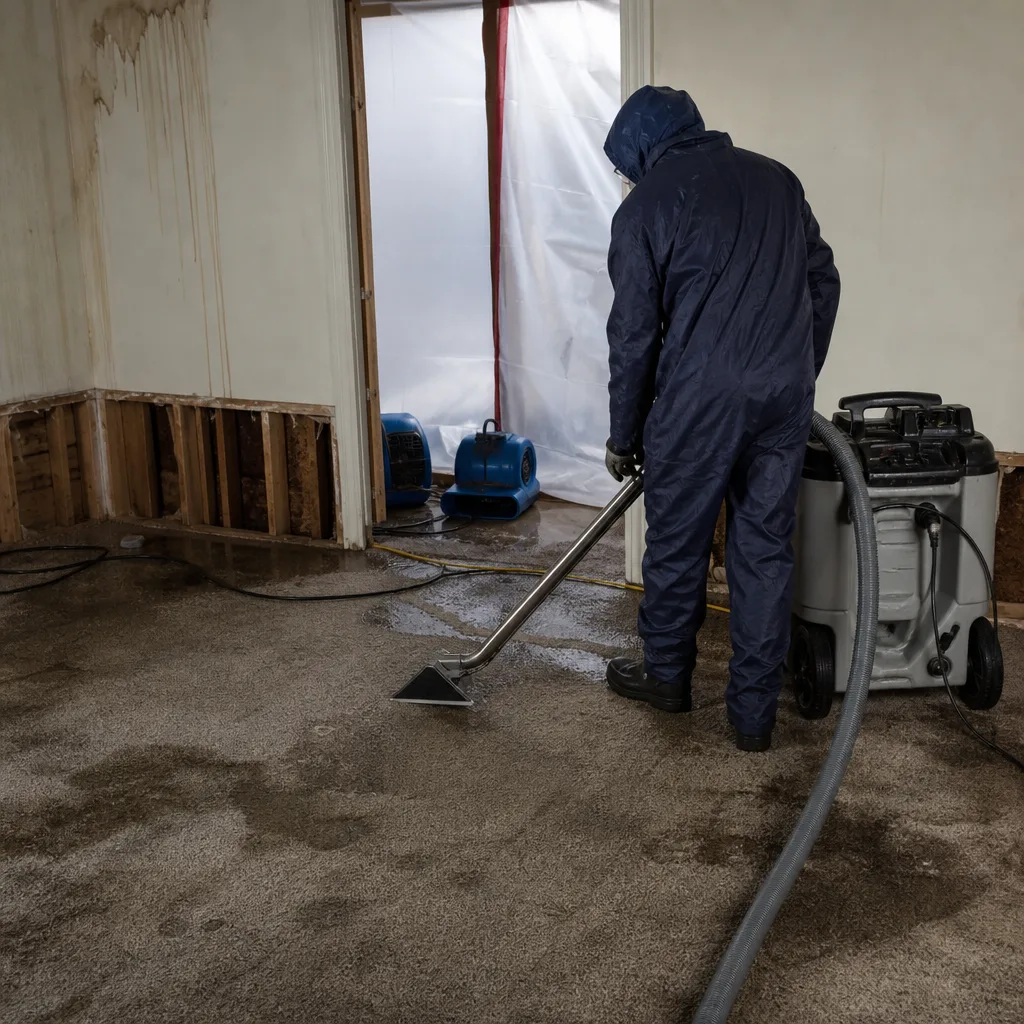
Debris Removal
Storm debris in Lawrence carries a specific hazard profile: pressure-treated lumber, saltwater-soaked insulation, broken glass, and occasionally construction materials from neighbor properties. We remove it safely, separate what’s salvageable from what’s contaminated, and coordinate disposal properly. You don’t need to handle it, and you shouldn’t try.
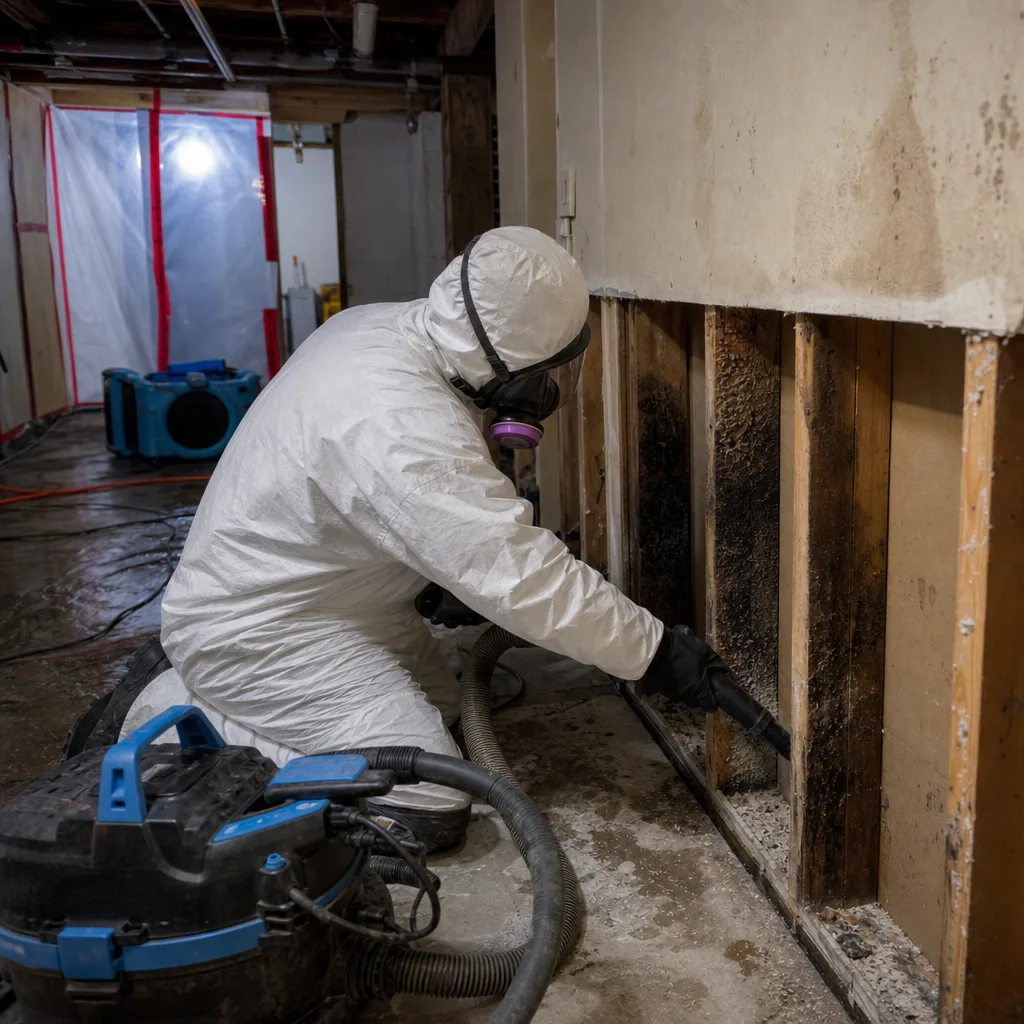
What happens when you call
- 1
A real person answersNo phone trees - you reach a local pro.
- 2
You get an upfront price rangeHonest numbers before anyone is dispatched.
- 3
A background-checked tech heads outLicensed & insured, dispatched right away.
- 4
You approve before work beginsNothing starts until you say go.
Storm & Disaster Restoration Costs in Lawrence, NY
Storm restoration pricing in Lawrence runs higher than inland Nassau County, and the geography explains why. Saltwater protocols, elevation certificate coordination, and impact-rated materials all cost more. Here’s what we see in this village’s market:
- Emergency board-up or roof tarping: $400-$900, depending on openings and access.
- Storm damage cleanup and debris removal: $1,200-$3,500 for a typical single-family property.
- Flood damage restoration with extraction and structural drying: $2,800-$7,500, higher when saltwater’s involved and corrosion-specific washdowns are required.
- Wind damage repair including impact-rated door replacement: $1,800-$6,000, depending on the unit’s wind rating and the jamb condition.
- Full restoration after a significant nor’easter: $8,000-$30,000+, driven by how much of the envelope failed and whether FEMA elevation compliance applies.
Most storm claims in Lawrence are insurance-covered, especially when the damage ties to a named event. We bill your carrier directly and fight for the full scope. If you’re paying out of pocket, the free visual inspection gives you a firm, line-item scope before any work starts, and the 90-Day Done Right Promise stands behind it. The Keystone Standard, in writing, no arguing. Call (845) 773-8058 for an exact quote. Estimates are free.
We Also Serve Cities Near Lawrence
Our crews regularly run storm restoration jobs in Lawrence and the surrounding Five Towns corridor. If you’re in Inwood, Far Rockaway, Woodmere, or Rosedale, the same certified team and the same 45-minute response commitment applies. Call (845) 773-8058 and we’ll route the nearest available crew to your door.
Serving Lawrence, NY - Our Local Coverage Area
We’re based in the Lawrence area and know this community well. Use the map below to see our service coverage - if you’re nearby, we can almost certainly help.
Lawrence Storm & Disaster Restoration Questions, Answered
Why do Lawrence homes need impact-rated doors and wind-load reinforcement before a nor’easter?
Lawrence sits on a narrow barrier strip between Reynolds Channel and Jamaica Bay, which means wind gusts here run higher than inland Five Towns values because they travel unimpeded across open water. A standard door rated for inland wind loads will flex, leak, or fail outright when a nor’easter drives a sustained gale up the channel. Impact-rated doors and wind-rated reinforcement aren’t an upgrade in this village; they’re the baseline for a building envelope that holds through a real storm. We’ve pulled failed non-rated doors from Lawrence homes where wind-driven rain had already saturated the subfloor before the storm ended.
What does a failing storm door look like before a storm hits Lawrence?
Look at the jamb first. If you see daylight around the door’s edges, feel air movement when it’s closed, or notice the door racking out of square when you open and close it, the unit’s already compromised. On Lawrence’s barrier strip, you’ll also see salt corrosion at the hinges and threshold, which weakens the anchoring over time. A door that doesn’t seat properly against its weatherstripping will let wind-driven rain into the wall cavity during the next nor’easter. If you’re seeing any of these signs, call us for an inspection before the next storm system forms.
How does saltwater flooding from Reynolds Channel change the restoration process compared to freshwater?
Saltwater flooding changes everything about the dryout and the cleanup. Chlorides in saltwater accelerate metal corrosion, so every fastener, HVAC coil, and subfloor component that got wet has to be treated or replaced. You can’t just run dehumidifiers and call it done. The moisture map has to account for salt-affected materials that hold water differently, and the cleaning step requires a corrosion-specific washdown with saline-neutralizing agents. Skip the salt protocols, and the metal inside your walls starts failing months after the claim closes. Most inland contractors never see this damage profile. Our crews treat it every storm season.
Do I need an elevation certificate before repairing my Lawrence basement after a storm?
In Lawrence’s most flood-prone sections near the bay, yes. If your property sits in a FEMA-designated AE or VE zone and the storm damaged the structure below the base flood elevation, Nassau County’s floodplain administrator will typically require a current elevation certificate before you can pull permits for reconstruction. We coordinate that directly, pulling the certificate and filing it with the county so the work doesn’t stall. Skipping this step triggers stop-work orders and forces you to reopen finished work later. It’s the compliance step most contractors overlook, and it’s standard procedure for our Lawrence storm restoration jobs.
Can emergency board-up or roof tarping buy time for Lawrence homes after a storm?
Yes, and it’s often the single most cost-saving step you can take. Board-up and tarping stop additional water intrusion, keep out pests and looters, and stabilize the structure so the loss doesn’t compound. In Lawrence, where the next storm system is always tracking somewhere offshore, a wind-rated temporary panel or properly fastened tarp means your home’s protected through the next weather event while the permanent repair gets scheduled. We complete board-up and tarping the same visit, document it for your claim, and use materials that hold through sustained wind.
How fast can a crew actually reach Lawrence after I call?
Our commitment is 45 minutes for storm emergencies in Lawrence. A live dispatcher answers your call immediately, every time, and routes the nearest certified team. During a major nor’easter when the whole village is calling, response times can stretch, but we prioritize the most severe damage first, and we’ll tell you honestly when the crew will arrive. Call (845) 773-8058 and we’ll give you a real arrival window, not a recording.
How long does storm damage drying and restoration take in Lawrence?
Structural drying typically takes three to five days, but saltwater jobs in Lawrence often run longer because corrosion protocols add a step and elevation certificate coordination can extend the timeline. A standard freshwater dryout with Dri-Eaz and Phoenix equipment might hit the dry standard in 72 hours. A saltwater intrusion from Jamaica Bay with FEMA compliance involved commonly runs seven to ten days from start to finished rebuild. We’ll give you a written timeline after the initial inspection, and we stick to it.
What should I do in the first 30 minutes after storm damage in Lawrence?
Call us at (845) 773-8058. Don’t enter the affected area if there’s standing water and any chance it’s saltwater, which can be electrically hazardous and contaminated. Don’t start pulling wet drywall or moving debris yourself, because you may disturb compromised materials or spread contaminants. Take photos from a safe distance for your own records. The first 30 minutes determine how much of the structure can be saved, and the sooner our crew starts extraction and stabilization, the lower the total cost. Call now, and a live person answers.
Written by Curt Bowman, Owner at Floodline Restoration Co., serving Lawrence since 2010.