

Free visual inspection and a written scope of work before any mitigation begins - photos, moisture readings, and drying logs go in your claim file
The scope we write is the scope we bill. Anything new gets shown to you, in writing, before we touch it.
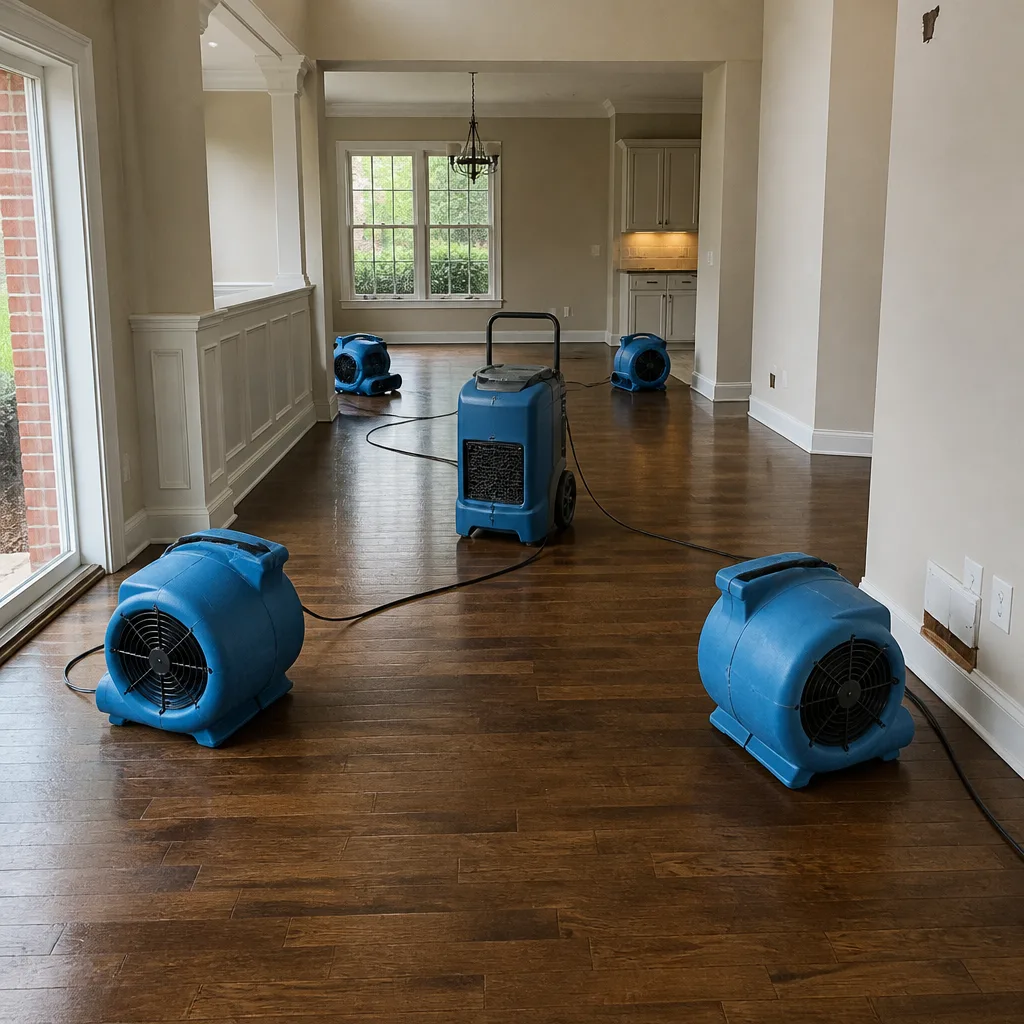
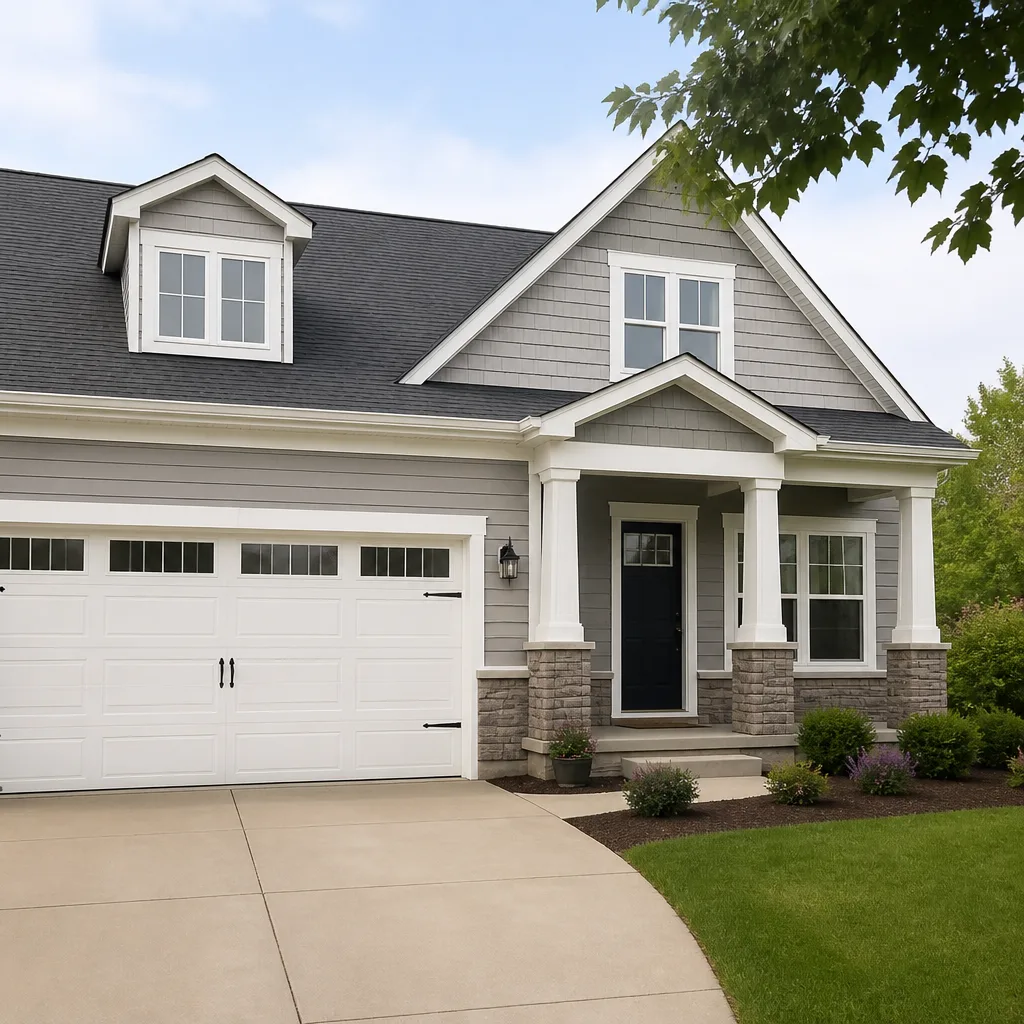
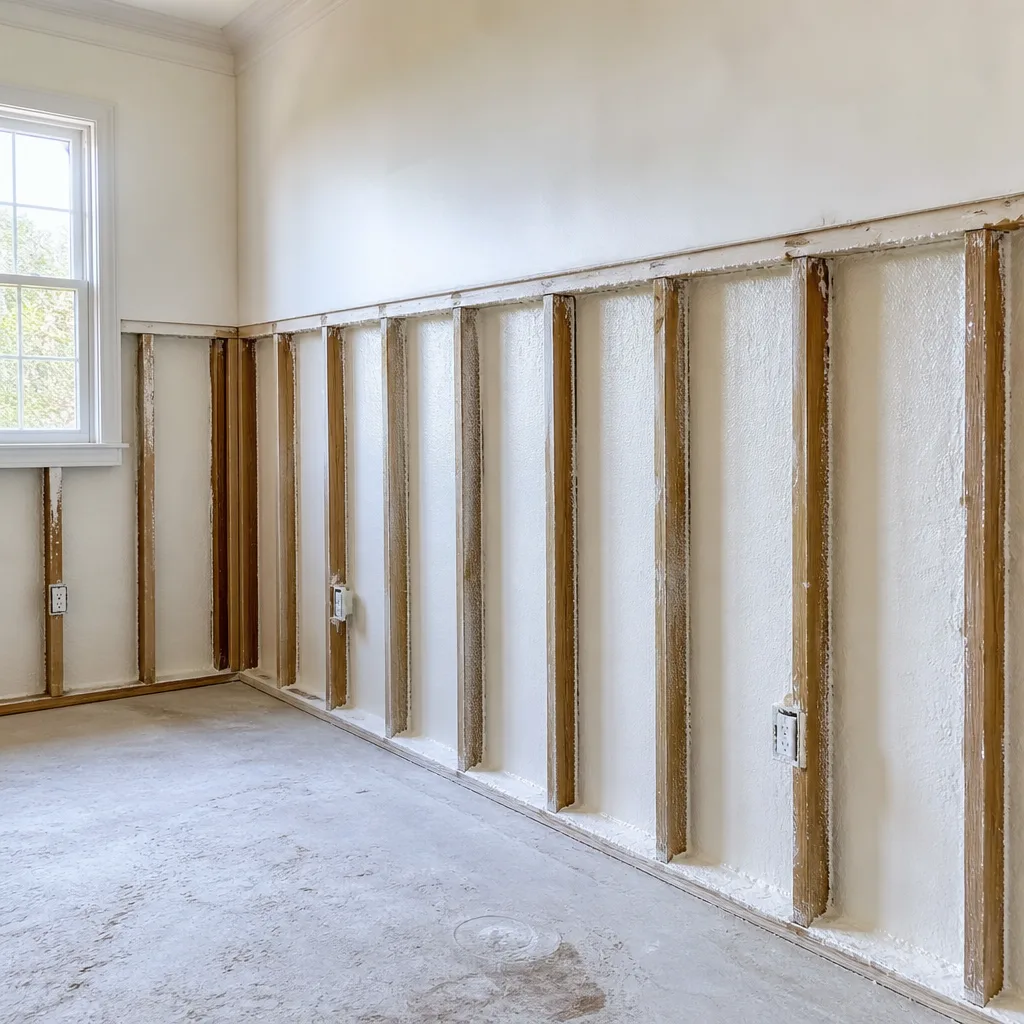
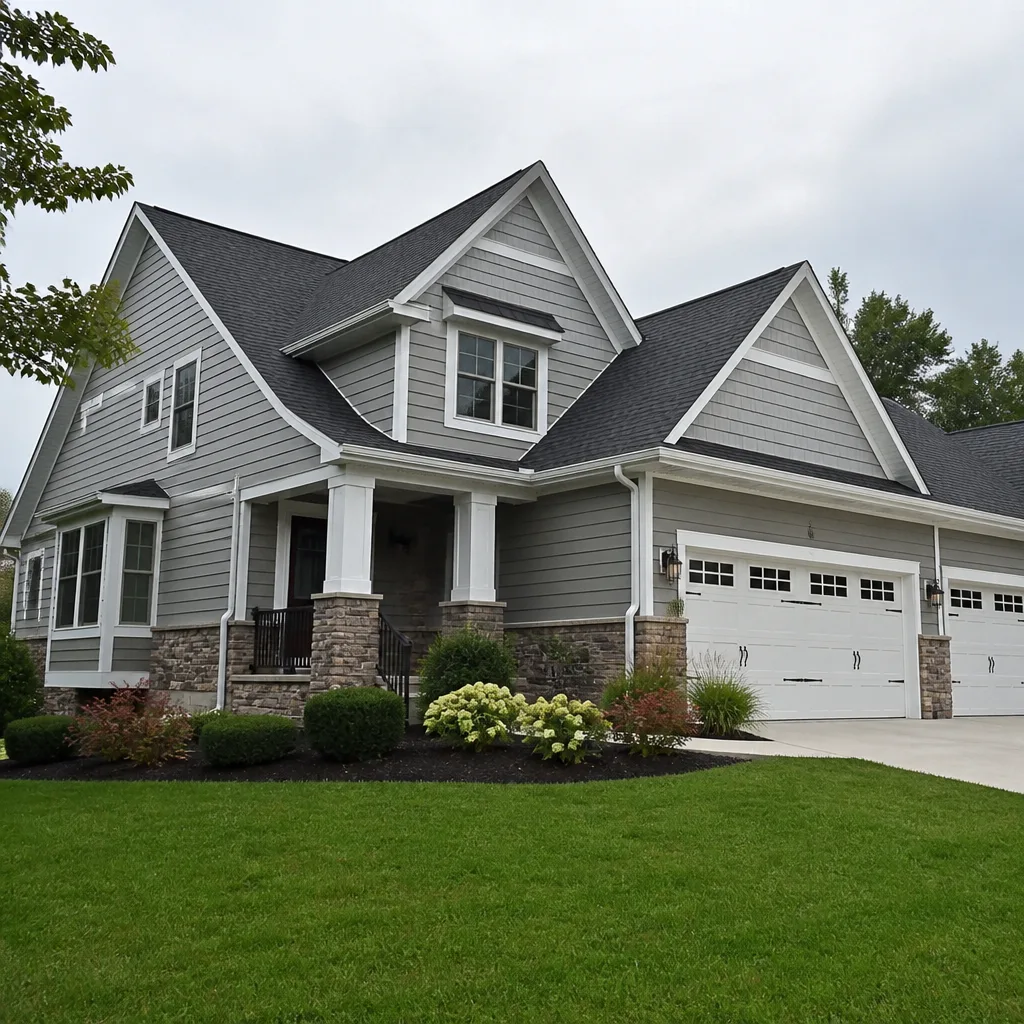
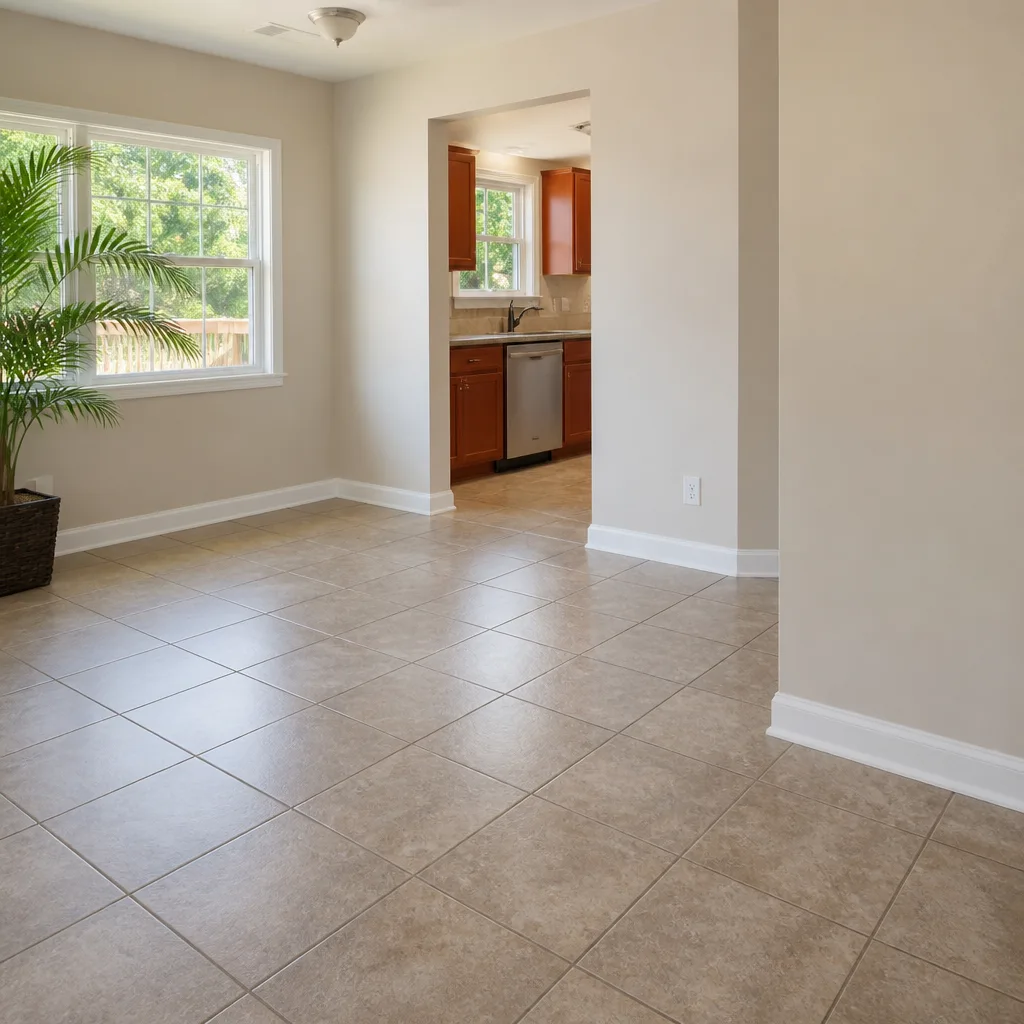
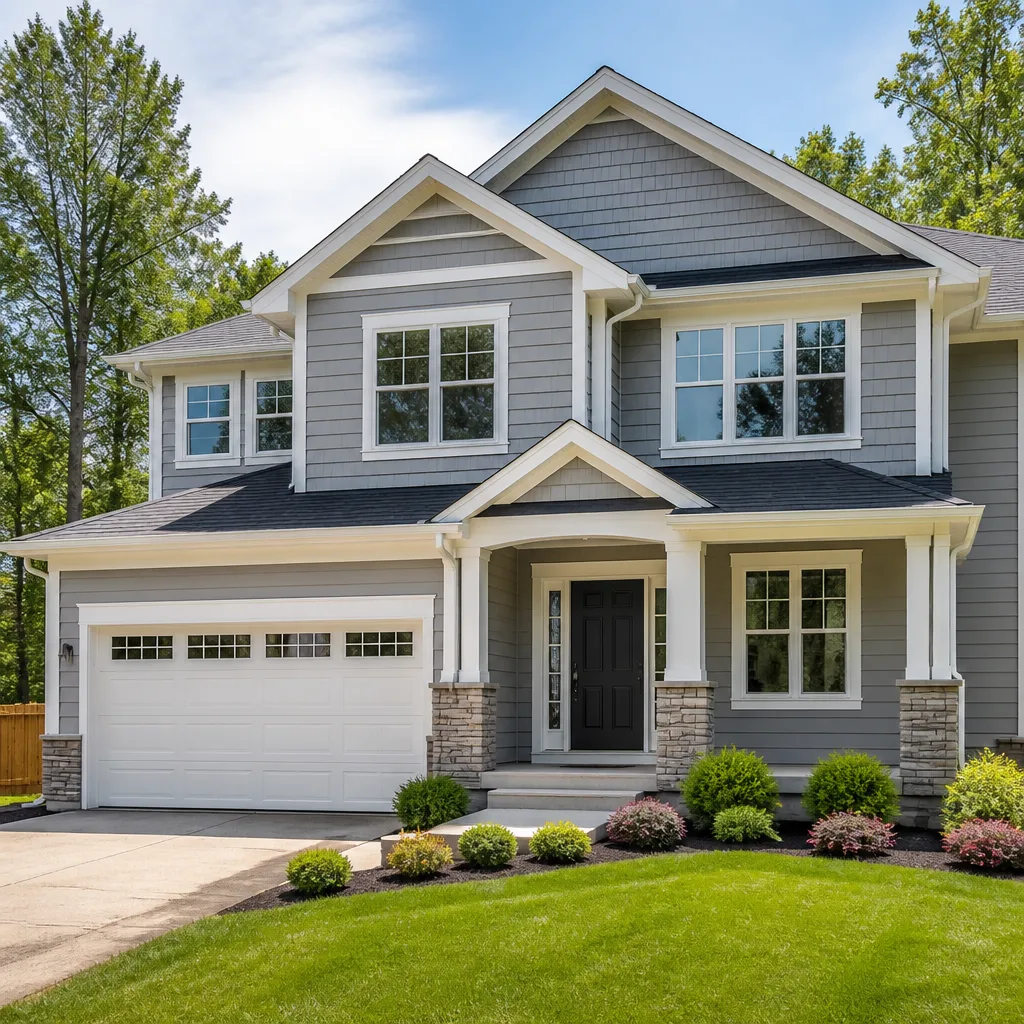
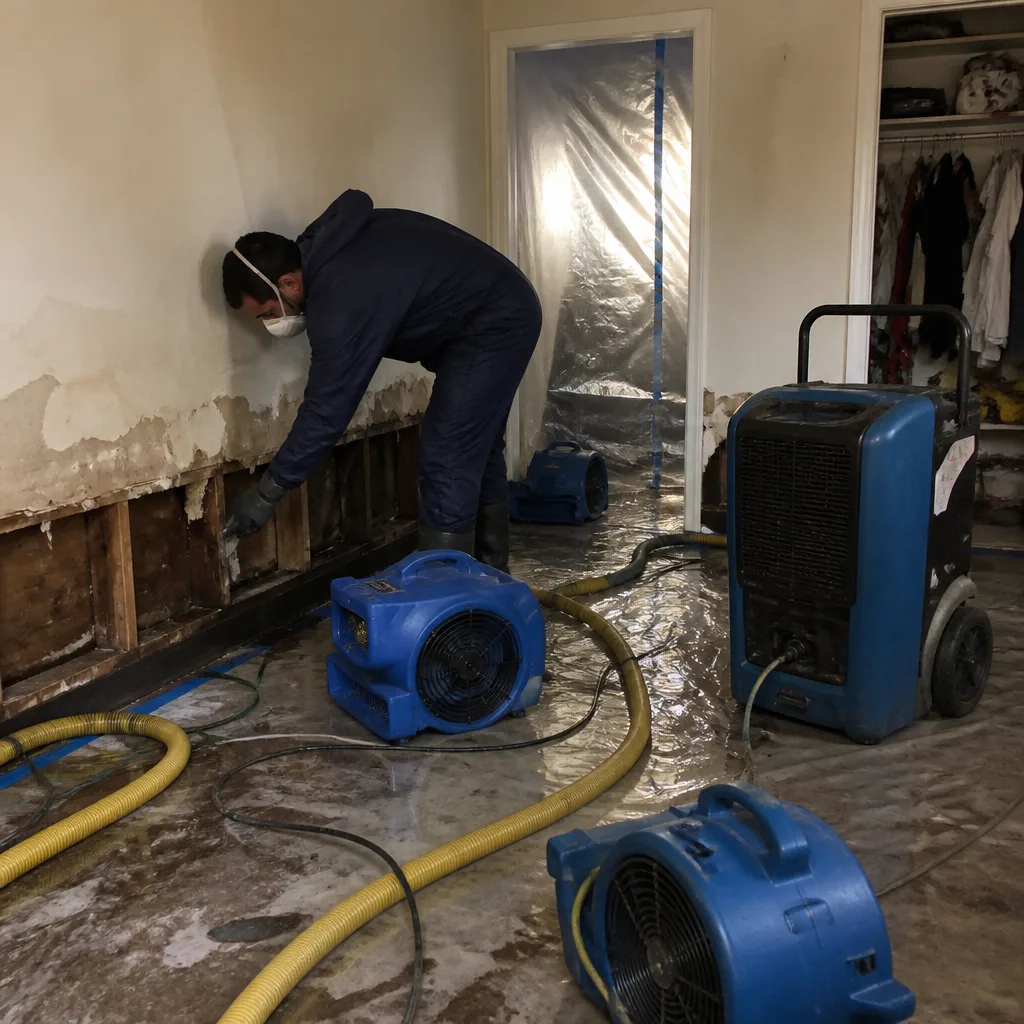 Before
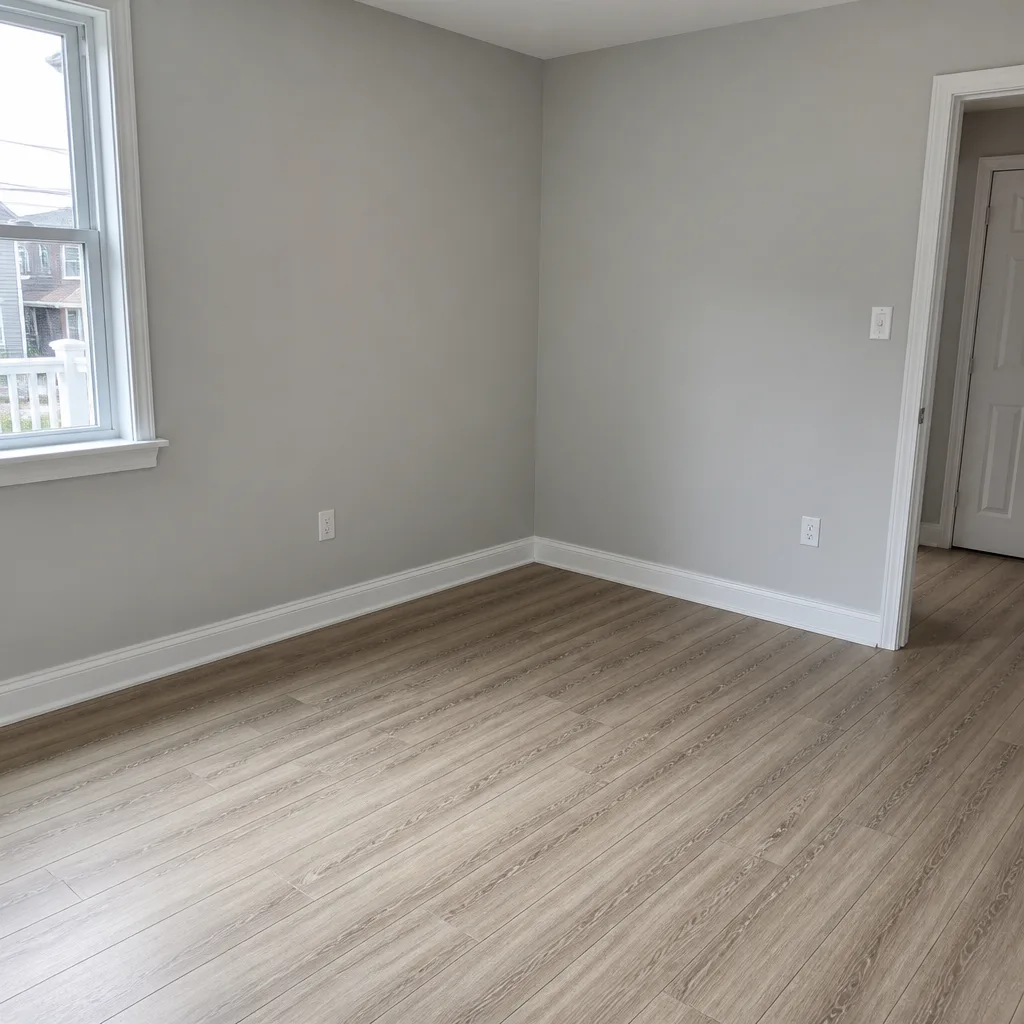 After
After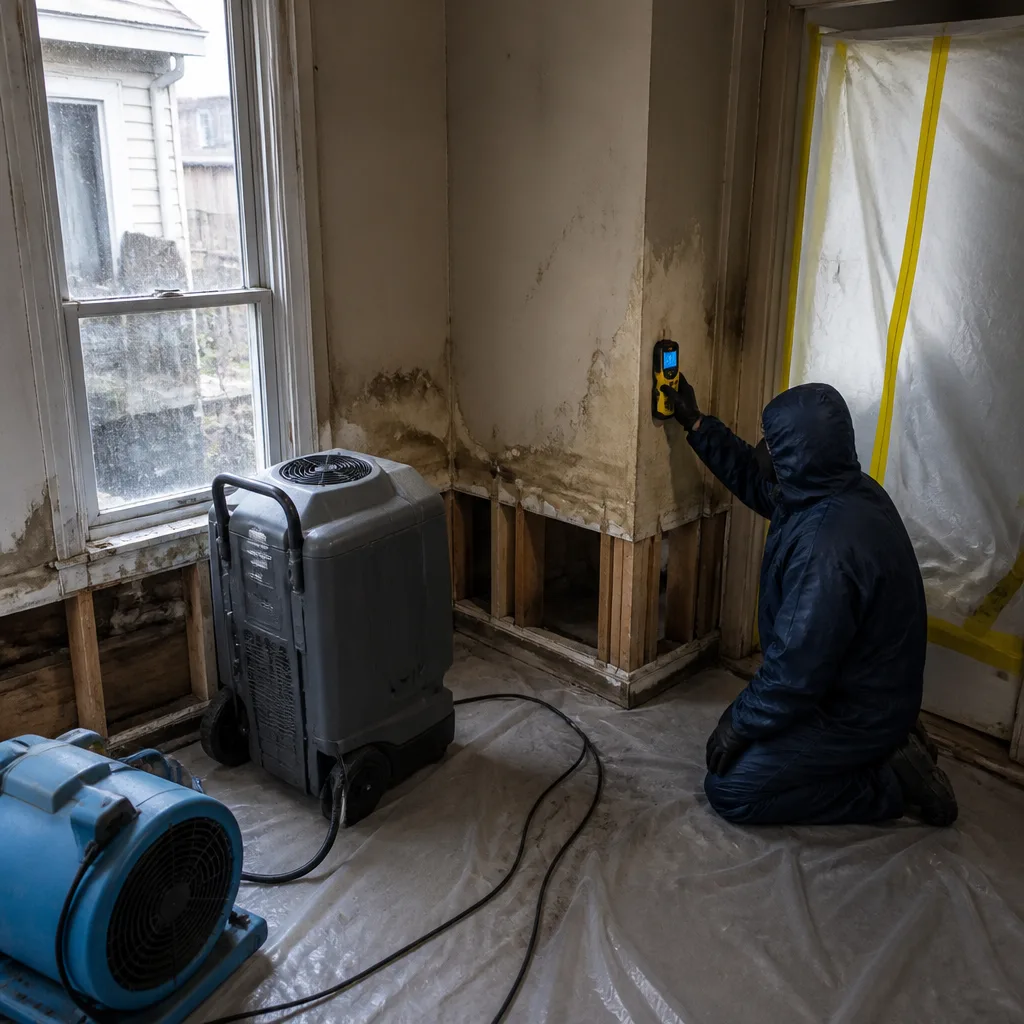 Before
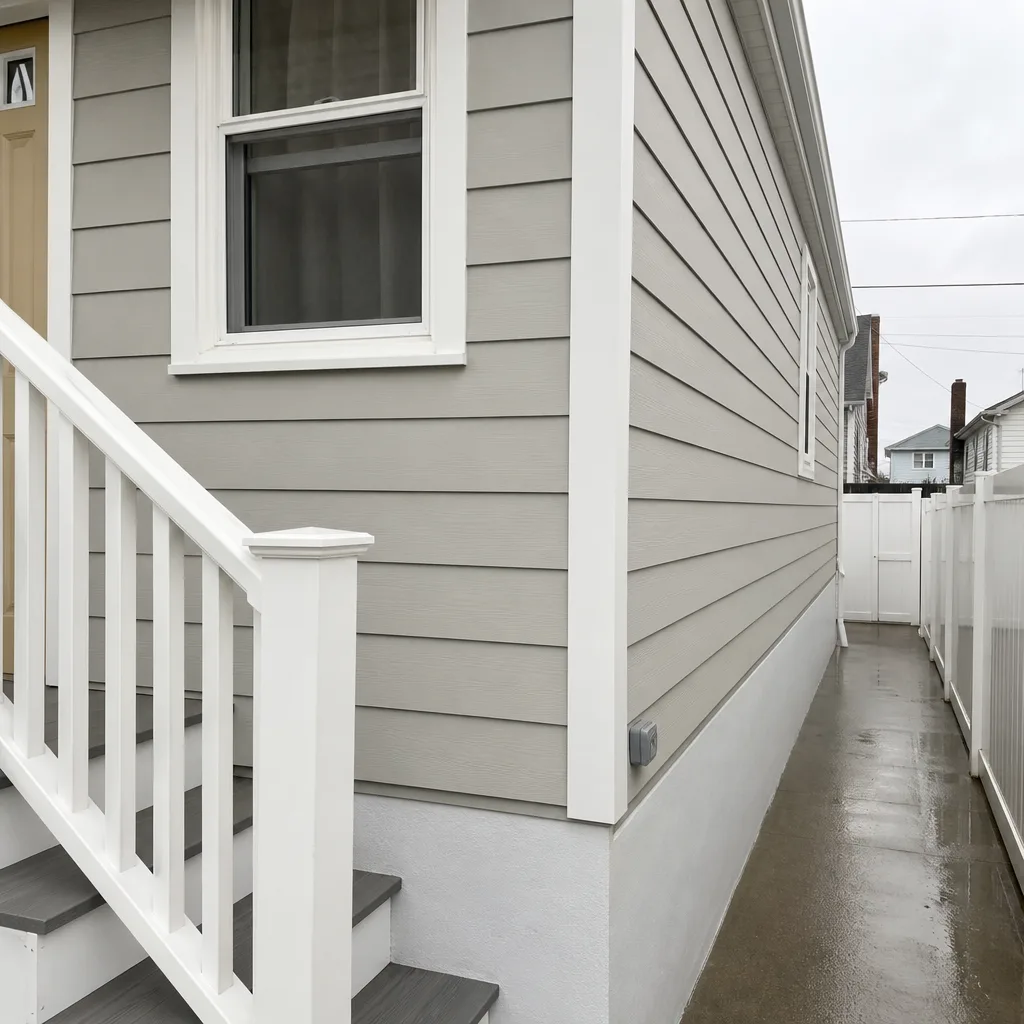 After
After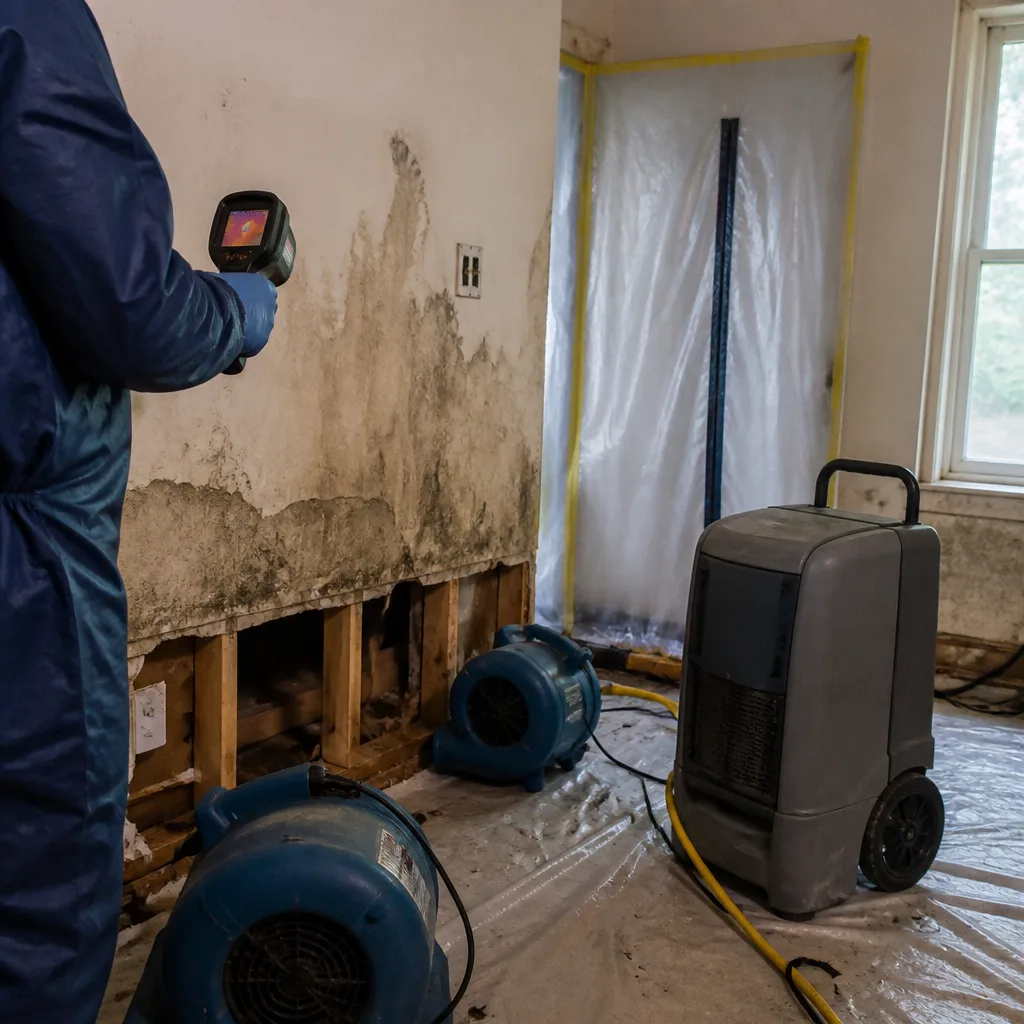 Before
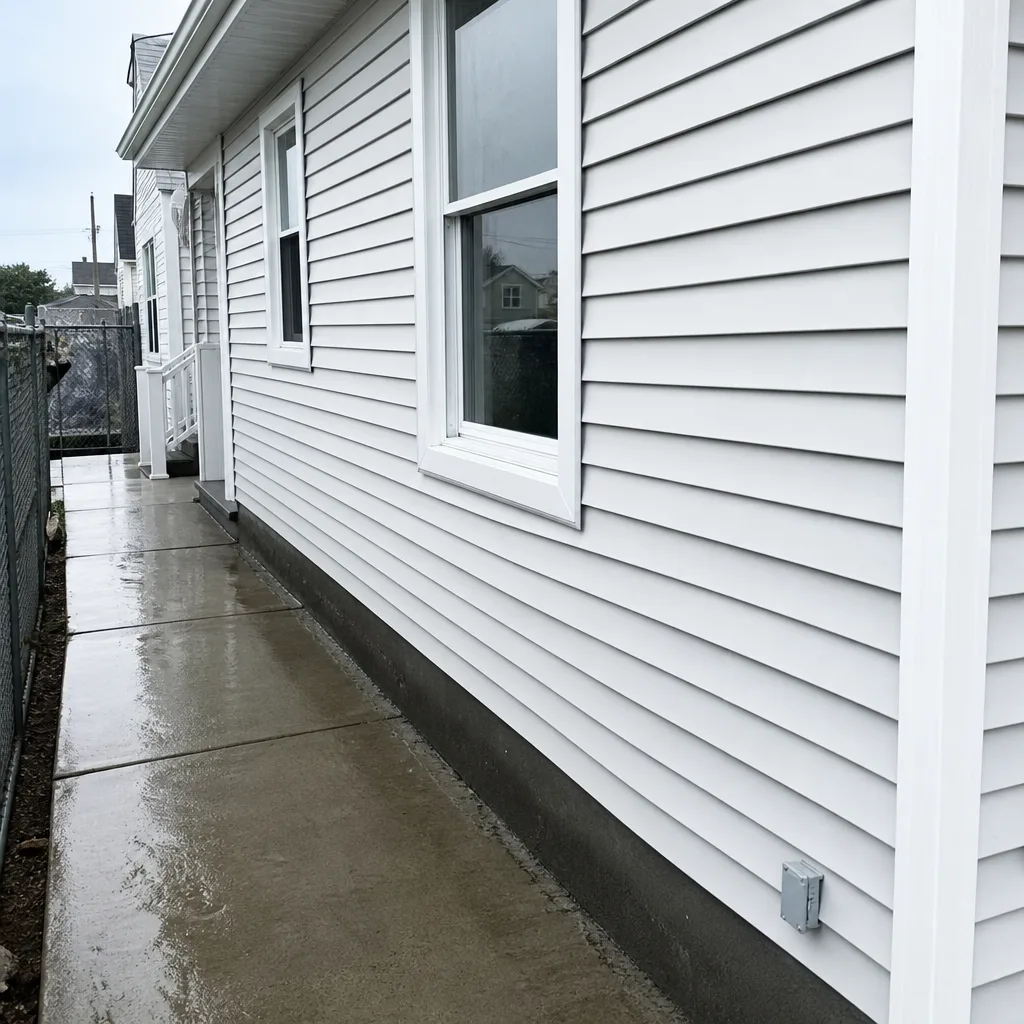 After
After24/7 Emergency Mold Remediation in Lawrence
Mold remediation in Lawrence starts with a direct answer: most visible mold outbreaks in this village run between $1,800 and $6,500 to remove properly, and the work usually takes two to five days once containment is set. A genuine emergency response that includes full containment, HEPA air scrubbing, and a written clearance plan for your insurer is available around the clock. If you have water coming in from Reynolds Channel or Jamaica Bay, or you’ve spotted dark staining spreading across drywall, call (845) 773-8058 now. Our live dispatcher answers at 2 a.m. the same way she answers at noon. We’ll get a background-checked crew to your Lawrence home, do a free visual inspection, and tell you straight whether you need full remediation or a targeted cleaning. The first hour matters because mold that gets air and moisture doubles its footprint fast, and in Lawrence’s salt-air environment, the clock runs faster than it does inland.
Understanding Mold Remediation Severity in Lawrence Properties
Lawrence’s housing stock splits into two very different risk profiles. The pre-war brick estates near the oceanfront and along Broadway have thick masonry walls that hold moisture for weeks after a flood, while the mid-century split-levels and ranches that fill the side streets from Mott Avenue toward the bay side often have finished basements sitting below flood-plain elevation. In both cases, the concern is not just the mold you see. It’s what’s behind the baseboard. We classify mold work by how much of the wall cavity is involved. A surface bloom under ten square feet is often a cleaning job. Anything larger, or anything tied to repeated water intrusion, typically requires full containment with 6-mil poly sheeting, negative air pressure, and HEPA air scrubbers running until particle counts drop to safe levels. Lawrence’s proximity to salt water adds a complication most restoration manuals never mention: chlorides from saltwater wick into drywall and framing, and those salts keep pulling moisture out of the air long after the original flood receded. That means a standard drying job can finish, the property passes a visual inspection, and the mold comes back six months later. We see it repeatedly in post-Sandy basement rebuilds along the bay side.
Why Lawrence Property Owners Choose Floodline Restoration Co.
- 45-minute response commitment – When you call about mold, we commit to having a technician at your Lawrence door within 45 minutes for an assessment, not a sales pitch.
- 24/7 live answer, always a person – Our dispatch board is staffed by human beings, every hour, every day. You will never leave a voicemail and wait for a callback when mold is spreading.
- IICRC-certified crews – Our technicians hold credentials in mold remediation (AMRT), water damage restoration (WRT), and fire and smoke restoration (FSRT). They are trained to the standards Lawrence’s insurance carriers recognize.
- Free visual inspection with a written scope – Before any work begins, you get a line-item scope of work in writing. No surprises on the bill, and no pressure to approve anything on the spot.
- Direct insurance billing – We bill your carrier directly and walk the claim through with your adjuster. You are not the messenger between us and the insurance company.
- One team from containment to reconstruction – The same Floodline crew that sets up containment and removes the mold is the crew that dries, sanitizes, and rebuilds. No mid-job handoff to strangers.
Our Mold Remediation Process
Inspection & Assessment
We start with a visual inspection, then use thermal imaging and moisture meters to map how far water has wicked into walls, subfloors, and ceiling cavities. For suspected hidden mold, we can pull air samples for lab analysis. You get a written scope before we cut anything open.
Containment & Air Filtration
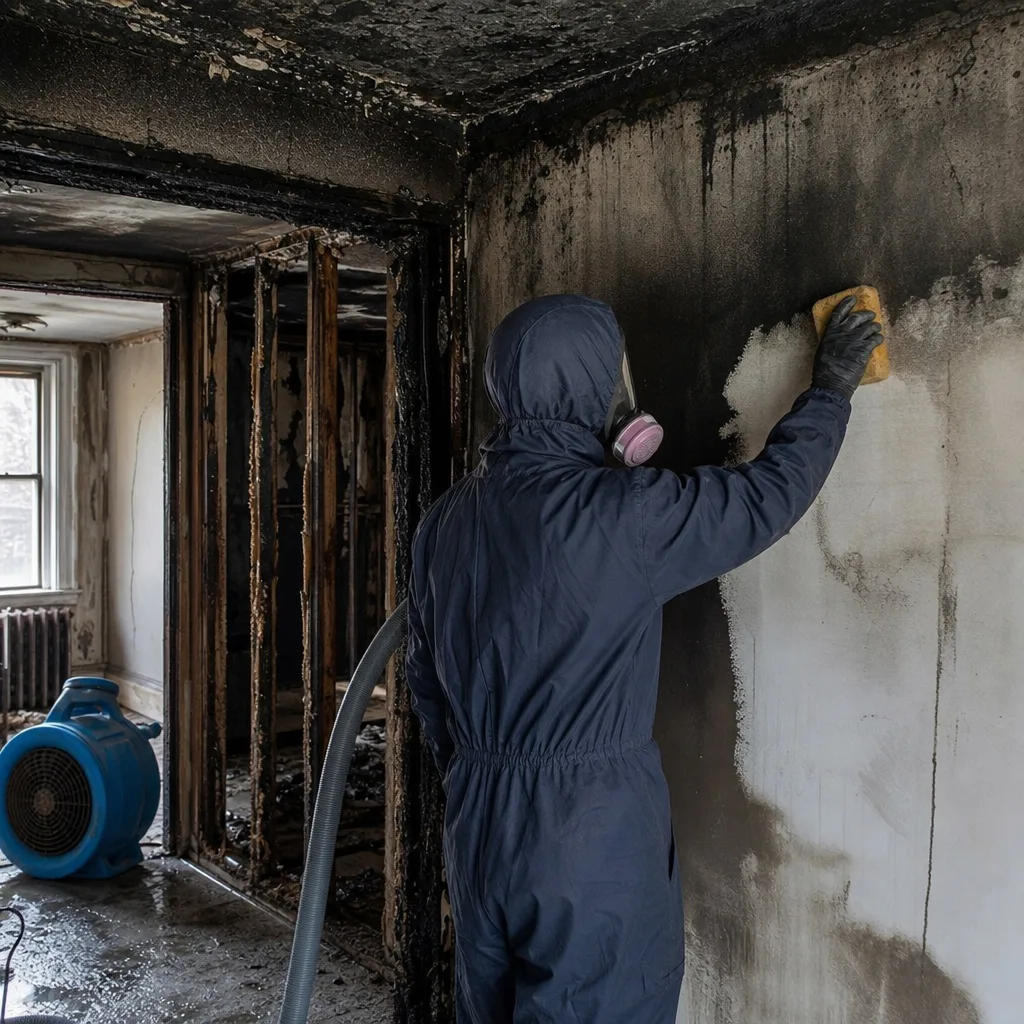
We seal the work area with 6-mil poly sheeting and establish negative air pressure so mold spores cannot spread to the rest of your Lawrence home. HEPA air scrubbers run continuously from this point until clearance testing passes.
Drying & Dehumidification
Dri-Eaz LGR dehumidifiers and high-volume air movers pull moisture out of studs, joists, and subfloors. In Lawrence’s salt-air environment, we extend drying protocol times because chlorides hold moisture longer than freshwater does. Daily moisture readings are logged and shared with your carrier.
Cleaning & Sanitization
We remove mold-damaged drywall and insulation at the source, HEPA-vacuum all surfaces, and apply an antimicrobial treatment to prevent regrowth. For salt-contaminated materials, we add a neutralization step that standard freshwater protocols skip entirely.
Salt-Specific Treatment
In homes exposed to storm surge from Reynolds Channel or Jamaica Bay, we test wall cavities for chloride residue. Where we find salt bloom, we remove affected material well past the visible stain line and treat remaining framing with a corrosion-inhibiting antimicrobial before reconstruction.
Repairs & Restoration
Once the property passes third-party clearance testing, our reconstruction crews rebuild what was removed: drywall, trim, flooring, paint. The job ends with a moisture log, a clearance report, and the 90-Day Done Right Promise in your hands.
Need Emergency Mold Remediation in Lawrence Now?
Crews minutes away, answering live 24 hours a day. The sooner we start, the less it costs.
Working With Your Insurance Company
Lawrence homeowners dealing with mold after a nor’easter or bay-side flood are almost always dealing with a carrier at the same time. We handle that for you. From the first hour on site, we photograph every affected room, log moisture readings, and document what was wet, what was removed, and why. Our line-item scopes are written to carrier standards, and we speak directly with your adjuster so you don’t have to translate trade language into insurance language. If your adjuster pushes back on a salt-contamination line item, we explain the chloride testing and the remediation necessity in terms the carrier accepts. The goal is a claim that closes cleanly, not a homeowner stuck arguing about scope after the work is already done.
What We Provide Your Insurer
- Thorough documentation of the loss
- Photos of all damage, room by room
- Moisture readings and drying logs
- A detailed, line-item scope of work
- Direct coordination with your carrier
Built for Lawrence’s Loss Calendar
Lawrence’s mold season is not a season. It’s a year-round pressure cycle driven by geography. January and February bring deep freezes that crack supply lines in the older brick estates along Ocean Avenue and Broadway, sending freshwater through finished ceilings and into wall cavities. March and April depend on thaw and rainfall: the water table rises, and basements in the split-levels off Mott Avenue and Washington Avenue start seeping through floor cracks. July through September is thunderstorm season, and a sudden downpour on the bay side can overwhelm aging sump pumps in under an hour. But the big one, the one that separates Lawrence from Woodmere and Cedarhurst, is the fall nor’easter. When storm surge pushes saltwater up from Reynolds Channel on the south and Jamaica Bay on the north, the village gets hit from both directions at once. That’s the flood that leaves salt in the studs, and the mold that shows up six months later in a finished basement that was “remediated” once already.
Mold Remediation Across Lawrence’s Neighborhoods
Lawrence is a small village, but the response routes and the building types change street by street. Out near the oceanfront, the big pre-war houses on Ocean Avenue and Bay Boulevard are built like fortresses: thick walls, high ceilings, and basements that were never meant to be living space. When those homes flood, the masonry soaks up water and releases it slowly, which means drying takes longer and the mold risk lingers for weeks. Over on the bay side, the split-levels and ranches along Doughty Boulevard and the streets running toward Inwood have a different failure pattern: finished basements with paneling and carpet directly against foundation walls, no flood vents, and sump pumps that have been patched rather than replaced. A nor’easter pushes two inches of Category 2 water into those spaces and the paneling hides the mold until someone smells it. Near the Lawrence train station and along Central Avenue, the mid-century homes tend to be on slightly higher ground, but many still sit within AE flood zones, and their owners are often unaware that their elevation certificate expired or was never filed after a prior renovation. We know these blocks. We know which homes need a FEMA elevation certificate pulled before work can start, and we know how to route a crew through Rockaway Turnpike traffic to reach the southern end of the village without losing an hour.
Specialized Mold Remediation Services We Offer in Lawrence
Mold Inspection & Testing
Before we remove anything, we identify exactly what is growing and how far it has spread. In Lawrence, we recommend air sampling and surface testing whenever mold appears in a below-grade space that has seen bay-side flooding, because salt-tolerant species like Aspergillus and Penicillium behave differently than the black mold everyone worries about. Lab results give your insurer a defensible basis for the scope, and they give you a baseline for clearance testing at the end.
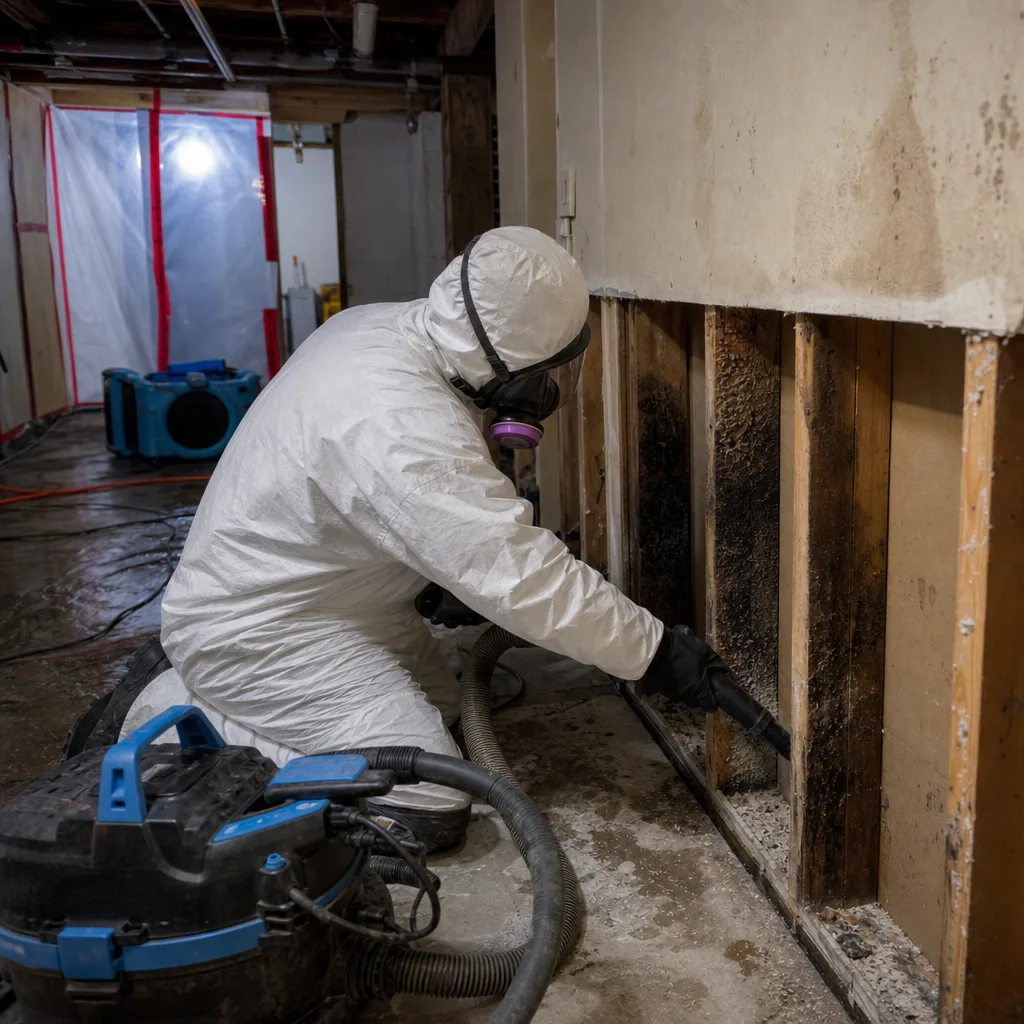
Black Mold Remediation
Stachybotrys chartarum, what people call black mold, needs chronic moisture to thrive. Lawrence’s repeated flood cycles on the bay side create exactly that condition. Full black mold remediation means containment, disposal of affected drywall and insulation, antimicrobial treatment of studs, and clearance testing. We never paint over it. We remove the material, dry the cavity, and prove the air is clean before we close the wall.
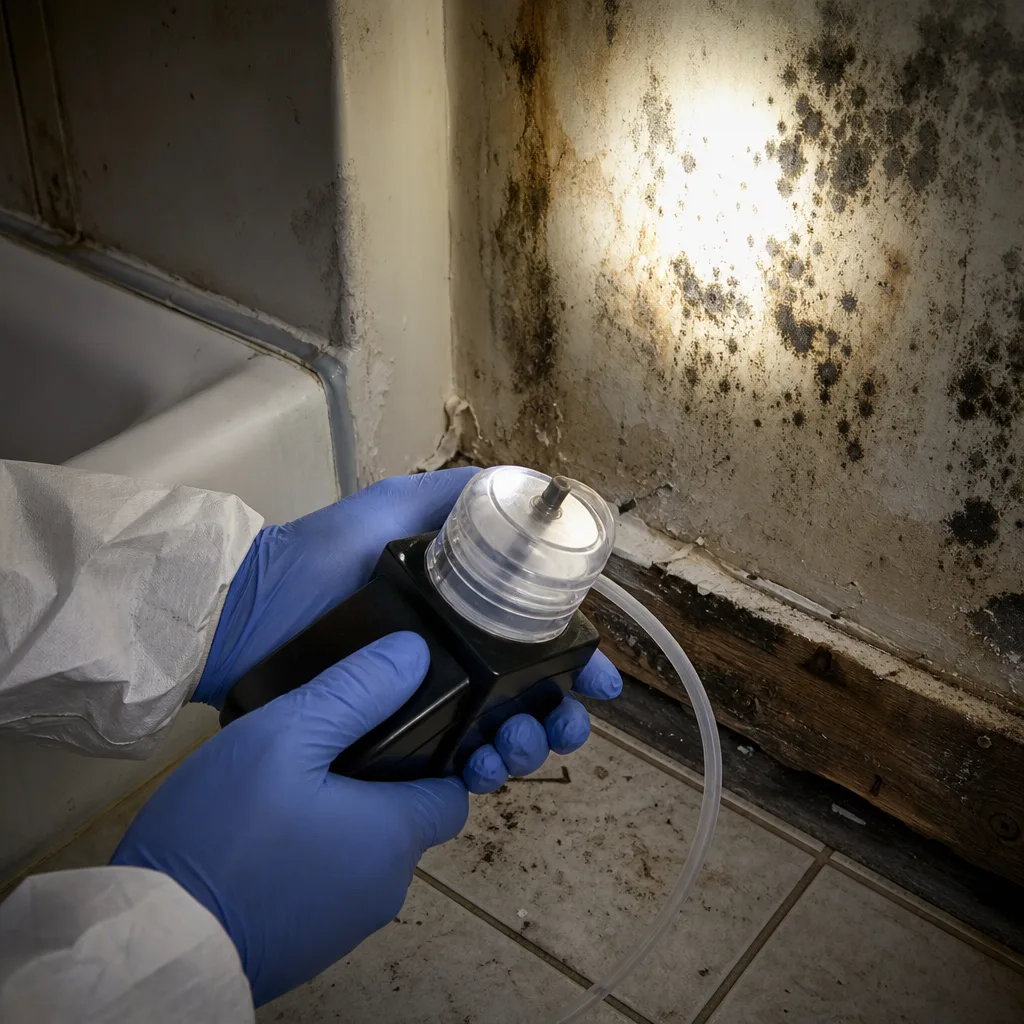
Air Quality Restoration
Mold spores move through HVAC systems fast. After any remediation in Lawrence, we run HEPA air scrubbers long enough to drop spore counts to background levels, and we inspect ductwork and air handlers for contamination. In salt-surge homes, we check for corrosion inside metal duct runs too, because rusted ducts are a moisture source that keeps feeding the problem.
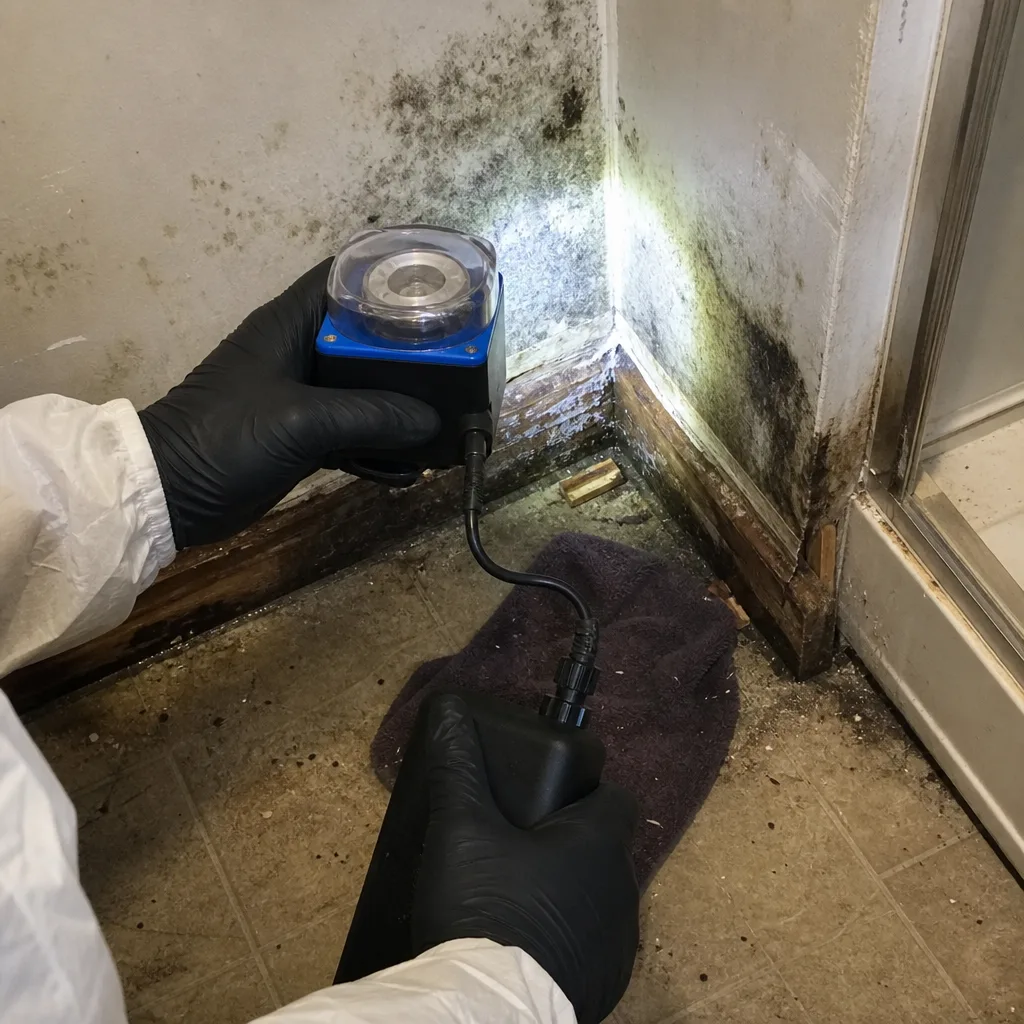
Moisture & Humidity Control
The best mold remediation in Lawrence is the one that never has to touch mold. We install and service whole-home dehumidifiers, sump pumps with battery backup, and proper flood vents. For finished basements below the flood line, we recommend a humidity control plan that keeps the space dry through a nor’easter, not just through a dry August.
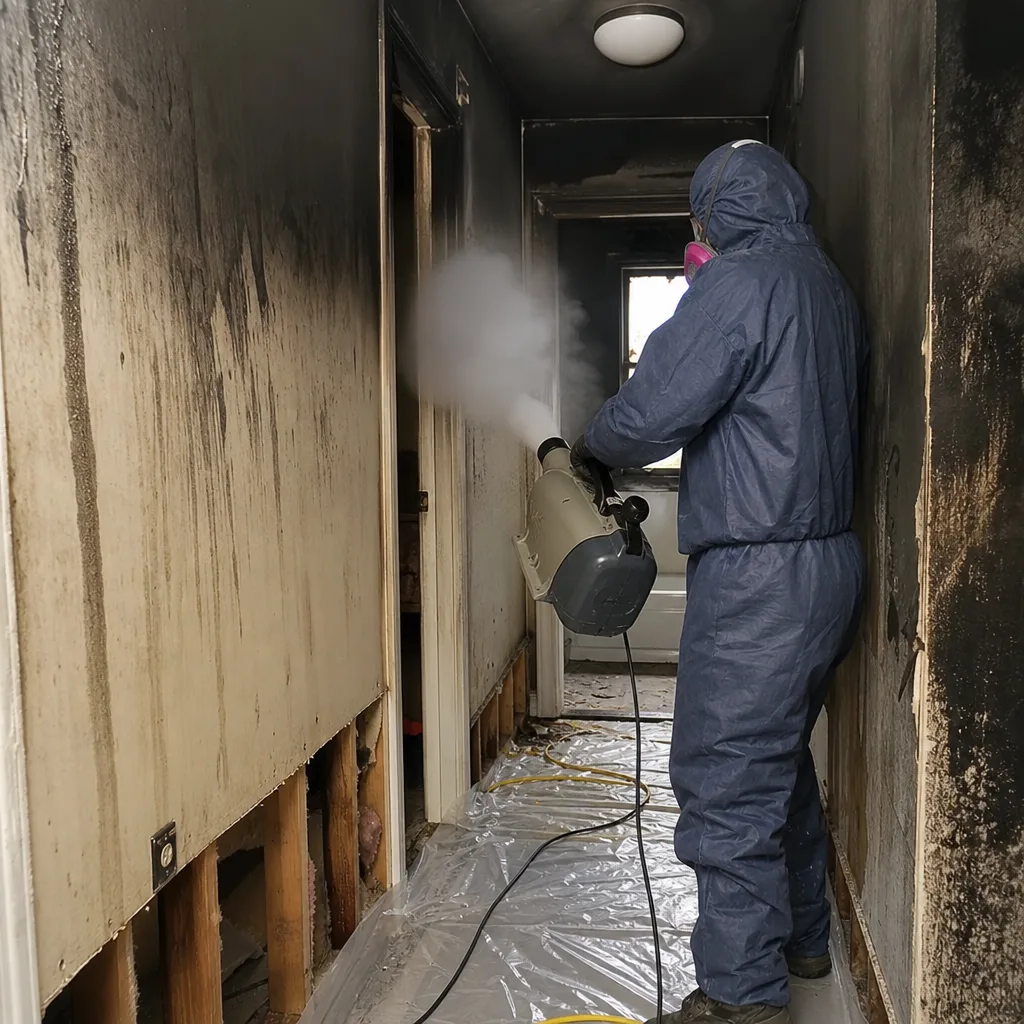
Crawl Space Treatment
Many of Lawrence’s older homes have crawl spaces that were never encapsulated. Salt-laden air from the bay circulates through those spaces, condenses on cold joists, and feeds mold that no one sees until the floor above starts to smell. We clean, treat, and seal crawl spaces, and if your home is in a flood zone, we coordinate the work with the elevation certificate and flood vent requirements that Nassau County enforces.
What happens when you call
- 1
A real person answersNo phone trees - you reach a local pro.
- 2
You get an upfront price rangeHonest numbers before anyone is dispatched.
- 3
A background-checked tech heads outLicensed & insured, dispatched right away.
- 4
You approve before work beginsNothing starts until you say go.
Mold Remediation Costs in Lawrence, NY
Lawrence mold remediation costs run higher than inland Five Towns pricing, mostly because saltwater intrusion work is slower and more material has to be removed. A small contained outbreak in a single bathroom or closet typically runs $1,200 to $2,800. A finished basement with mold behind paneling after a bay-side flood usually lands between $4,500 and $9,500, depending on how much drywall, insulation, and flooring has to come out. Black mold that has spread across multiple rooms can reach $14,000 or more. What moves the price: square footage of affected material, whether containment and clearance testing are required, whether salt neutralization is needed, and whether the job triggers Nassau County elevation certificate requirements before reconstruction. The free visual inspection we do in Lawrence gives you a firm line-item scope before you commit to anything, and we bill your carrier directly whenever the loss is covered.
We Also Serve Cities Near Lawrence
Floodline Restoration Co. runs mold remediation crews throughout the Five Towns and the surrounding South Shore communities. We serve mold remediation clients in Inwood, Far Rockaway, Woodmere, and Rosedale, with the same 24/7 live dispatch and the same 90-Day Done Right Promise. If you’re in a neighboring community and water just came in, call the same number and we’ll route the nearest available crew.
Serving Lawrence, NY - Our Local Coverage Area
We’re based in the Lawrence area and know this community well. Use the map below to see our service coverage - if you’re nearby, we can almost certainly help.
Lawrence Mold Remediation Questions, Answered
How does saltwater flooding from Reynolds Channel change mold remediation in Lawrence compared to a freshwater leak?
Saltwater leaves chloride crystals inside drywall, insulation, and framing that pull moisture from the air indefinitely, which means mold returns even after standard drying and cleaning. Lawrence saltwater remediation requires removing material past the visible stain line and neutralizing chloride residue before rebuilding, a step freshwater protocols do not include. Call (845) 773-8058 and we’ll assess whether your home needs salt-specific treatment.
Why does my post-Sandy finished basement keep getting mold even though I had it remediated once?
Most likely, chlorides from the original saltwater flood were never neutralized, and moisture keeps wicking into the same wall cavities whenever humidity rises. We find this pattern regularly in Lawrence basements that were remediated by crews unfamiliar with salt-surge chemistry. The fix is removing affected material to the true dry line, treating framing with a corrosion-inhibiting antimicrobial, and addressing the moisture source. Call us for a free inspection and moisture map.
Do I need a Nassau County elevation certificate before mold remediation in a Lawrence flood zone?
If structural reconstruction is required after mold removal, and the home sits in an AE or VE flood zone, Nassau County’s floodplain administrator will require a current elevation certificate before permits are issued. We pull and file those certificates as part of the job so your remediation does not stall. We know which Lawrence blocks trigger this and which don’t, and we’ll tell you at the inspection.
How soon after a bay-side storm should I have mold inspection in Lawrence given the 24-48 hour mold timeline?
Within 24 hours if you can manage it. Mold starts colonizing damp drywall and insulation within one to two days, and in Lawrence’s humid salt-air environment, we have seen visible growth appear in under 36 hours. The sooner we set up drying equipment and dehumidification, the less material has to be removed. Call (845) 773-8058 and we’ll be there within 45 minutes for an assessment.
What is the difference between Category 2 and Category 3 water in a Lawrence flood, and how does that affect whether materials get dried or removed?
Category 2 water is contaminated but not sewage; it includes bay surge water that has picked up organic matter, road runoff, and household chemicals. Category 3 is grossly contaminated, including sewage backups and water that has been sitting for days. Category 3 water-affected drywall and insulation should always be removed, not dried. Category 2 materials can sometimes be dried if we reach them within 24 to 48 hours, but in Lawrence’s salt-surge conditions, we lean toward removal more often because chloride contamination complicates drying. Our inspection determines the category and the correct scope.
How quickly can you get a mold remediation crew to Lawrence?
We commit to a 45-minute response for emergency mold calls in Lawrence. Our dispatch coordinates from our New York City office, and crews are stationed to reach the village without traffic delays from the Rockaway Turnpike corridor or the bay side. After the assessment, most containment jobs start the same day or next morning, depending on what the scope requires.
Will my insurance cover mold remediation after a nor’easter flood in Lawrence?
It depends on your policy. Standard homeowners policies cover mold remediation only when it results from a covered water loss, like a burst pipe or storm damage, and many have mold sub-limits of $5,000 to $10,000. Flood insurance through NFIP may cover mold as part of a flood claim if the mold was caused by the covered flood. We document everything from the first hour and bill your carrier directly, and we’ll walk your claim through with the adjuster. Call (845) 773-8058 and we’ll review your coverage situation during the free inspection.
What should I do in the first 30 minutes after I find mold in my Lawrence home?
Do not disturb it. Do not wipe it with bleach, do not cut into the wall, and do not run a household fan on it, because all three spread spores into the air and make the problem larger. Close the door to the room if you can, turn off the HVAC system so spores don’t circulate, and call us at (845) 773-8058. We’ll inspect, contain, and give you a written scope before anything else happens.
Written by Curt Bowman, Owner at Floodline Restoration Co., serving Lawrence and the Five Towns since our founding in 2010. Our crews are IICRC, RIA, and IFA certified, background-checked, and uniformed. Every Lawrence job ends with the 90-Day Done Right Promise in writing. $50 off any repair over $250, $89 seasonal tune-up, and a 5% senior and veteran discount are always available. Call (845) 773-8058 for a free estimate.